
How to Sell Multi-Million Dollar Modernization Deals Without a BIG Legacy Engineering Team
The Myth Blocking Millions: Why Legacy Expertise Isn’t the Gatekeeper Anymore
Most resellers, MSPs, and mid-sized consultancies disqualify themselves from multi-million dollar modernization opportunities before the conversation even begins.
The reasoning feels logical: legacy systems—COBOL, mainframes, deeply entangled monoliths—require rare, highly specialized expertise. If you don’t have that expertise in-house, you assume you can’t credibly sell, scope, or deliver the work.
But that assumption is outdated. And more importantly, it’s expensive.
Across regulated industries like banking, healthcare, and insurance, enterprises are actively seeking partners to modernize aging systems. These aren’t small engagements. They are multi-year, multi-million dollar programs tied directly to compliance mandates, operational risk, and digital transformation goals.
Yet a significant portion of the partner ecosystem opts out.
Not because the demand isn’t there—but because the perceived barrier to entry feels too high.
This creates a paradox in the market. On one side, enterprises are under increasing pressure from regulatory frameworks, rising maintenance costs, and shrinking legacy talent pools. On the other, capable service providers hesitate to engage because they believe they lack the prerequisite skills.
The result is a widening gap between opportunity and participation.
And that gap is where the next wave of growth sits.
What’s changed is not the complexity of legacy systems—but the way they can be understood, analyzed, and modernized. The historical dependency on a small pool of legacy experts is no longer the only path forward.
Today, the ability to enter and win these deals is shifting away from “who has the most legacy engineers” toward “who can create system understanding the fastest and most accurately.”
That shift fundamentally changes who gets to compete.
Firms that recognize this early are not just participating—they are positioning themselves to capture deals that were previously out of reach.
The constraint is no longer expertise alone.
It’s whether you still believe that it is.
A Market in Imbalance: The Growing Gap Between Legacy Demand and Talent Supply
The modernization opportunity isn’t emerging—it’s already here. What’s accelerating now is the imbalance between how much transformation is required and how little legacy expertise is available to execute it.
Across banking, healthcare, and manufacturing, core systems built decades ago are still running mission-critical operations. These systems process transactions, manage patient data, and support regulatory reporting. Replacing or modernizing them is no longer optional—it is being driven by compliance mandates, security risks, and the need for real-time digital capabilities.
At the same time, the workforce capable of maintaining and interpreting these systems is rapidly shrinking.
A significant percentage of legacy developers—particularly those skilled in COBOL and mainframe environments—are nearing retirement. Fewer new engineers are entering this space, and even fewer are choosing to specialize in it long term. For enterprises, this creates an operational risk that extends beyond innovation—it threatens continuity.
This is where the imbalance becomes commercially significant.
Enterprises are not just looking for vendors with deep legacy expertise. They are looking for partners who can help them move forward—quickly, safely, and in a way that aligns with regulatory expectations such as evolving financial compliance standards and healthcare data protection requirements.
However, the traditional supply model cannot meet this demand.
Large system integrators are stretched across too many transformation programs. Specialized legacy talent is both expensive and difficult to scale. Internal teams are often constrained by undocumented systems and institutional knowledge loss.
This creates a widening execution gap.
And that gap is not being filled by more experts—it’s being filled by new approaches.
For resellers, MSPs, and consultancies, this is a moment of strategic opportunity. The market is no longer constrained by demand. It is constrained by who can step in with a credible way to understand and modernize complex systems without relying entirely on scarce human expertise.
The firms that recognize this imbalance are not waiting to build legacy teams.
They are redefining how these projects get delivered—and positioning themselves where demand is already outpacing supply.
The Real Reasons Firms Walk Away from Modernization Deals
Despite the size of the opportunity, most resellers, MSPs, and consultancies consistently step back from legacy modernization deals. Not because they lack capability—but because they operate under a set of assumptions that no longer reflect how these projects can be delivered today.
Understanding these objections is critical, because each one represents a barrier that can now be systematically removed.
“We Don’t Have Legacy Expertise”
This is the most common—and most limiting—belief.
Historically, it was valid. Legacy systems required deep, experience-based knowledge. Understanding COBOL programs, deciphering undocumented logic, and navigating tightly coupled architectures depended on specialists who had spent decades in those environments.
That expertise is now both scarce and expensive.
For smaller firms, building or acquiring such talent is not just difficult—it’s commercially impractical. As a result, many organizations self-select out of opportunities before even evaluating them.
The impact is significant. High-value deals are left on the table, and firms remain confined to lower-margin, less strategic work.
What’s often overlooked is that the requirement is not “having experts”—it’s “achieving understanding.” And those are no longer the same thing.
“Discovery Takes Too Long and Is Too Risky”
Legacy environments are notoriously opaque.
Documentation is incomplete or nonexistent. Business logic is embedded deep within codebases. Dependencies span decades of incremental changes. Before any proposal can be created, firms assume they must invest heavily in manual discovery—often without guaranteed outcomes.
This creates a pre-sales dilemma.
Pursuing these deals requires significant upfront effort, extended timelines, and the risk of mis-scoping complex systems. For many firms, the cost of simply trying to understand the system outweighs the perceived benefit of winning the deal.
The result is predictable: they opt out early.
This not only slows sales cycles but also reinforces the belief that only large system integrators can afford to engage at this level.
“We Can’t Deliver Without Specialized Teams”
Even if a firm considers pursuing a deal, delivery concerns quickly surface.
Legacy modernization is seen as inherently tied to specialized execution teams—developers who understand both the old system and the target architecture. Without that bridge, the risk of failure feels high.
This leads to over-reliance on external partners or large SIs, reducing control over delivery, margins, and client relationships.
More importantly, it creates a false dependency.
Delivery is not just about coding—it’s about clarity. Without a clear understanding of the system, even the best developers struggle. With structured understanding, however, delivery becomes significantly more predictable, even for teams without deep legacy backgrounds.
Each of these beliefs was grounded in reality at one point.
But together, they form a constraint that no longer needs to exist.
The firms that continue to operate within these assumptions will keep sitting out the largest opportunities in the market.
The ones that challenge them will find that the barriers to entry are not as fixed as they once seemed.
The New Model: From Specialist-Dependent to Intelligence-Driven Delivery
For decades, legacy modernization has been defined by one constraint: access to specialized expertise.
If you didn’t have COBOL engineers, mainframe architects, or system veterans who understood decades-old logic, you simply couldn’t compete. Delivery models, pricing structures, and even sales strategies were all built around this dependency.
That model is now breaking.
Not because legacy systems have become simpler—but because the way they can be understood has fundamentally changed.
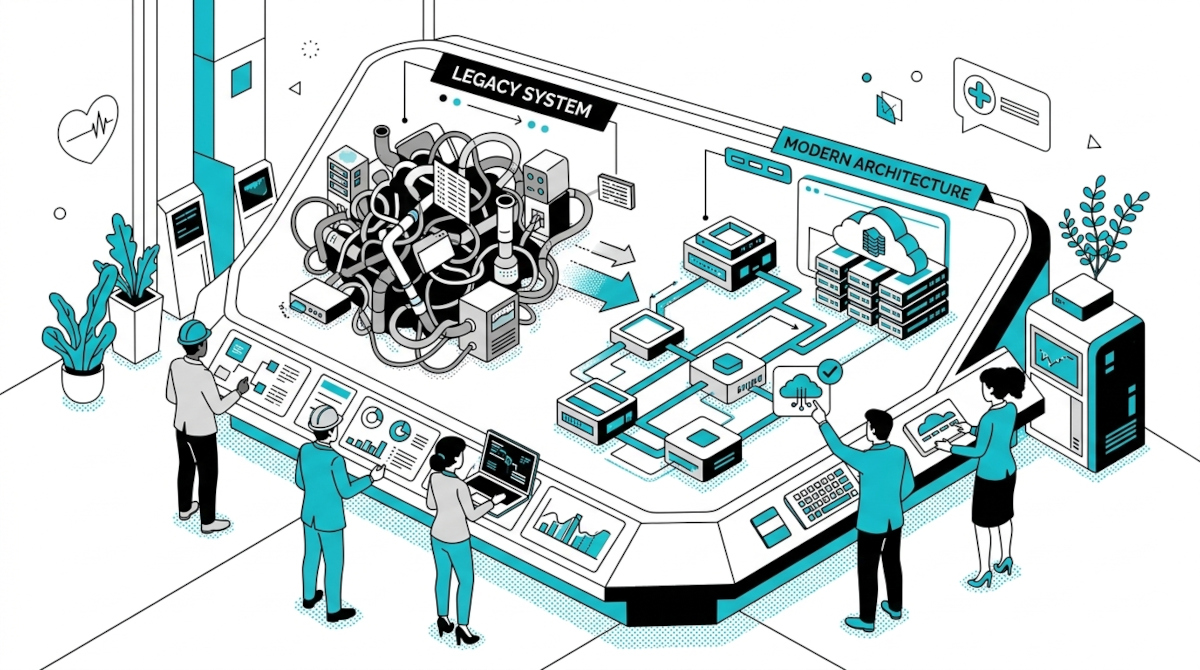
Today, modernization is shifting from an expertise-driven model to an intelligence-driven one.
This distinction matters.
In the traditional model, progress depended on human interpretation. Teams manually read through thousands—or millions—of lines of code, reverse-engineered system behavior, and attempted to reconstruct undocumented logic. This process was slow, inconsistent, and difficult to scale.
In the intelligence-driven model, understanding is no longer limited by individual experience.
AI-powered systems can analyze entire codebases, map dependencies, extract business logic, and generate structured documentation in a fraction of the time. What once required weeks of specialist effort can now be initiated in hours—and refined in days.
This changes the economics of delivery.
Instead of building teams around scarce expertise, firms can build around accelerated understanding. Instead of delaying engagement due to uncertainty, they can enter earlier with greater confidence. Instead of relying on a few key individuals, they can distribute knowledge across the entire team.
The result is a more scalable, repeatable approach to modernization.
This shift also redefines what it means to be “qualified” to pursue these deals.
Firms no longer need to ask, “Do we have the legacy expertise?”
They need to ask, “Do we have the capability to generate accurate system intelligence quickly?”
Because once that capability exists, many of the traditional barriers—long discovery cycles, delivery risk, dependency on niche talent—begin to collapse.
This is the inflection point in the market.
The competitive advantage is no longer reserved for those who spent decades inside legacy systems. It belongs to those who can unlock and operationalize system understanding faster than everyone else.
And that is what enables entirely new entrants to compete—and win.
A Practical Entry Strategy: How Smaller Firms Are Winning Larger Deals
The shift to intelligence-driven delivery is not theoretical—it’s already changing how smaller firms enter and compete in legacy modernization deals.
What’s emerging is a repeatable, low-barrier model that allows resellers, MSPs, and consultancies to engage credibly without needing to build large legacy teams upfront.
At its core, this model replaces prolonged uncertainty with structured, rapid understanding—and turns that understanding into a foundation for both sales and delivery.
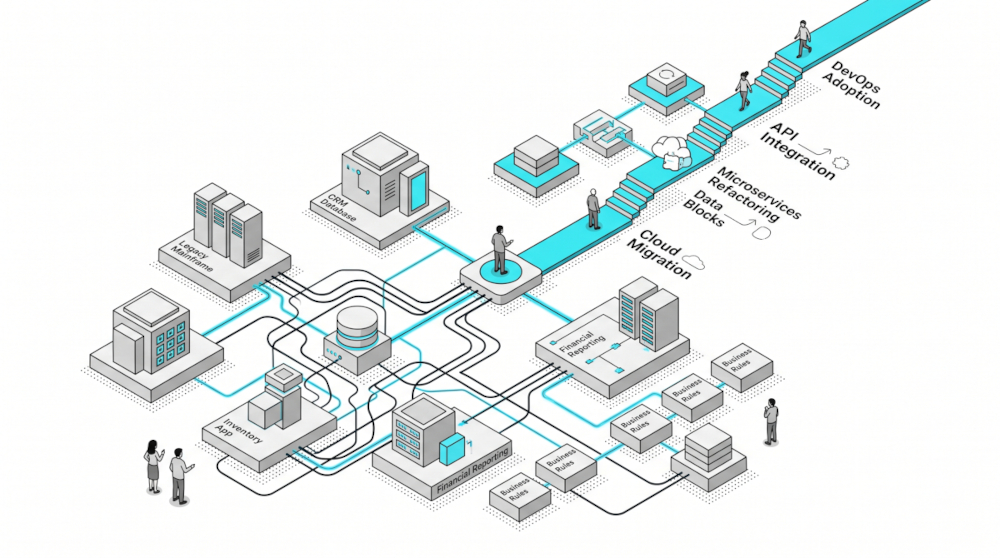
Step 1: Rapid System Understanding
The first breakthrough is speed.
Instead of committing to weeks of manual code review, modern firms begin by quickly analyzing the client’s existing system to establish a baseline understanding. This includes identifying core components, mapping dependencies, and surfacing embedded business logic.
The goal is not perfection—it’s clarity.
Within a short timeframe, firms can move from “we don’t know what this system does” to “we have a structured view of how this system operates.” That shift alone is enough to begin meaningful conversations with stakeholders.
It also changes how credibility is established during the sales process.
Rather than relying on past legacy experience, firms demonstrate insight into the client’s actual environment.
Step 2: Structured Discovery
Once initial understanding is established, discovery becomes focused instead of exploratory.
Instead of asking broad, open-ended questions, teams can validate specific assumptions, confirm system behaviors, and identify modernization priorities with greater precision.
This significantly reduces one of the biggest risks in these deals: mis-scoping.
With clearer visibility into the system, firms can:
- Define realistic timelines
- Identify high-risk components early
- Align modernization goals with business outcomes
This stage also shortens the pre-sales cycle.
What traditionally required extended engagements and heavy upfront investment can now be compressed into a more efficient, insight-driven process.
Step 3: Phased Modernization
With a structured understanding in place, delivery shifts from high-risk transformation to controlled execution.
Instead of attempting large-scale, all-at-once modernization, successful firms break the process into phases. Each phase targets specific components or capabilities, allowing for incremental progress and continuous validation.
This approach delivers three key advantages:
- Reduced delivery risk
- Faster time to value for the client
- Greater flexibility to adapt as new insights emerge
It also aligns well with how enterprise buyers think—particularly in regulated industries where change must be controlled, auditable, and compliant.
This three-step model—understand, structure, and phase—creates a practical pathway into deals that were previously inaccessible.
Firms no longer need to wait until they have the “perfect” team.
They can enter earlier, build confidence through insight, and expand their role as the engagement progresses.
And most importantly, they can do it without taking on disproportionate risk.
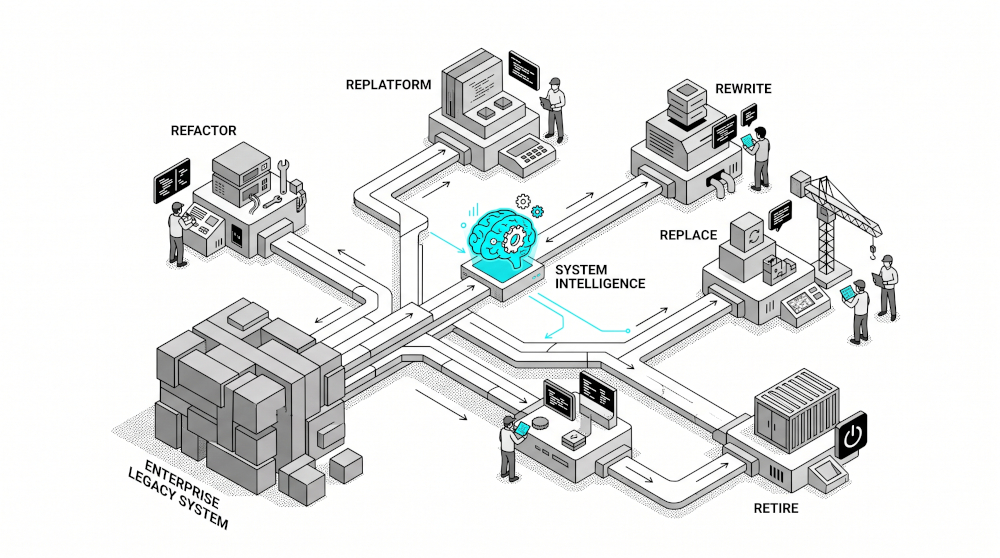
Where CodeAura Becomes the Force Multiplier
The shift to intelligence-driven delivery creates the opportunity—but execution still depends on having the right capabilities in place.
This is where CodeAura fundamentally changes what smaller firms can achieve.
Instead of requiring years of accumulated legacy expertise, CodeAura provides an AI-driven layer of system understanding, documentation, and transformation support that allows teams to engage with confidence from day one.
Eliminating the Need for Deep Legacy Expertise
The first barrier CodeAura removes is interpretation.
Legacy systems are difficult not just because of their age, but because their logic is buried, undocumented, and highly interconnected. Traditionally, extracting that understanding required specialists with years of experience.
CodeAura replaces that dependency with automated intelligence.
By analyzing legacy codebases, it generates structured documentation that breaks down system components, workflows, and logic in a way that is accessible to both technical and non-technical stakeholders.
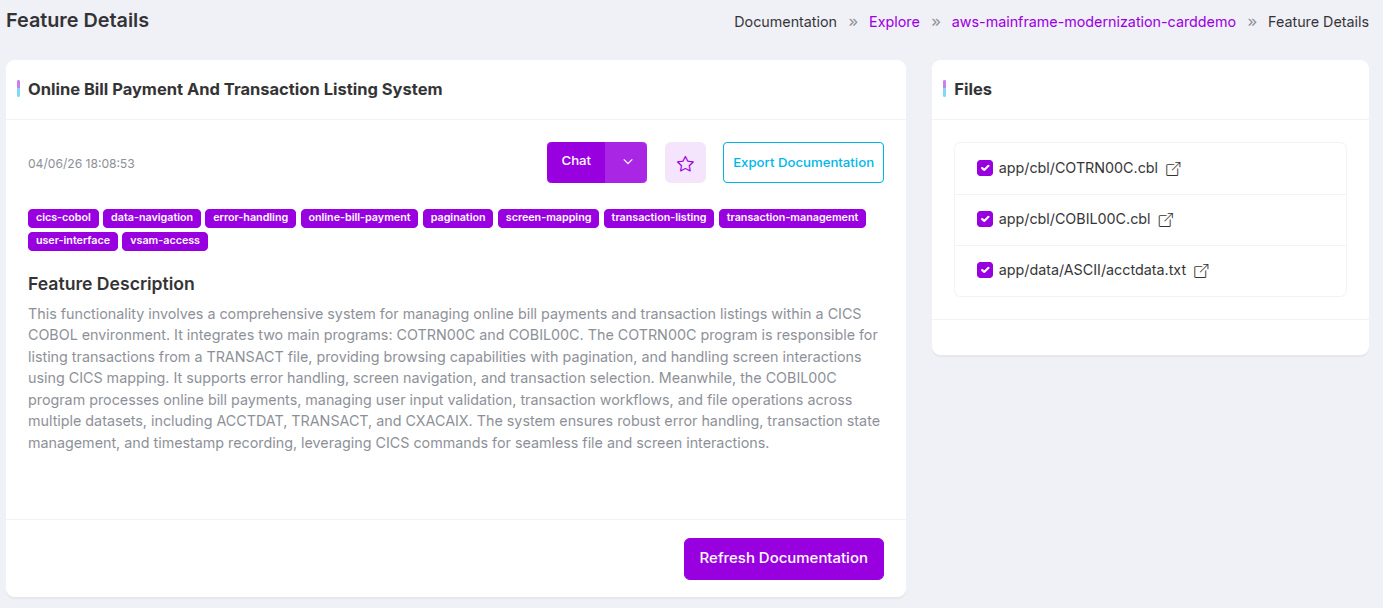
This shifts the starting point for teams.
Instead of beginning with uncertainty, they begin with a mapped, explainable system—reducing reliance on hard-to-find experts and enabling broader team participation.
Accelerating Pre-Sales and Discovery
Pre-sales is where most firms lose momentum in modernization deals.
The time and cost required to understand a legacy system before proposing a solution often make these opportunities unattractive. CodeAura compresses this timeline significantly.
By rapidly surfacing system architecture, dependencies, and key logic flows, teams can move from initial access to actionable insight in a fraction of the traditional time.
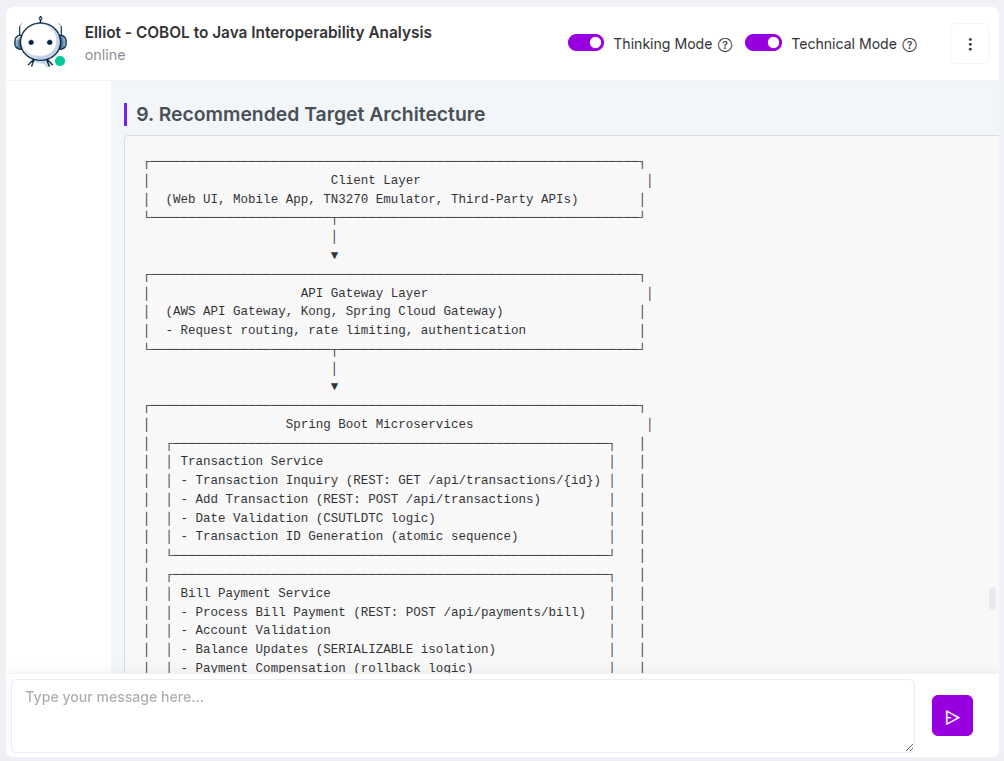
This allows firms to:
- Engage earlier in the sales cycle
- Build more accurate proposals
- Reduce the risk of mis-scoping
What once took weeks of manual analysis can now be approached in days—with greater consistency and clarity.
Enabling Smaller Teams to Deliver
One of the most significant constraints in legacy modernization is knowledge concentration.
Critical system understanding is often held by a small number of individuals, creating bottlenecks in both delivery and decision-making.
CodeAura distributes that knowledge.
Through an AI-powered interface, teams can query the system, retrieve contextual insights, and understand behavior without needing to manually trace through code.
This transforms how teams operate.
Instead of depending on a few experts, organizations can enable broader participation across engineering, architecture, and even business teams—improving speed, collaboration, and resilience.
Supporting Migration and Transformation
Understanding alone is not enough—execution must follow.
CodeAura extends beyond analysis into transformation by supporting code migration and modernization efforts. Whether converting legacy logic into modern languages or generating new components aligned with target architectures, it accelerates development while maintaining consistency.
This reduces both delivery time and variability.
Teams can move from insight to implementation with a higher degree of confidence, even without deep prior experience in the legacy stack.
Together, these capabilities redefine what is required to participate in modernization deals.
Firms no longer need to build large, specialized teams before entering the market. They can access system understanding, accelerate discovery, and support delivery through a unified intelligence layer.
CodeAura does not just assist modernization—it enables participation.
And for many firms, that is the difference between watching the opportunity and winning it.
From Capability to Revenue: The Business Case for Entering the Market Now
For resellers, MSPs, and consultancies, the decision to enter legacy modernization is not just a technical one—it is a revenue strategy.
What was once considered a niche, high-barrier domain is now one of the largest untapped growth areas in enterprise services. And with the shift to intelligence-driven delivery, the economics of participation have changed in ways that directly benefit smaller and mid-sized firms.
Revenue Expansion
Legacy modernization projects are rarely isolated engagements.
They often span multiple phases—assessment, re-architecture, migration, integration, and ongoing optimization. This creates a long-tail revenue opportunity that extends well beyond initial project scope.
For firms already serving enterprise clients, this opens a new dimension of account expansion.
Instead of competing solely on incremental services, they can position themselves around strategic transformation initiatives—unlocking larger deal sizes and deeper client relationships.
Faster Sales Cycles
Traditional modernization deals are slowed by uncertainty.
Lengthy discovery phases, unclear system visibility, and high pre-sales costs create friction that delays decision-making. With faster system understanding and structured discovery, firms can significantly compress this timeline.
This has two direct impacts:
- Proposals become more accurate and easier to approve
- Clients gain confidence earlier in the engagement
Speed, in this context, is not just operational—it is competitive.
Firms that can move from initial conversation to credible proposal faster are more likely to win.
Higher Margins
One of the biggest cost drivers in legacy modernization has always been specialized talent.
Scarce expertise commands high rates, and projects often depend on a small number of critical individuals. This creates margin pressure and delivery risk.
By reducing dependency on that model, firms can rebalance their cost structure.
Smaller, more efficient teams—augmented by AI-driven understanding—can deliver outcomes that previously required significantly larger investments. This improves both project profitability and scalability.
Competitive Positioning
Perhaps the most strategic impact is positioning.
Historically, large system integrators dominated modernization deals because they controlled access to expertise. Smaller firms were often relegated to subcontracting roles or excluded entirely.
That dynamic is shifting.
Firms that adopt intelligence-driven approaches can compete on speed, insight, and adaptability—areas where larger organizations often struggle. This creates an opportunity to differentiate, not by size, but by execution model.
It also changes how clients evaluate partners.
Instead of asking, “How many legacy experts do you have?”
They begin asking, “How quickly can you help us understand and move forward?”
The result is a clear business case.
Entering the modernization market is no longer a high-risk, high-barrier decision. It is a strategic move that enables revenue growth, improves margins, and strengthens competitive positioning.
For firms willing to adapt their approach, the upside is not incremental.
It is transformational.
Rethinking Eligibility: Who Gets to Compete in Legacy Modernization
For years, participation in legacy modernization has been implicitly restricted.
Not by formal requirements, but by shared assumptions about who is “qualified” to engage. Large system integrators, firms with deep benches of legacy engineers, and organizations with decades of mainframe experience have traditionally dominated the space.
Everyone else watched from the sidelines.
That definition of eligibility is now outdated.
What determines success in modernization today is no longer rooted solely in accumulated expertise—it is defined by access to understanding, speed of insight, and the ability to translate complexity into actionable outcomes.
This shift expands the field.
Firms that were previously excluded—resellers, MSPs, and mid-sized consultancies—can now enter conversations they would have avoided entirely. Not because the work has become easier, but because the path to engaging with it has become more accessible.
They no longer need to begin with complete certainty.
They can begin with the ability to create clarity.
This distinction is critical.
Eligibility is no longer about having all the answers upfront. It is about having a credible way to find those answers quickly, structure them effectively, and use them to guide both the client and the delivery process.
That capability changes how firms position themselves.
Instead of disqualifying early, they can engage with confidence. Instead of deferring to larger competitors, they can lead with insight. Instead of waiting to build internal expertise, they can access and operationalize it when needed.
For enterprise buyers, this also introduces a new dynamic.
The pool of potential partners expands. The evaluation criteria evolve. Speed, transparency, and adaptability begin to carry as much weight as legacy credentials.
And that creates a more competitive—and more innovative—market.
The legacy modernization opportunity has never been limited by demand.
It has been limited by perception.
The firms that continue to believe they are unqualified will remain on the outside.
The ones that rethink what qualification actually means will find themselves competing—and winning—in deals that once felt out of reach.
The question is no longer whether you have the expertise today.
It’s whether you are equipped to access it when it matters.
Unlock your ability to sell and deliver multi-million dollar modernization deals.
Book a demo to see how CodeAura enables system understanding, faster discovery, and scalable delivery.