
A CNPJ Field Can Work While the Workflow Fails
A system can accept an alphanumeric CNPJ on a form and still fail in production.
That is the central risk companies need to plan for before Brazil’s CNPJ format changes in July 2026. The new format keeps the 14-position structure, allows letters and numbers in the first 12 positions, and keeps the final two verification digits numeric. Existing numeric CNPJs remain valid.
The visible field is only the first test. A user may be able to enter a new alphanumeric CNPJ in a customer registration screen, supplier onboarding portal, or branch setup form. But the same value may later be rejected by an API schema, truncated by a database rule, mishandled by an ERP customization, stripped by a data normalization routine, or blocked by a fiscal integration that still assumes CNPJ is numeric-only.
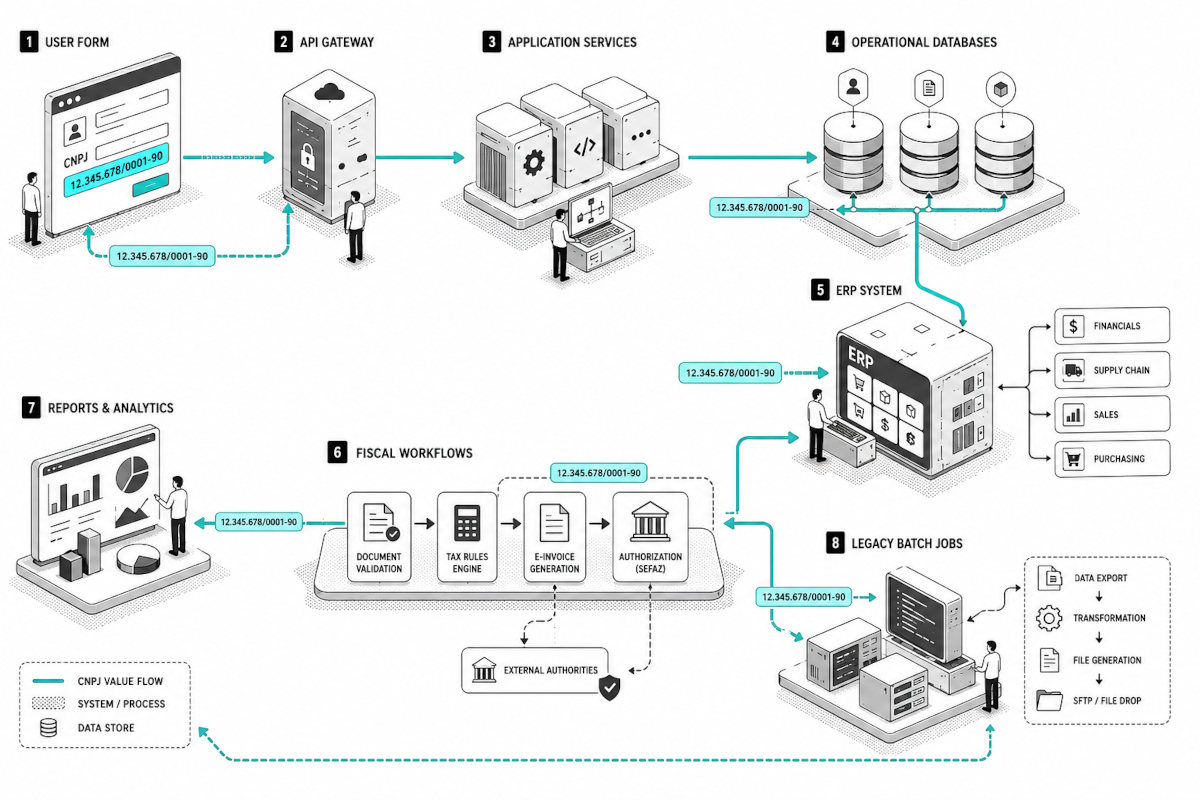
That is why alphanumeric CNPJ readiness should not be treated as a minor formatting update. It is an enterprise impact analysis problem. CNPJ values move through business workflows: they are entered, validated, stored, transformed, matched, exchanged, reported, reconciled, and audited. A change in the identifier format can expose assumptions that have been buried for years across applications, databases, batch jobs, reports, and third-party systems.
The production risk is not that every system will fail. The risk is that teams may only test the obvious layer and miss the downstream dependency that matters most. Before changing validation logic or updating input masks, organizations need to understand the full path of CNPJ across the enterprise. That impact analysis becomes the foundation for deciding what to test, what to fix, what to prioritize, and which vendors or internal teams need to be involved before go-live.
Why Impact Analysis Must Come Before Remediation
For most organizations, CNPJ is not limited to a single application or database column. It often appears across customer records, supplier records, branch registration, billing, procurement, invoicing, fiscal reporting, integrations, analytics, audit trails, and legacy processing. That means alphanumeric CNPJ readiness starts with a simple but critical question: where does CNPJ actually flow?
A proper impact analysis should identify where CNPJ enters the organization, where it is stored, where it is validated, where it is transformed, where it is exchanged with external parties, and where it is used in reporting or reconciliation. It should also uncover whether the value is treated as a numeric field, a formatted string, a matching key, a lookup value, or a business identifier inside rules and workflows. These assumptions matter because the new format does not only affect input validation. It can affect storage, integrations, downstream processing, and auditability.
This is especially important in large enterprise environments where ownership is distributed. One team may own the customer portal, another may own the ERP, another may manage fiscal integrations, and another may maintain the data warehouse. A change that looks complete in one system can still fail when the value reaches a downstream process owned by another team or vendor.
Impact analysis gives teams scope before remediation. Without it, organizations may update the most visible systems first and discover late in testing that an older API, stored procedure, batch file, report, or third-party connector still assumes numeric-only CNPJ. With it, teams can prioritize high-risk systems, define regression test coverage, assign ownership, sequence vendor conversations, and decide where code changes are actually required.
For technical leaders, this changes the modernization question from “Which validation function do we update?” to “Which business processes depend on numeric-only assumptions?” That distinction is what separates a narrow code fix from production readiness.
What to Test Across the Application Layer
The first visible impact of the alphanumeric CNPJ will usually appear in application screens: customer registration, supplier onboarding, branch setup, tax profile management, admin tools, mobile apps, internal back-office workflows, and search forms. These are the places users will notice first if the system still expects a numeric-only value.
Testing should go beyond whether the field accepts letters. Teams need to confirm that users can enter, edit, save, retrieve, search, and update alphanumeric CNPJ values without breaking the workflow. Input masks, validation messages, required-field behavior, copy-and-paste handling, formatted and unformatted values, lowercase input, special characters, leading zeros, and maximum field length should all be tested as part of the user journey.
Just as important, systems must continue to accept existing numeric CNPJs. The new format does not invalidate current identifiers, so regression testing needs to cover both formats. A system that supports alphanumeric CNPJ but accidentally rejects an existing numeric CNPJ has created a different production problem.
The application layer also includes backend validation and business logic. Many enterprises have stricter checks behind the user interface: shared utility libraries, regex rules, check-digit calculations, duplicate detection, customer and supplier matching, document normalization, exception handling, audit logs, and logging routines. A front-end update may allow the new value to pass the form, but the backend may still reject it before the transaction is completed.
This is why testing should follow the full workflow, not the field. Create a customer. Update a supplier. Search for a branch. Submit an invoice. Trigger an integration. Review the audit trail. Reopen the record. Export the data. The goal is not only to prove that the CNPJ field accepts a new format. The goal is to prove that the business process still works when that identifier moves through the application.
What to Test Across Data, APIs, and Integrations
Databases, APIs, and integrations are often where alphanumeric CNPJ issues become harder to detect. A user-facing application may appear ready, but the value still has to survive storage, retrieval, synchronization, validation, transformation, and exchange across connected systems.
At the data layer, teams should review whether CNPJ is stored as a numeric value, text value, formatted string, normalized identifier, or matching key. Numeric column types, check constraints, stored procedures, triggers, indexes, data-quality rules, and master data management routines may all contain assumptions that reject or damage alphanumeric values. A safe principle is to treat CNPJ as a text-based business identifier with explicit validation, not as a number.
APIs introduce another layer of risk. OpenAPI or Swagger definitions, JSON schemas, XML schemas, REST endpoints, SOAP services, API gateways, message queues, webhooks, and third-party validation services may still define CNPJ as numeric-only. Even when your system accepts the new format, a connected system may reject the payload, return an unexpected error, or silently transform the value in a way that causes later reconciliation issues.
This is where contract testing becomes essential. Teams should test request and response payloads, field types, length rules, validation behavior, error handling, retry logic, and downstream acceptance. The question is not only “Can our application send an alphanumeric CNPJ?” It is also “Can every system that receives, stores, forwards, or reports that value handle it correctly?”
Integration testing should include ERP connectors, CRM platforms, supplier portals, customer portals, payment systems, fiscal platforms, tax integrations, procurement tools, and external data providers. These systems may be owned by different teams or vendors, which makes early impact analysis especially important. Vendor dependency can become a production risk when it is discovered too late.
For CNPJ readiness, data and integration testing should prove continuity across the full chain: create the record, store the identifier, retrieve it, send it through an API, process it in connected systems, report on it, and reconcile it afterward. Anything less leaves room for a downstream failure that only appears after production traffic begins.
What to Test Across ERP, Fiscal, Reporting, and Analytics Workflows
For Brazil-facing enterprises, CNPJ is often embedded deep inside ERP, fiscal, finance, procurement, and compliance workflows. It may appear in customer master data, supplier master data, branch registration, invoicing, billing, procurement, accounts payable, accounts receivable, tax reporting, fiscal document workflows, government-facing integrations, and third-party fiscal platforms. That makes this part of the readiness effort especially important for ERP owners, finance operations, tax technology teams, and compliance leaders, not only developers.
The testing question is not simply whether an ERP screen accepts an alphanumeric CNPJ. Teams need to confirm that the identifier can move through the full transaction lifecycle. Can a supplier be onboarded? Can a customer record be updated? Can an invoice be issued? Can a fiscal document be generated? Can tax reporting still run? Can accounts payable and receivable workflows still reconcile correctly? Can downstream compliance reports still identify the correct legal entity?
Reporting and analytics deserve separate attention because failures may not appear immediately. A transaction may complete successfully, but an ETL job could cast CNPJ as a number, a BI tool could infer the wrong data type, a CSV export could corrupt the value, or a data warehouse schema could reject letters. Dashboards, reconciliation reports, and audit reports may then show incomplete or incorrect results after the operational workflow appears to have passed.
This is where CNPJ readiness becomes a business-continuity issue. ERP and fiscal processes are often tied to revenue, procurement, tax obligations, supplier operations, and audit readiness. A small identifier-format assumption can create downstream exceptions that affect invoicing, reporting, reconciliation, or compliance review.
Testing should therefore include both transaction workflows and evidence workflows. It is not enough to create or update a record. Teams should also verify the exported files, fiscal outputs, data warehouse records, BI reports, audit logs, reconciliation reports, and exception queues that depend on that record. The goal is to prove that the organization can operate, report, and audit correctly when alphanumeric CNPJ values enter production.
Why Legacy Systems and Batch Jobs Require Special Attention
Legacy systems are often the hardest part of alphanumeric CNPJ readiness because the assumptions are less visible. A modern application may expose validation rules in a shared service or API contract. Older systems may hide them inside COBOL programs, mainframe jobs, RPG applications, Delphi screens, stored procedures, fixed-width file layouts, nightly batch jobs, file transfer workflows, or hard-coded masks.
These environments may have treated CNPJ as numeric for years because the old format allowed that assumption to work. A batch job may cast the value as a number before matching records. A fixed-width file may expect only digits in a specific position. A legacy validation routine may strip non-numeric characters. A stored procedure may reject letters. A report generation job may silently drop records that do not match the expected pattern.
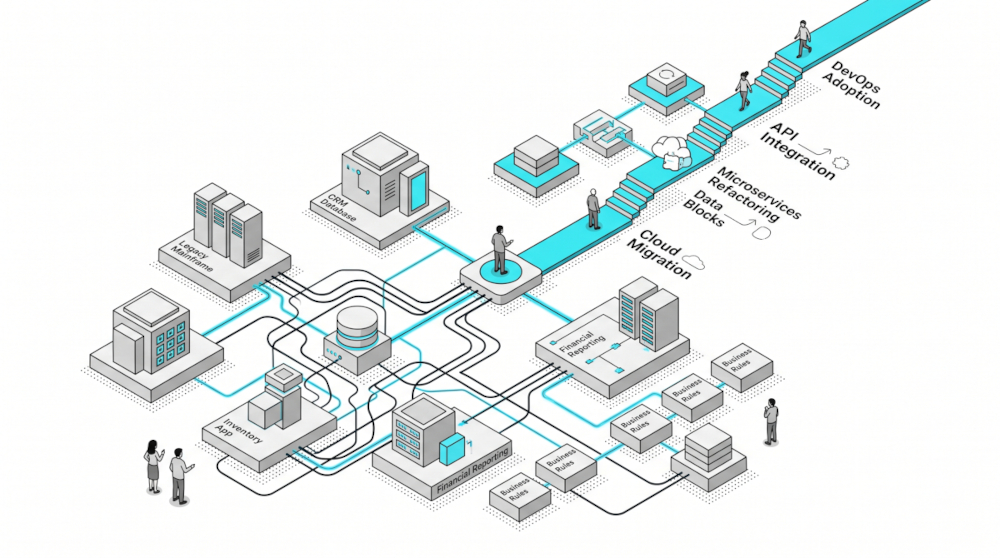
The risk is not only technical failure. It is operational uncertainty. Many legacy workflows are poorly documented, owned by a small number of specialists, or dependent on retiring subject-matter experts. Business rules may exist only inside code, scripts, jobs, or undocumented system behavior. CodeAura’s platform context specifically emphasizes that legacy systems often contain valuable business logic but become risky when that logic is poorly documented, hard to change, and dependent on shrinking expertise.
For CNPJ readiness, legacy testing should include more than application transactions. Teams should test nightly jobs, file imports, file exports, scheduled reports, reconciliation routines, fiscal file generation, exception handling, rollback behavior, and operational monitoring. They should also review whether downstream systems receive the CNPJ exactly as expected after each transformation.
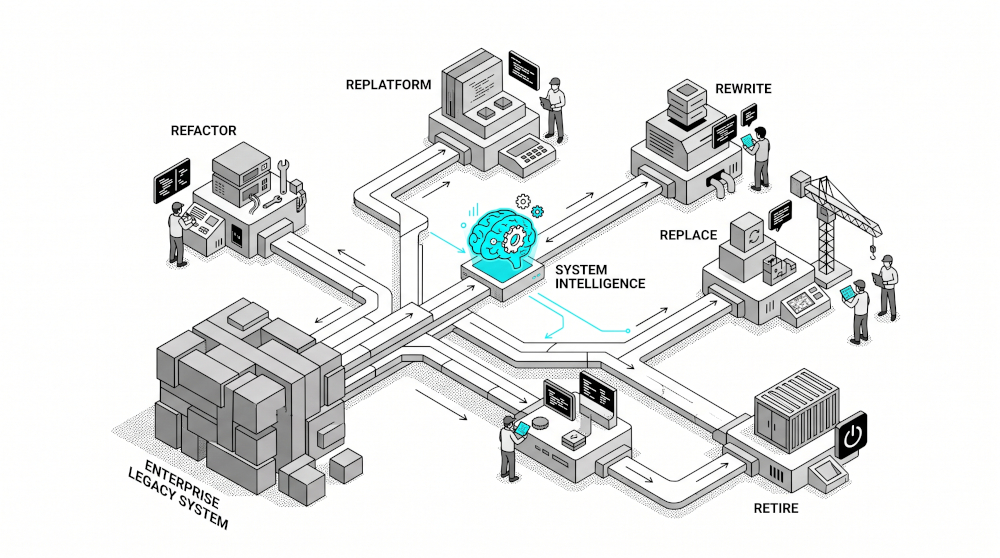
This is where impact analysis becomes a modernization readiness exercise. Before teams can safely change legacy code, they need to know where CNPJ appears, which jobs depend on it, which business rules reference it, which files carry it, and which downstream processes consume it. CodeAura’s documentation-first approach is relevant here because it helps teams make legacy systems visible before modernization decisions are made.
For older estates, the goal should not be to guess where the CNPJ logic lives. The goal should be to map it, understand it, test it, and then change it with control.
Turn Impact Analysis Into a Testing and Remediation Plan
Alphanumeric CNPJ readiness should end with a prioritized plan, not a long, unranked list of possible changes. Once teams know where CNPJ appears across applications, databases, APIs, integrations, ERP workflows, reports, and legacy jobs, the next step is to decide what must be tested first, what must be fixed first, and who owns each dependency.
Not every system carries the same level of risk. A low-volume internal reference table may not need the same urgency as a customer master data process, supplier onboarding flow, invoicing workflow, tax reporting integration, or government-facing fiscal system. Prioritization should consider business criticality, regulatory relevance, transaction volume, external exposure, integration complexity, ownership clarity, vendor dependency, legacy risk, and the operational impact of failure.
The testing plan should cover both valid and invalid scenarios. Teams should test existing numeric CNPJs, valid alphanumeric CNPJs, invalid alphanumeric values, invalid check digits, formatted and unformatted values, lowercase input, special characters, leading zeros, maximum field length, search behavior, create and update workflows, API payloads, CSV import and export, ERP flows, fiscal workflows, batch jobs, BI reports, audit logs, rollback scenarios, and third-party integrations. The goal is full workflow confidence, not isolated function coverage.
This is where CodeAura Analysis fits naturally. CodeAura is designed to help organizations assess the impact of the alphanumeric CNPJ across applications, databases, APIs, integrations, business logic, reports, and legacy systems. The Analysis package can help identify affected systems, high-risk code paths, validation logic, data model issues, integration dependencies, testing requirements, remediation priorities, and potential production risks.
For organizations that do not yet know where CNPJ appears, Discovery may be the first step. For teams that already have a mapped scope, CodeAura Analysis can turn that knowledge into a structured readiness plan. Code Changes can then follow the analysis phase to update validation logic, input masks, schemas, tests, APIs, and affected code. This reflects CodeAura’s broader modernization principle: system understanding should come before system transformation.