
How Smaller Firms Are Winning Legacy Modernization Deals Against Industry Giants
The End of Scale Dominance in Legacy Modernization
For decades, legacy modernization has been defined by a single assumption: the bigger the firm, the safer the choice. Enterprises entrusted transformation initiatives to large system integrators with vast teams, global delivery models, and deeply entrenched methodologies. In high-stakes environments—particularly across banking, healthcare, and manufacturing—scale became synonymous with reliability.
But that assumption is no longer holding.
A fundamental shift is underway in how modernization is evaluated and executed. Enterprises are beginning to recognize that while large firms bring capacity, they do not always bring efficiency. Massive teams often translate into layered coordination, slower execution cycles, and rising costs—without a proportional increase in outcomes.
At the same time, the nature of legacy systems themselves has changed the equation. Many organizations are now operating with decades-old COBOL systems, fragmented documentation, and critical knowledge locked within shrinking pools of experienced engineers. The challenge is no longer just about manpower—it is about understanding, speed, and precision.
This is where smaller firms are finding their opening.
Instead of competing on scale, they are competing on intelligence. By leveraging AI-driven platforms, automation, and more agile delivery models, boutique consultancies and mid-sized firms are achieving levels of efficiency that were previously only possible with large teams. What once required dozens of engineers and months of discovery can now be accelerated dramatically with the right tools.
The result is a quiet but meaningful disruption: smaller firms are no longer just participating in modernization deals—they are winning them.
This shift is not hypothetical. It reflects a broader change in enterprise buying behavior. Decision-makers are starting to prioritize outcomes over optics, speed over size, and clarity over capacity. In this new environment, competitive advantage is being redefined.
Legacy modernization is no longer a game of who has the most people. It is becoming a test of who can extract the most value from every person involved.
Why Large System Integrators Have Historically Won
To understand why smaller firms are now gaining ground, it’s important to first acknowledge a simple truth: large system integrators didn’t dominate legacy modernization by accident. Their advantage was built on structural strengths that aligned closely with enterprise expectations—especially in regulated industries where risk tolerance is low.
Access to Specialized Talent
Large firms have long maintained deep benches of legacy expertise. From COBOL and mainframe engineers to domain specialists in banking and healthcare systems, they’ve been able to assemble teams with highly specific skill sets on demand.
This mattered because legacy environments are rarely standardized. Each system carries decades of custom logic, regulatory adaptations, and undocumented dependencies. Enterprises naturally gravitated toward partners who could field teams capable of navigating that complexity without hesitation.
Established Methodologies
Over time, large integrators developed structured delivery frameworks designed to reduce uncertainty. These methodologies—often refined across hundreds of engagements—provided a sense of predictability in otherwise unpredictable modernization efforts.
For enterprise buyers, this translated into reassurance. Clearly defined phases, governance models, and reporting structures created the perception of control, even in large-scale transformations.
Perceived Lower Risk
Brand reputation has played a significant role in decision-making. Engaging a globally recognized firm has often been viewed as a risk mitigation strategy in itself.
For CIOs and CROs, the logic is straightforward: if something goes wrong, choosing an established provider is easier to justify internally than taking a chance on a smaller, lesser-known firm. This perception has historically tilted procurement decisions toward large players, regardless of actual delivery efficiency.
Ability to Scale Teams Quickly
Perhaps the most visible advantage has been scale. Large firms can rapidly deploy sizable teams, often leveraging offshore delivery centers to parallelize workstreams.
In traditional modernization models—where much of the effort involves manual code analysis, documentation, and refactoring—this ability to “throw more people at the problem” has been a defining capability.
The result is a model where scale became the primary proxy for capability. The more people a firm could deploy, the more confident enterprises felt about execution.
But that model was built for a different era—one where manual effort was the only way to understand and transform legacy systems.
That assumption is now being challenged.
The Structural Weaknesses Hidden Behind Scale
While large system integrators have built their dominance on scale, that same scale introduces structural inefficiencies—many of which are becoming increasingly difficult to ignore in today’s modernization landscape.
Heavy Reliance on Manual Labor
Despite advancements in tooling, a significant portion of legacy modernization within large firms remains highly manual. Code analysis, documentation, dependency mapping, and refactoring are often performed by teams of engineers working line by line through decades-old systems.
This approach creates two immediate constraints: time and consistency.
Manual processes inherently slow down discovery and delivery. More importantly, they introduce variability—different engineers may interpret the same system differently, leading to inconsistencies in outputs and rework downstream. In large engagements, this compounds quickly.
What was once accepted as “the only way” is now being questioned.
High Cost Structures
Scale comes at a cost—literally.
Large teams, layered management structures, offshore coordination, and extended timelines all contribute to significantly higher engagement costs. For enterprises, this often translates into multi-million-dollar modernization programs with long payback periods.
In an environment where CFOs are increasingly focused on efficiency and measurable ROI, this cost structure is becoming harder to justify. The expectation is shifting toward delivering more value with fewer resources—not the other way around.
Slower Execution
With size comes complexity. Large firms operate through multiple layers of governance, approvals, and coordination mechanisms designed to manage risk—but these same mechanisms often slow down execution.
Decisions take longer. Changes require alignment across teams. Iteration cycles stretch.
In modernization projects, where requirements evolve as systems are uncovered, this lack of agility becomes a critical disadvantage. Speed is no longer just a benefit—it’s a requirement.
Inconsistent Knowledge Transfer
One of the most overlooked challenges in large-scale engagements is knowledge fragmentation.
With multiple teams working across different components of a system, knowledge is often distributed rather than centralized. Documentation may exist, but it is frequently incomplete, inconsistent, or difficult to navigate.
This creates long-term risks:
- Rework due to missing context
- Dependency on specific individuals or teams
- Reduced maintainability post-modernization
For enterprises already struggling with undocumented legacy systems, this compounds the very problem modernization is supposed to solve.
The irony is clear: the very factor that made large firms dominant—scale—is now introducing friction across cost, speed, and quality.
As enterprise expectations evolve, these weaknesses are no longer tolerable trade-offs. They are becoming decision drivers.
And this is precisely where the competitive landscape begins to shift.
What Enterprise Buyers Actually Value Today
The criteria for selecting modernization partners is undergoing a fundamental shift. While scale, brand recognition, and team size once dominated decision-making, enterprise buyers are now recalibrating their priorities around outcomes that directly impact speed, cost, and long-term sustainability.
This shift is more pronounced in regulated industries, where modernization is no longer optional—it is driven by compliance mandates, operational risk, and competitive pressure.
Speed to Value
Modernization initiatives are no longer measured solely by completion—they are measured by how quickly they begin delivering value.
CIOs and CTOs are under increasing pressure to accelerate transformation timelines without increasing risk. Lengthy discovery phases and multi-year roadmaps are becoming less acceptable, particularly when business environments are changing in parallel.
Enterprises now favor partners who can:
- Rapidly understand existing systems
- Shorten time between analysis and execution
- Deliver incremental value early in the process
Speed is no longer a trade-off against quality—it is a core requirement.
Cost Efficiency and Measurable ROI
CFOs are placing greater scrutiny on modernization spend. Large, open-ended engagements with unclear ROI are increasingly difficult to justify.
Instead, organizations are prioritizing:
- Transparent pricing models
- Predictable delivery outcomes
- Clear linkage between investment and business impact
The expectation has shifted from “complete the project” to “demonstrate value at every stage.”
This creates an environment where leaner, more efficient delivery models have a clear advantage.
Transparency and System Understanding
One of the biggest historical pain points in legacy modernization has been the lack of visibility into existing systems.
Undocumented codebases, tribal knowledge, and opaque architectures create uncertainty—not just during modernization, but long after projects are completed.
Today’s buyers are demanding:
- Clear, accessible documentation
- Real-time insights into system behavior
- The ability to understand dependencies and risks
Modernization is no longer just about rewriting systems—it is about making them understandable and governable.
Flexibility and Adaptability
Legacy modernization is rarely linear. As systems are analyzed, new complexities emerge. Requirements evolve. Priorities shift.
Rigid delivery models struggle in this environment.
Enterprises now value partners who can:
- Adapt quickly to new findings
- Adjust scope without excessive overhead
- Iterate continuously rather than follow fixed plans
Flexibility has become a competitive differentiator—particularly in complex, high-stakes transformations.
The underlying shift is clear:
Enterprises are no longer buying capacity—they are buying outcomes.
They are prioritizing partners who can deliver faster insights, clearer understanding, and measurable progress without the burden of excessive scale. This redefinition of value is what’s opening the door for a new class of competitors.
And it sets the stage for how smaller firms are beginning to win.
The New Playbook: How Smaller Firms Are Winning
The shift in enterprise expectations has created an opening—but smaller firms are not winning by chance. They are succeeding because they are operating with a fundamentally different playbook, one that prioritizes speed, precision, and technology-driven execution over brute force scale.
Faster Discovery and Proposal Cycles
One of the most critical phases in any modernization effort is initial system discovery. Traditionally, this process could take weeks or even months, requiring large teams to manually analyze codebases, map dependencies, and reconstruct system logic.
Smaller firms are compressing this timeline dramatically.
By leveraging AI-assisted analysis and automated documentation, they are able to:
- Understand system architectures in a fraction of the time
- Identify risks and dependencies early
- Produce highly accurate proposals with tighter scopes
This speed creates a significant competitive advantage—not just in delivery, but in the sales cycle itself. Enterprises increasingly favor partners who can demonstrate understanding quickly and confidently.
Leaner Teams with Higher Output
Instead of deploying large teams, smaller firms are optimizing for output per engineer.
With the right tooling and workflows, a small, highly skilled team can now accomplish what previously required dozens of contributors. This shift reduces overhead while maintaining—or even improving—delivery quality.
The benefits are immediate:
- Lower project costs
- Tighter communication loops
- Greater accountability across team members
This model aligns directly with enterprise demand for efficiency and measurable ROI.
Greater Agility in Execution
Smaller firms inherently operate with fewer layers of management and less bureaucratic friction. This allows them to move faster, make decisions quickly, and adapt as new information emerges during modernization.
In practice, this means:
- Faster iteration cycles
- Real-time adjustments to scope and priorities
- Closer alignment with client needs throughout the project
In complex legacy environments, where unknowns are the norm, this level of agility becomes a decisive advantage.
Technology-Driven Advantage
The most important differentiator, however, is the strategic use of technology.
Smaller firms are not attempting to replicate the scale of large integrators—they are replacing it.
By embedding AI and automation into their delivery models, they are reducing reliance on manual effort across:
- Code analysis
- Documentation generation
- Dependency mapping
- Transformation workflows
This shift transforms how work gets done. Instead of scaling through headcount, they scale through intelligence.
The result is a new competitive model:
Smaller firms are delivering outcomes that rival—or exceed—those of much larger competitors, without the associated cost and complexity.
They are not constrained by the traditional rules of modernization. They are redefining them.
How AI Platforms Like CodeAura Eliminate the Scale Gap
The emergence of AI-driven platforms is not just enhancing modernization—it is fundamentally changing who can compete.
Where scale once determined capability, platforms like CodeAura are redefining the equation by embedding intelligence directly into the delivery process. This shift enables smaller firms to operate with the effectiveness of much larger teams—without inheriting their inefficiencies.
Matching (or Exceeding) Discovery Capabilities
One of the most immediate advantages AI introduces is in system discovery.
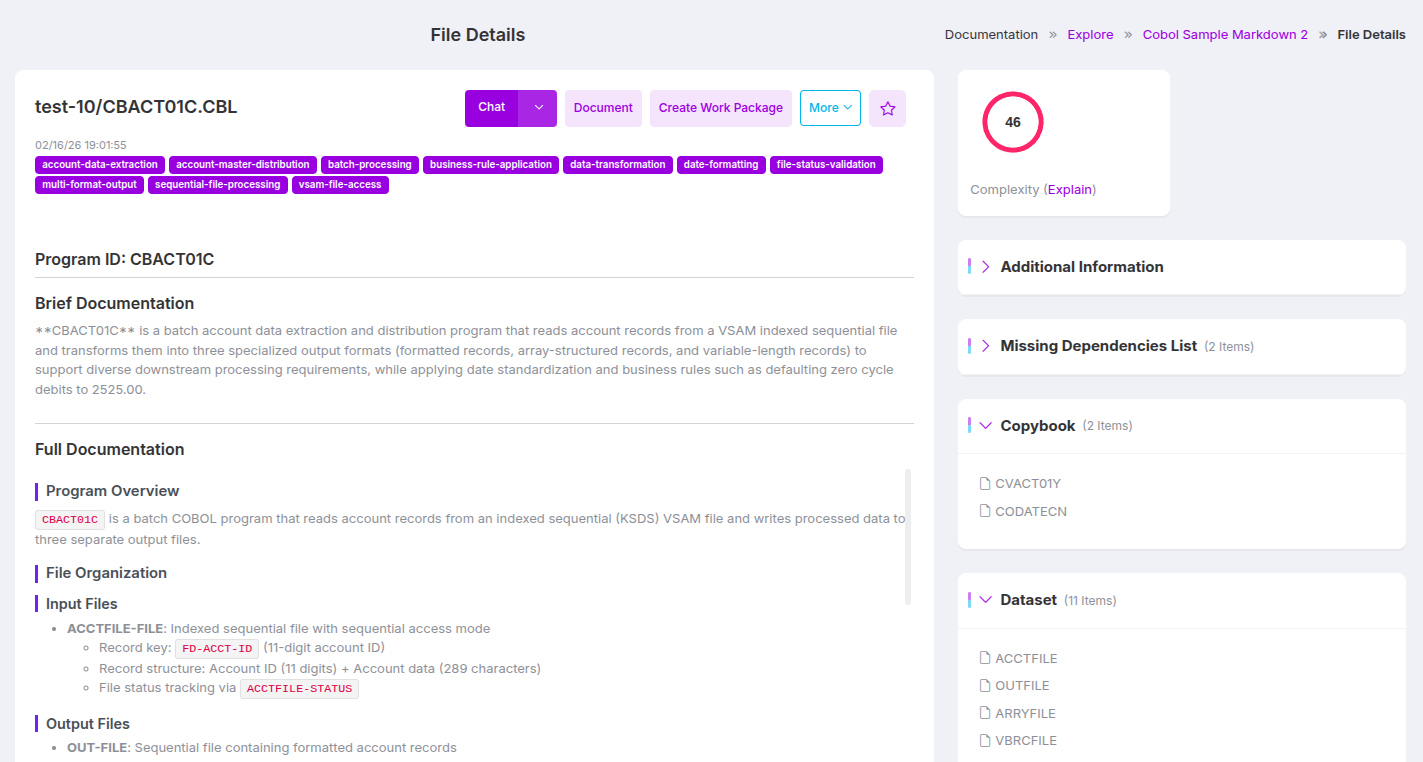
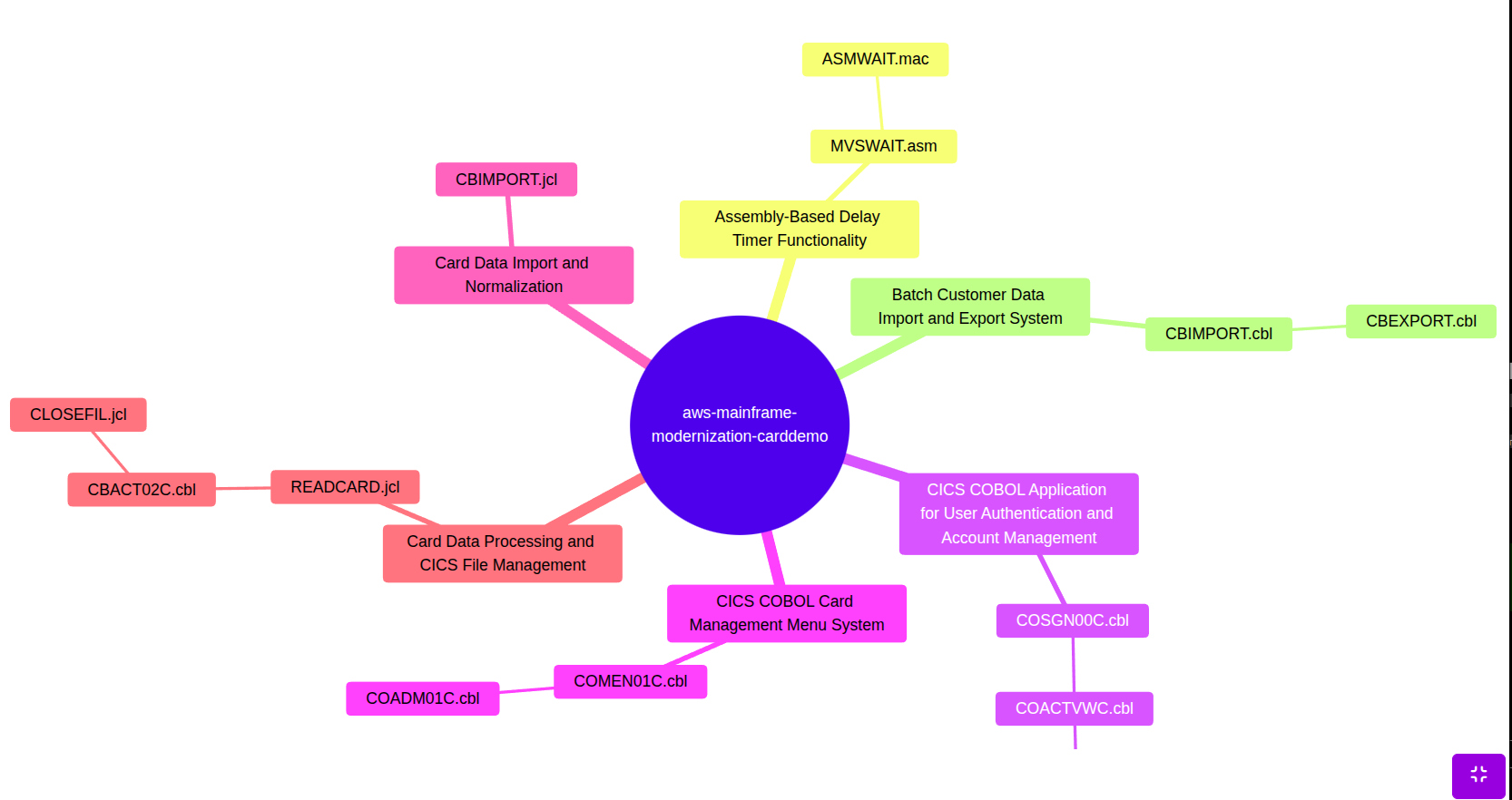
Instead of relying on weeks of manual analysis, CodeAura automates the process of understanding legacy systems. It generates structured documentation, maps dependencies, and surfaces system logic in a way that is both comprehensive and accessible.
This allows smaller firms to:
- Rapidly analyze complex codebases
- Produce system-level insights with minimal manual effort
- Enter client conversations with a high degree of confidence
The traditional advantage of large firms—deploying teams to “figure things out”—is effectively neutralized.
Reducing Dependence on Large Teams
Access to knowledge has historically been tied to access to people. Large firms maintained an advantage because they could distribute expertise across teams.
CodeAura breaks this dependency.
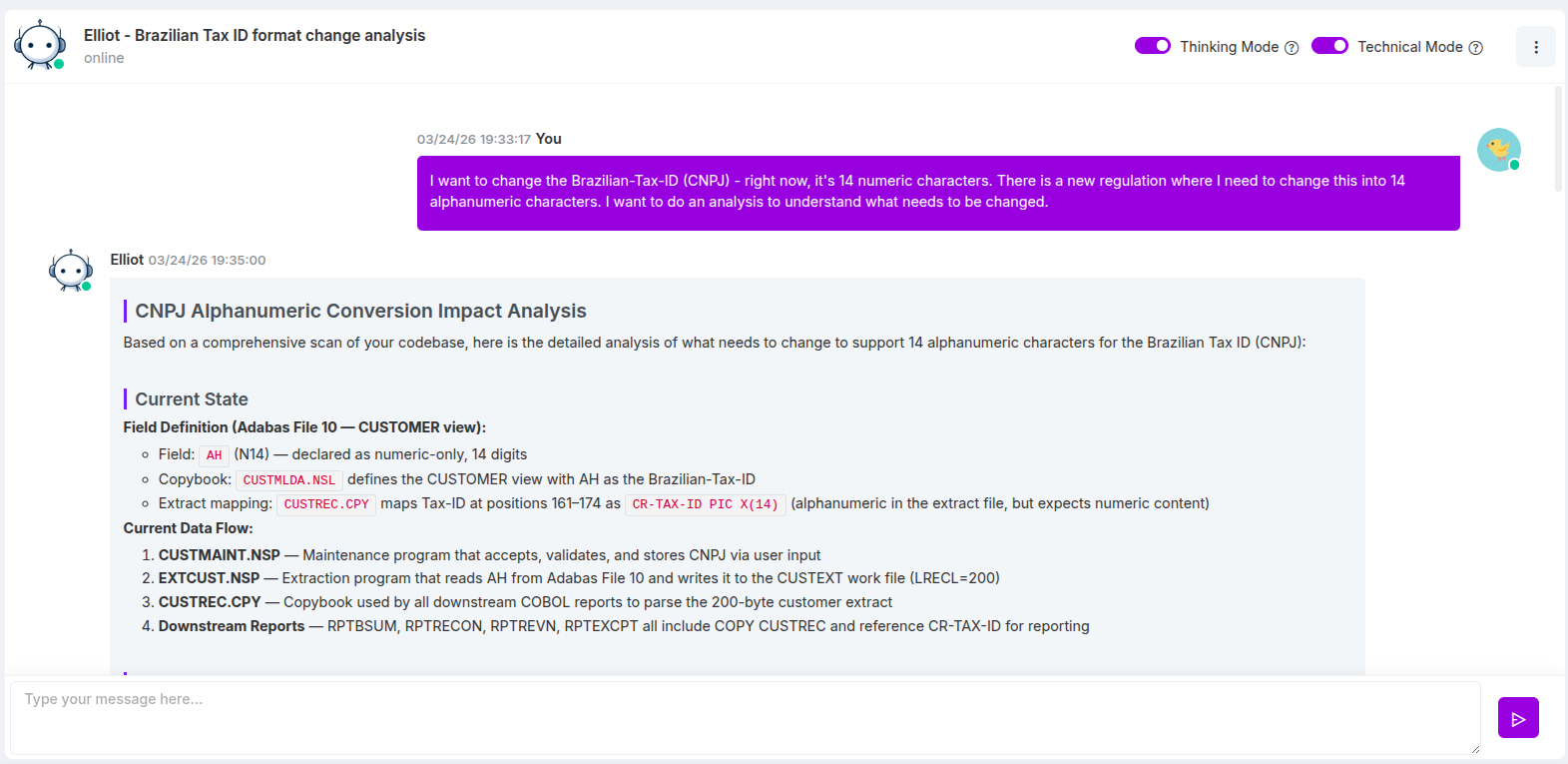
By centralizing system knowledge into an AI-powered, queryable interface, teams can access critical insights instantly—without needing a specialist for every component. Engineers, architects, and even non-technical stakeholders can interact with the system and retrieve relevant information in real time.
This results in:
- Fewer bottlenecks
- Reduced reliance on niche expertise
- More autonomy across team members
Smaller teams become significantly more capable, without increasing headcount.
Accelerating Delivery
Beyond discovery, AI directly impacts execution.
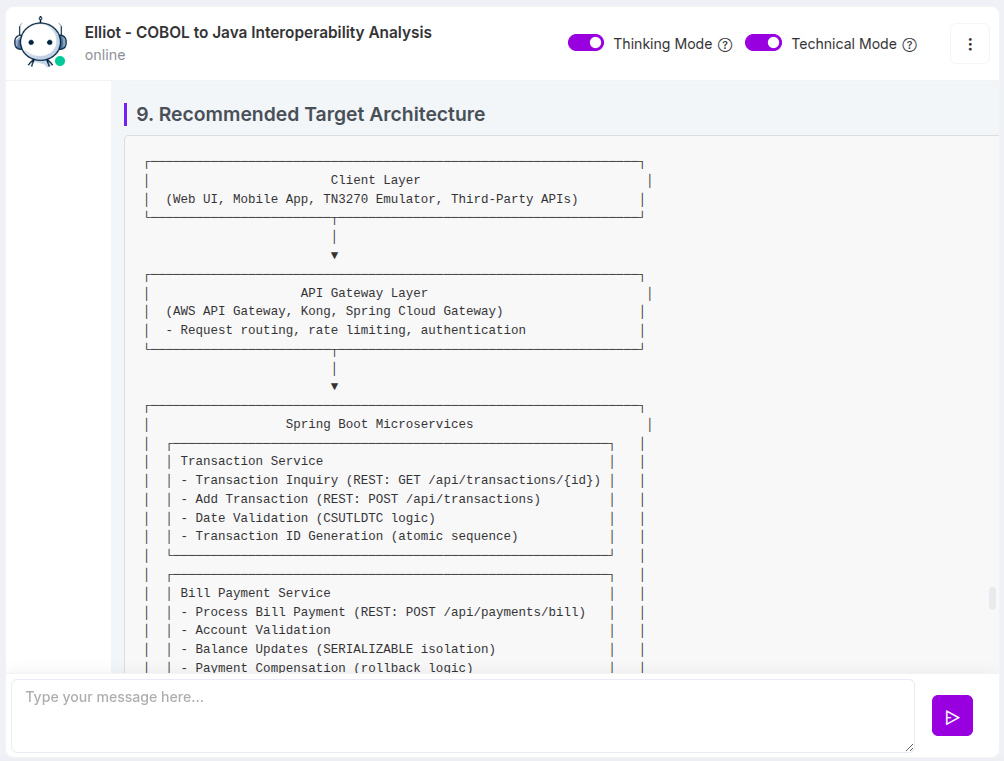
CodeAura supports structured workflows and code generation capabilities that streamline modernization tasks. Whether it’s translating legacy logic into modern languages or generating implementation-ready artifacts, the platform reduces the manual burden traditionally associated with transformation.
For delivery teams, this means:
- Faster development cycles
- Reduced rework
- More consistent outputs across the project
Projects that once required extended timelines and large teams can now move forward with greater speed and precision.
Improving Consistency and Quality
One of the most understated advantages of AI-driven platforms is standardization.
Large teams often introduce variability—different interpretations, inconsistent documentation, and uneven quality across deliverables. CodeAura enforces structure by generating consistent, repeatable outputs across all stages of modernization.
This leads to:
- Higher-quality documentation
- Clearer system understanding
- More predictable delivery outcomes
For enterprises, this consistency is not just a technical benefit—it is a risk reduction mechanism, particularly in regulated environments where auditability and traceability are critical.
CodeAura does not just make modernization faster—it changes the economics of delivery.
By embedding intelligence into every phase of the process, it enables smaller firms to compete on equal footing with large system integrators—while maintaining the advantages of agility, efficiency, and cost control.
The scale advantage is no longer exclusive. It has been abstracted into the platform.
From Headcount to Intelligence: A New Competitive Benchmark
For years, enterprise decision-making in legacy modernization has been guided by a simple metric: how many people can a vendor deploy?
That metric is rapidly becoming obsolete.
As AI-driven platforms reshape how modernization work is executed, the true measure of capability is no longer tied to headcount—it is tied to how effectively intelligence is applied across the delivery lifecycle.
The Shift in Evaluation Criteria
Traditional vendor evaluations emphasized:
- Team size and global presence
- Number of certified specialists
- Capacity to scale resources quickly
These factors served as proxies for execution capability in a world dominated by manual effort.
Today, a new set of criteria is emerging:
- Speed of system understanding
- Efficiency of execution
- Consistency of outputs
- Ability to reduce risk while accelerating delivery
This represents a fundamental shift from input-based evaluation (resources) to output-based evaluation (results).
Productivity Per Engineer as the New Metric
AI is compressing the amount of effort required to perform core modernization tasks. Activities that once required extensive manual work—such as code analysis, documentation, and transformation—can now be significantly accelerated or partially automated.
As a result, the question is no longer:
“How large is the team?”
It is:
“How much value can each team member deliver?”
Smaller, AI-enabled teams are demonstrating that a handful of engineers—equipped with the right tools—can outperform much larger groups operating under traditional models.
This shift has direct implications for cost, speed, and scalability.
Intelligence as a Force Multiplier
Platforms like CodeAura act as force multipliers by embedding domain understanding, system context, and automation into the workflow itself.
This changes the role of the engineer:
- From manually analyzing code → to validating AI-generated insights
- From writing documentation → to refining structured outputs
- From navigating unknown systems → to operating with immediate context
The result is a workforce that is not just smaller—but significantly more effective.
Rethinking Risk in Vendor Selection
Historically, larger firms were perceived as the safer choice due to their scale. But as intelligence-driven delivery models mature, that perception is being challenged.
Risk is no longer just about vendor size. It is increasingly about:
- Visibility into the system being modernized
- Predictability of delivery outcomes
- Dependence on manual processes vs. automated workflows
In many cases, AI-enabled approaches reduce risk by improving transparency and consistency—areas where traditional models often struggle.
The competitive benchmark has changed.
It is no longer defined by how many people can be deployed, but by how intelligently the work is executed.
Firms that recognize this shift—and align their delivery models accordingly—are not just competing more effectively. They are redefining what “capability” means in legacy modernization.
Rewriting the Rules of Legacy Modernization Competition
The competitive landscape for legacy modernization is no longer evolving—it has already changed.
What was once a domain dominated by scale, brand recognition, and workforce size is now being reshaped by speed, intelligence, and efficiency. The rules that governed vendor selection for decades are being rewritten in real time.
For smaller firms, this is not just an opportunity—it is a structural advantage.
From Size to Leverage
The defining question in modernization is no longer:
“Who has the largest team?”
It is:
“Who can deliver the most value with the least friction?”
AI-driven platforms have introduced a new form of leverage—one that allows firms to amplify their capabilities without proportionally increasing their resources. This fundamentally alters how competition works.
Smaller firms no longer need to match the scale of large integrators. They need to outperform them in how effectively they use intelligence.
A More Level Playing Field
For the first time, boutique consultancies and mid-sized firms can enter high-stakes modernization deals without being immediately disadvantaged.
They can:
- Demonstrate deep system understanding early in the sales cycle
- Deliver faster, more precise proposals
- Execute with lean teams while maintaining high output
- Provide greater transparency throughout the engagement
This levels the playing field in a way that was previously not possible.
The barrier to entry is no longer headcount—it is capability.
A Shift in Enterprise Mindset
Enterprises are also becoming more pragmatic in how they evaluate partners.
The historical bias toward large firms is being replaced by a more outcome-driven mindset:
- Can this partner help us move faster?
- Can they reduce our costs without increasing risk?
- Can they give us better visibility into our systems?
When smaller firms can confidently answer “yes” to these questions—backed by AI-enabled delivery—they become not just viable options, but preferred ones.
The Strategic Implication
This shift carries a broader implication for the industry:
Legacy modernization is transitioning from a labor-driven market to an intelligence-driven market.
In this new model:
- Efficiency outperforms scale
- Clarity outperforms complexity
- Outcomes outperform optics
Firms that continue to rely solely on traditional delivery models will find it increasingly difficult to compete—not because they lack talent, but because they lack leverage.
The conclusion is clear.
Legacy modernization is no longer a game reserved for the largest players. It is a domain where smaller, smarter, and more agile firms can compete—and win—by redefining how work gets done.
The question is no longer whether you can compete with larger firms.
It is whether you are using the right leverage to do so.