The Silent Liability: Why Undocumented Legacy Code Drains Enterprise Productivity
Undocumented legacy systems represent one of the most persistent and underestimated sources of operational drag inside large enterprises. While technology leaders often view modernization as a long-term strategic initiative, the daily burden of undocumented COBOL, PL/I, Assembler, and RPG logic quietly erodes productivity in ways that rarely appear on budgets but consistently impact delivery velocity, risk posture, and workforce morale.
At scale, undocumented code becomes a systemic bottleneck. Engineers spend disproportionate time deciphering business rules rather than implementing new ones. Routine maintenance tasks stretch from hours to days as teams piece together logic scattered across decades-old monoliths. A typical Fortune 500 institution may see 30–50 percent of engineering time consumed by rediscovery work alone—effort that creates no new value and compounds technical debt with every release cycle.
For CIOs and CTOs, this creates a dual burden: productivity drops as teams slow down, and opportunity costs rise as strategic initiatives are delayed or under-resourced. The absence of documentation also constrains architectural flexibility. When no one fully understands how subsystems interact, risk-averse behavior prevails, freezing innovation and increasing dependence on a shrinking pool of SMEs.
This silent liability ultimately forces organizations into a defensive operating model—one where the primary goal is to avoid breaking the system rather than improving it. AI-powered documentation platforms like CodeAura shift this dynamic by transforming opaque legacy environments into transparent, navigable, and governable assets, allowing teams to reclaim productivity that has been locked away for years.
Operational Blind Spots: The Cost of Rediscovering COBOL, PL/I, and Assembler Logic
In enterprises running decades-old mainframe workloads, rediscovery has become an expensive and unavoidable ritual. Every change request—no matter how small—triggers a forensic investigation into code that no one fully understands. This is especially true in systems written in COBOL, PL/I, Assembler, and CLIST/JCL, where the logic is often deeply interwoven, sparsely commented, and dependent on conventions long forgotten.
The result is an operational model built around detective work. Engineers trace execution paths manually, map copybooks by hand, and validate assumptions through trial and error. In many regulated organizations, a single enhancement can require 20–40 hours of rediscovery before meaningful development even begins. Multiplied across hundreds of change requests per year, this becomes a multimillion-dollar drag on productivity.
These blind spots also compound risk. Undocumented interdependencies lead to unexpected side effects, increasing the likelihood of production incidents and regression cycles. Because no canonical system documentation exists, different teams form competing interpretations of business logic—introducing rework, inconsistent implementations, and failed audit trails. Incident response becomes slower and more error-prone, as teams must reconstruct context under pressure.
AI-driven analysis changes this dynamic. Platforms like CodeAura systematically interpret legacy languages, extract execution flows, surface cross-program dependencies, and reconstruct business rules with precision. Instead of beginning each change request with guesswork, teams start with authoritative, automatically generated documentation and visual system maps. Rediscovery time drops dramatically, and engineering capacity can be reallocated to modernization and innovation—not archeology.
The Talent Cliff: SME Dependency, Knowledge Loss, and Onboarding Delays
Enterprises reliant on legacy systems face an increasingly urgent demographic challenge: the pool of subject-matter experts who understand COBOL, PL/I, and Assembler is shrinking faster than organizations can replace them. Many of these systems were built 30–40 years ago, and the engineers who wrote them are nearing retirement. This creates a “talent cliff” where critical institutional knowledge is walking out the door without a structured mechanism to capture it.
This dependency introduces measurable operational and financial risk. SMEs become single points of failure—overloaded with support tickets, code reviews, and emergency triage responsibilities. Their availability dictates delivery timelines. When an SME is on vacation or unavailable, entire projects stall. In some highly regulated banks and insurers, onboarding a new engineer onto a legacy system can take 9–12 months before they are safe to contribute to production code. The ramp-up time alone translates into significant cost overruns and delays in modernization roadmaps.
Meanwhile, knowledge loss becomes an audit and compliance liability. Without documented logic flows, organizations cannot demonstrate how financial calculations, eligibility rules, or transaction validations operate internally—an increasingly common requirement under frameworks like Basel IV, HIPAA, and PCI-DSS. When only retiring SMEs can answer these questions, enterprises face unacceptable operational exposure.
AI-driven platforms like CodeAura mitigate the talent cliff by converting tacit knowledge into structured, searchable intelligence. Automated documentation, interaction diagrams, data lineage maps, and business rule extraction make the system understandable to any engineer, not just long-tenured experts. Onboarding times shrink, SME bottlenecks dissolve, and responsibility shifts from a handful of individuals to the entire engineering organization. In effect, AI becomes the continuity layer that preserves institutional memory long after the original authors are gone.
Compliance at Risk: How Missing Documentation Exposes Regulated Enterprises
In regulated sectors—banking, healthcare, insurance, and manufacturing—documentation is not optional infrastructure. It is a compliance artifact. Regulators increasingly expect organizations to demonstrate not only what their systems do, but how they do it. When legacy systems lack traceability, enterprises face heightened exposure across audits, model validations, security assessments, and operational risk reviews.
Undocumented logic obscures the provenance of critical business rules. For financial institutions operating under Basel IV and OCC guidance, the inability to map calculation logic to code paths creates material model-risk findings. Healthcare organizations under HIPAA face similar challenges: without clear documentation, it becomes difficult to verify that protected health information flows are properly constrained, encrypted, or logged. Manufacturers operating under NIST frameworks must show how control systems enforce safety requirements—yet legacy PLC integrations often remain undocumented islands.
This gap also complicates incident management. When outages occur, teams must manually reconstruct logic to diagnose downstream impact. The absence of authoritative documentation increases mean time to resolution and elevates the likelihood of repeat events. In some industries, extended downtime directly correlates with regulatory penalties or required disclosures.
AI-powered documentation fundamentally reshapes this landscape. Platforms like CodeAura generate line-level traceability, interaction diagrams, and data lineage maps that auditors can follow without relying on tribal knowledge. Business rules are extracted directly from code, reducing interpretation risk and ensuring consistency across systems. Instead of scrambling to prepare audit materials at year-end, organizations maintain continuous compliance—with living documentation that updates as the code evolves.
The shift is transformative: compliance moves from a reactive cost center to a proactive capability, reducing audit friction while strengthening operational resilience.
The Financial Burden: Quantifying Maintenance Waste, Rework, and Outage Costs
The financial impact of undocumented legacy systems is rarely captured in a single line item, which makes the burden easy to underestimate. Yet when broken down into its operational components—maintenance inefficiency, rework, and incident-related costs—the economic picture becomes unambiguous. Undocumented code is expensive, and the costs compound annually.
Maintenance is the most visible drain. Engineers routinely spend 40–60 percent of their time deciphering code before making changes, inflating labor costs and delaying delivery. For large enterprises with mainframe teams numbering in the hundreds, this can translate into $5–$15 million per year in rediscovery effort alone. Because teams work without reliable documentation, even simple updates risk unforeseen ripple effects, creating additional cycles of testing, validation, and quality assurance.
Rework is equally costly. When multiple teams interpret undocumented logic differently, inconsistencies emerge across applications, downstream reports, and integration layers. These inconsistencies often go undetected until an audit, incident, or system migration forces a reconciliation effort. Correcting these discrepancies can multiply project timelines and inflate budgets by 20–40 percent.
Outages impose the heaviest financial penalty. Production incidents traceable to misunderstood or undocumented legacy logic are both common and expensive. Downtime in a major financial institution can cost $5,000–$20,000 per minute depending on transaction volume and customer impact. Without documentation, mean time to resolution increases dramatically because engineers must rebuild understanding in real time. These delays not only carry direct cost but also increase regulatory exposure when critical systems remain unavailable.
AI-driven documentation platforms like CodeAura directly reduce these financial burdens. By creating an authoritative source of truth—including flow diagrams, business rule extraction, and component interactions—teams eliminate rediscovery cycles and reduce defect rates. Incident response accelerates because engineers start with a clear understanding of logic paths and dependencies. Rework decreases as interpretations align. The result is a measurable reduction in operational spend and a modernization strategy grounded in accurate, data-driven insights.
AI-Powered Documentation: Turning Tribal Knowledge Into Institutional Intelligence
AI-driven documentation represents a fundamental shift in how enterprises understand and manage legacy systems. Instead of relying on manual interpretation or scarce SMEs, organizations can now generate comprehensive, consistent, and always-current documentation directly from the source code. This transforms previously opaque monoliths into transparent systems that anyone on the engineering team can navigate.
For decades, documentation has been treated as a secondary activity—valuable but difficult to maintain, especially in environments where code changes frequently and teams are stretched thin. As a result, most legacy estates lack even basic artifacts: system diagrams, data lineage, control flows, and business rule inventories. AI removes this friction entirely. By interpreting COBOL, PL/I, JCL, Assembler, and other legacy languages at scale, platforms like CodeAura automatically produce structured outputs that would take humans months to create.
These outputs extend far beyond static text. AI can infer functional groupings, identify cross-application dependencies, reconstruct job streams, and highlight undocumented side effects. Flowcharts, interaction diagrams, component diagrams, and data mappings give teams immediate contextual awareness. Executives benefit as well: non-technical stakeholders can finally understand how systems operate without needing to interpret code.
Crucially, AI-generated documentation becomes a living asset. As code evolves, documentation updates automatically, eliminating drift—a chronic problem in large enterprises. This ensures that modernization initiatives, integration programs, and compliance reviews all operate from the same authoritative knowledge base.
By institutionalizing tribal knowledge, AI collapses onboarding timelines, reduces SME dependency, and ensures continuity despite workforce turnover. The result is a legacy landscape where every engineer can contribute confidently and every executive can make decisions backed by real, system-level insight.
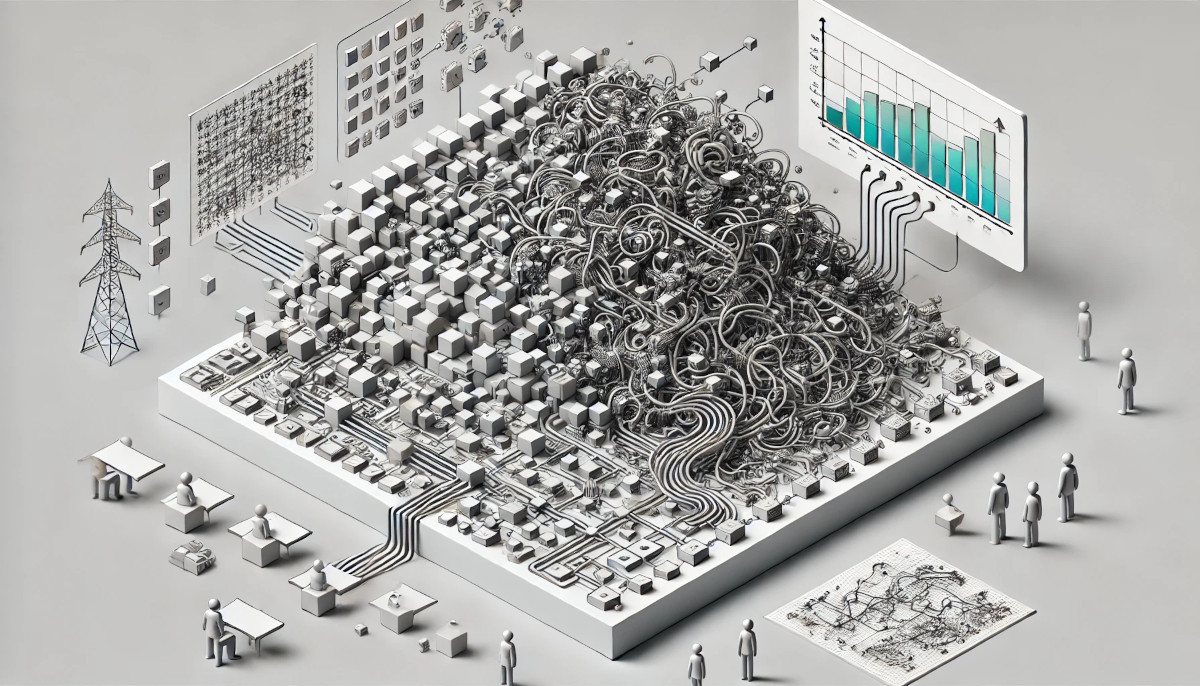
From Chaos to Clarity: How CodeAura Accelerates Modernization and Reduces Risk
Where traditional modernization efforts begin with uncertainty—months of discovery, brittle manual documentation, and incomplete system understanding—CodeAura replaces that ambiguity with clarity from day one. By analyzing legacy codebases at scale and producing structured, contextual intelligence, the platform eliminates the guesswork that typically derails modernization timelines and budgets.
CodeAura’s automated extraction of business rules, flowcharts, interaction diagrams, component maps, and data lineage provides a unified, end-to-end view of the legacy environment. This enables architects and engineering leaders to design modernization paths with confidence, grounded in an accurate understanding of dependencies, edge cases, and integration contracts. The platform’s hybrid automation model further extends this advantage by supporting both technical and non-technical workflows, allowing product teams, compliance officers, and business analysts to engage directly with system logic through natural-language interfaces.
Risk reduction is equally significant. By making legacy behavior transparent, CodeAura reduces the likelihood of regressions during code refactoring or system decomposition. Modernization teams can simulate the impact of proposed changes, validate coverage, and compare legacy and modernized logic side-by-side. This lowers test effort, minimizes defects, and reduces the probability of costly production incidents.
For organizations seeking to migrate from COBOL or JCL to modern languages like Java or JavaScript, CodeAura accelerates the path forward with guided migration capabilities. The platform identifies modernizable components, prioritizes workloads based on complexity and business impact, and generates target-language equivalents that preserve functional behavior. This transforms multi-year modernization programs into phased, manageable initiatives backed by verifiable traceability.
In industries where mistakes can trigger compliance findings or service disruptions, CodeAura becomes the stabilizing force—turning undocumented complexity into predictable, governable systems that are genuinely ready for cloud adoption, integration modernization, and digital transformation.
The Strategic Payoff: Building a Compliant, Modernization-Ready Enterprise
When undocumented legacy systems are replaced with AI-driven clarity, enterprises unlock more than operational efficiency—they gain a strategic advantage. Documentation becomes a living, trustworthy asset. Engineering teams shift from reactive maintenance to proactive modernization. Compliance leaders gain continuous transparency. And executives gain a foundation for technology decisions built on evidence, not assumptions.
The benefits compound across the organization. Development throughput increases because teams no longer waste time rediscovering code. Outage frequency and severity decline as engineers understand root causes faster and avoid unintended side effects. Compliance reviews run smoothly with auditable, automatically generated documentation that stands up to regulatory scrutiny. The enterprise becomes more resilient and more adaptable.
Just as importantly, modernization initiatives—often delayed for years due to uncertainty—finally become actionable. With CodeAura providing system maps, business rule inventories, dependency analysis, and migration guidance, organizations can decompose monoliths with confidence or move targeted workloads to the cloud without risking production stability. Technical debt becomes measurable, prioritizable, and ultimately reducible.
This shift has financial implications as well. Reduced maintenance waste, faster onboarding, fewer incidents, and accelerated modernization all contribute directly to cost savings. But the real payoff is the ability to innovate. When legacy systems stop acting as a barrier, enterprises can pursue new digital products, cloud-native capabilities, and data-driven operations without dragging decades of uncertainty behind them.
By converting undocumented code into institutional intelligence, CodeAura helps organizations move from slow, risk-heavy operations to a modern, compliant, and strategically aligned technology foundation—one capable of sustaining competitive advantage in regulated markets for decades to come.
Ready to eliminate hidden legacy costs and reduce modernization risk?
Discover how CodeAura transforms undocumented systems into transparent, compliant, and migration-ready architectures.
Schedule a demo today and see your legacy landscape with clarity for the first time.