Operational Risk in Mainframe Environments: How AI-Synced Documentation Prevents Outages
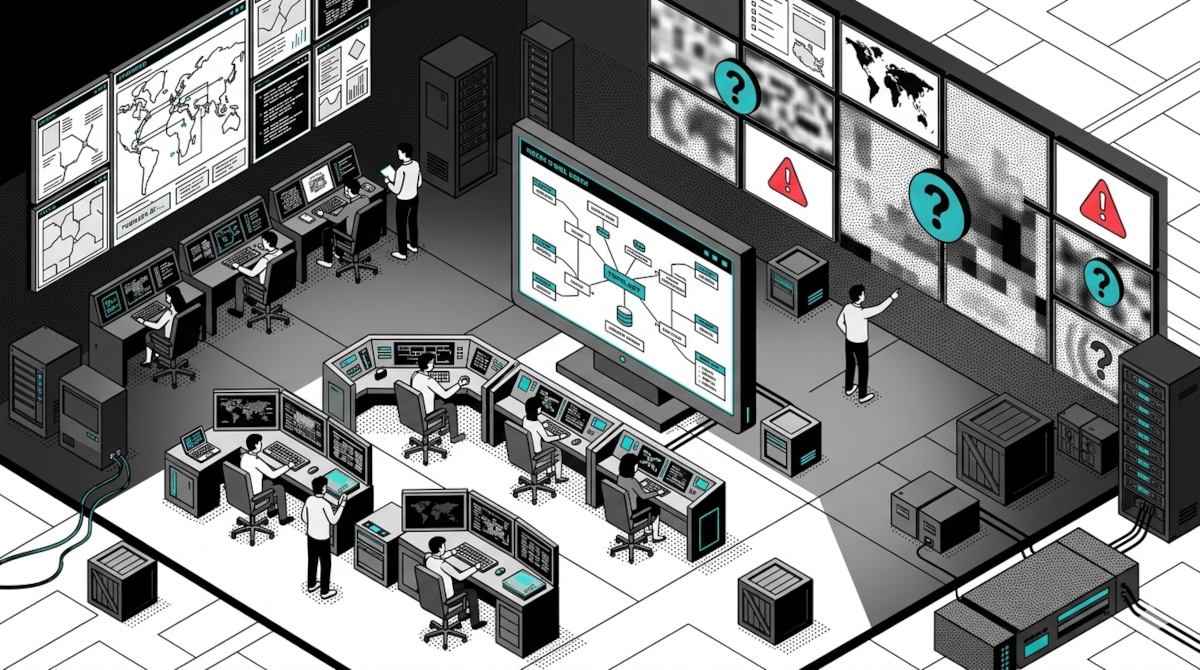
The Hidden Risk Surface of Modern Mainframe Operations
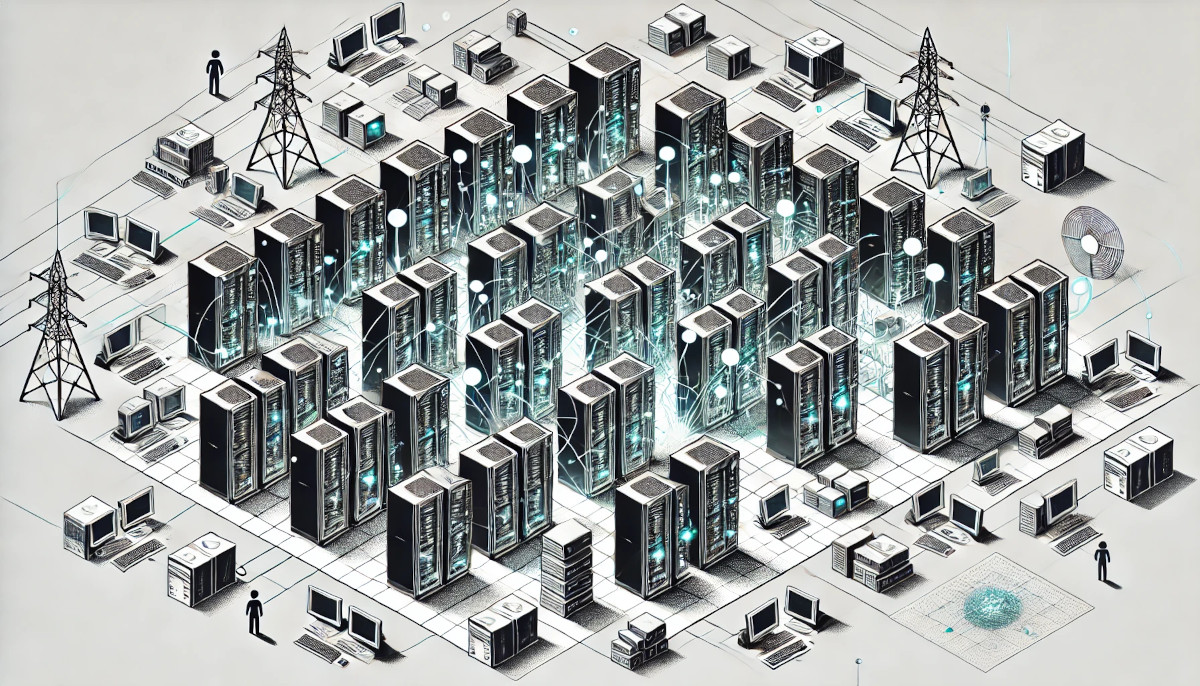
Mainframes remain the transactional core of banking, healthcare, and manufacturing, yet their operational risk profile has expanded faster than most organizations can manage. Decades of incremental enhancements, emergency patches, and undocumented business logic have produced sprawling COBOL and JCL ecosystems whose internal behaviors are rarely understood in full. What used to be predictable batch flows and well-defined IMS/DC interactions now behave as dynamic systems with thousands of implicit touchpoints.
The result is an expanding risk surface that is invisible to most executive teams. A single variable reused across modules, a VSAM file updated by an untracked utility, or an IMS transaction dependent on a deprecated routine can trigger cascading failures. These failures are rarely isolated; they propagate through settlement workflows, claims adjudication platforms, and manufacturing execution systems that depend on mainframe stability.
In regulated sectors, this opacity directly converts to business exposure. Basel IV operational risk mandates, HIPAA auditability requirements, and PCI-DSS controls all assume that system behavior can be documented, reconstructed, and consistently verified. Yet for many enterprises, more than 40% of their mainframe logic has no usable documentation. When no one can explain why a job runs, what dependencies it touches, or how a change will impact downstream processes, even routine updates become risk events.
The core challenge is not that mainframes are outdated; it’s that organizations are blind to the internal mechanics of the systems they depend on. Operational risk thrives in this blindness. Modernization cannot begin, and outages cannot be prevented, until visibility is restored—and that visibility must be continuous rather than episodic. AI-synced documentation is rapidly emerging as the only scalable method for achieving that level of clarity.
Where Outages Begin: Undocumented Dependencies in COBOL, JCL, IMS, and VSAM
Most mainframe outages do not originate from catastrophic hardware failures. They begin in the quiet corners of the software stack—places where undocumented dependencies and tribal knowledge suppress operational clarity. When an institution has thousands of COBOL modules, hundreds of JCL job streams, and decades-old IMS/DC transactions stitched together through implicit data-sharing patterns, even a minor change can trigger a systemic failure.
A common source of disruption is hidden cross-module logic. A COBOL routine may be updated to address a defect, yet that routine may also feed a nightly reconciliation process or trigger conditional updates to VSAM datasets. If those connections aren’t documented—and often they aren’t—operations teams can’t anticipate the downstream impact. The result is a batch job that halts mid-run or produces malformed records that impair settlement cycles or claims processing.
Another risk driver is shared data structures whose lineage is poorly understood. VSAM files updated by one JCL step may be consumed by dozens of other workflows, some of which depend on very specific record formats or field-level behaviors. A single schema adjustment can break multiple upstream and downstream interactions in ways that are difficult to trace without automated mapping.
IMS/DC environments introduce their own subtle risks. Transactions may appear isolated, yet they commonly rely on legacy message processing logic, copybooks with undocumented overrides, and control blocks that reflect years of incremental modifications. When one of these components is altered without full visibility into its relationships, cascading failures can emerge hours or days later—making root-cause analysis both slow and incomplete.
What makes these dependencies dangerous is not their complexity, but their invisibility. Outages manifest when teams operate on the assumption that their systems behave as designed, rather than as evolved. And with manual documentation unable to keep up with the dynamic nature of these environments, the risk is not just operational downtime—it is the erosion of confidence in the institution’s ability to control its own critical infrastructure.
Why Traditional Documentation Fails in Regulated, Legacy-Centric Enterprises
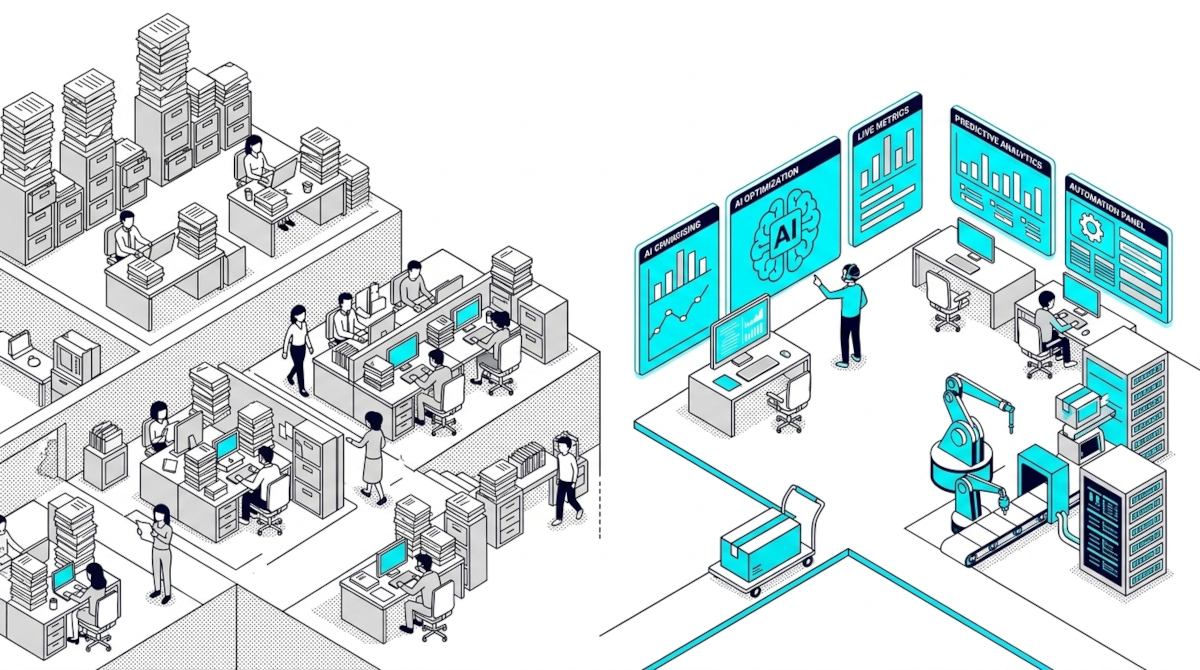
Enterprises have long relied on static documentation practices—confluence pages, Word files, architecture diagrams, and manual code walkthroughs—to keep mainframe knowledge accessible. But these methods were not designed for systems whose logic has evolved continuously over 30 to 50 years. They assume that documentation can “catch up” to the codebase, when in reality the codebase is changing faster, more frequently, and with more hidden interdependencies than any human-led documentation cycle can capture.
The first failure point is latency. By the time documentation is written, reviewed, and approved, it is often weeks behind production. In regulated environments where even a single untracked change can trigger audit exposure, this lag is unacceptable. Basel IV, HIPAA, and PCI-DSS require not just documentation, but evidence of timely documentation, something traditional processes cannot reliably provide.
The second failure point is granularity mismatch. Documentation written by humans gravitates toward high-level summaries: system overviews, data descriptions, architectural intent. But outages rarely originate at the architecture level. They emerge from misplaced conditionals, obsolete copybooks, deprecated routines, and brittle data transformations deep inside COBOL or JCL. Traditional documentation cannot scale to capture these micro-level details across millions of lines of code, nor can it maintain accuracy as logic evolves.
The third failure is tribal knowledge dependency. Many enterprises rely on senior engineers who carry decades of mental models about which routines are fragile, which transactions are interdependent, and which VSAM files serve as shared state across workflows. As these employees retire or shift roles, organizations inherit undocumented systems whose operational risk is both invisible and compounding.
Lastly, traditional documentation models lack bidirectional validation. They describe what teams believe the system does, not what the system actually does. In legacy estates, this gap becomes dangerous. It leads to false confidence, poor change management decisions, and audit trails that cannot withstand scrutiny.
Without real-time, code-synchronized documentation, regulated enterprises face an unavoidable reality: their documentation will always be outdated, incomplete, or strategically misaligned with the true behavior of their most critical systems. That is the foundation upon which operational risk quietly accumulates.
AI-Synced Documentation: Creating a Real-Time Source of Operational Truth
AI-synced documentation addresses the core limitation of legacy documentation methods by eliminating the gap between what the system does and what teams believe it does. Instead of relying on manual updates or individual memory, AI continuously parses, analyzes, and structures code-level insights to reflect the true state of the mainframe environment—across COBOL programs, JCL workflows, IMS/DC transactions, and VSAM interactions.
The foundation of this approach is real-time code ingestion and change detection. As new code is committed or promoted, AI agents automatically map updated logic, cross-references, data definitions, and execution flows. This ensures that every modification—no matter how small—immediately updates the documentation baseline. In regulated industries, this creates an audit-ready record of change events, dependency impacts, and historical behavior without additional manual effort.
AI-synced documentation also excels in semantic interpretation, extracting meaning from legacy constructs that are difficult for humans to track at scale. For example, it can identify when a variable’s purpose shifts across modules, when JCL steps subtly alter dataset handling, or when IMS message processing routines introduce behavioral anomalies. These insights produce a level of clarity that traditional documentation cannot achieve.
For operations teams, the value is practical and measurable. A real-time source of truth enables analysts to quickly trace batch failures, visualize data lineage, confirm whether a deprecated copybook is still active in production, or surface all routines that rely on an outdated VSAM schema. Issues that previously took days of investigation compress into minutes, reshaping how incidents are triaged and resolved.
For executives, AI-synced documentation provides something even more critical: risk visibility. It transforms mainframes from opaque systems into transparent, explorable environments where operational, architectural, and compliance risks can be quantified and mitigated. The result is a shift from reactive firefighting to proactive governance, supported by evidence rather than assumptions.
When AI and documentation operate in lockstep, enterprises gain a continuously updated, authoritative model of their legacy estate—an operational truth that is essential for preventing outages and preparing systems for modernization.
Mapping Downstream Impacts to Reduce MTTR and Strengthen Incident Response
When an outage occurs in a mainframe environment, the real challenge is not identifying the failing job—it is understanding the blast radius. A single COBOL routine can influence settlement workflows, claims adjudication pipelines, inventory systems, or customer-facing channels through layers of implicit dependencies. Without full visibility into these downstream connections, incident response becomes an exercise in trial and error, and Mean Time to Repair (MTTR) expands accordingly.
AI-synced documentation changes the equation by providing instant dependency maps that visualize how code, data, and workflows interact. Analysts can see not just where a failure occurred, but what else it touches: which VSAM datasets downstream jobs rely on, which IMS/DC transactions reference the same copybooks, and which JCL chains will be affected if a step fails or must be rolled back. This eliminates the guesswork that traditionally consumes hours of diagnostic time.
More importantly, the AI can analyze historical patterns of failures to highlight high-risk impact zones—modules or workflows that frequently amplify small defects into large outages. Knowing where systemic fragility exists allows operations teams to prioritize preventative work and adjust monitoring thresholds before issues escalate.
During incident response, AI-generated lineage graphs and execution traces compress the diagnostic cycle by revealing root cause and impact in a single view. Instead of combing through logs or reverse-engineering execution paths, teams can immediately identify which variables changed, which conditions failed, or which data movements produced unexpected outcomes.
This shift is critical in regulated sectors, where extended outages carry not just operational cost but also compliance penalties, customer trust erosion, and audit exposure. Every minute of MTTR reduction translates into tangible business value.
By making the downstream effects of change visible in real time, AI does more than improve incident response—it enables enterprises to run their legacy environments with the kind of operational precision and foresight normally reserved for modern cloud-native systems.
Pattern-Level Risk Detection: Identifying Fragile Logic, Deprecated Routines, and Compliance Gaps
Operational risk on the mainframe rarely emerges from dramatic architectural flaws. It tends to hide in the micro-patterns of code: a conditional that behaves inconsistently across modules, a deprecated subroutine still invoked by a critical job, or a data transformation logic that no longer aligns with regulatory expectations. These are the patterns that trigger outages, create reconciliation gaps, and lead to audit findings—yet they are nearly impossible for humans to spot at scale.
AI shifts this dynamic by performing pattern-level risk detection across millions of lines of COBOL, JCL, IMS message logic, and VSAM interactions. Instead of waiting for failures to surface, AI identifies fragile constructs—such as nested conditional branches, implicit fall-through logic, uninitialized variables, and copybook inconsistencies—that correlate strongly with historical defects in similar environments.
AI can also detect deprecated or high-risk routines that should no longer be used but remain embedded in production workflows. In many enterprises, these routines persist because teams don’t know where they are referenced or what dependencies would break if they’re removed. By mapping invocation paths and dependency chains, AI makes it possible to retire or refactor them safely.
For compliance teams, this level of granularity unlocks visibility that manual reviews cannot achieve. AI can flag code patterns that violate HIPAA data-handling rules, PCI-DSS encryption requirements, or Basel IV auditability standards. For example, it can identify where sensitive fields are moved without masking, where logging is insufficient for audit traceability, or where business logic violates documented control procedures.
The value of AI pattern detection is not just in identifying problems—it is in enabling risk-weighted prioritization. Executives and architects gain a clear view of which parts of the legacy estate present the greatest operational or compliance exposure, allowing modernization budgets to be targeted where they will have the highest impact.
In short, AI transforms risk from a hidden byproduct of legacy systems into a measurable, manageable dimension of operational governance.
Embedding Risk-First Modernization Into Architecture, Audit, and Change Management
Modernization initiatives often begin with technology aspirations—moving to the cloud, rewriting COBOL, or rearchitecting monoliths into services. But in regulated enterprises, modernization that ignores operational risk quickly becomes unsustainable. The most successful organizations now begin with a risk-first modernization strategy: understanding the exposure embedded in legacy systems before deciding what to transform, retire, or replatform.
Risk-first modernization starts with architectural clarity. With AI-synced documentation providing real-time insight into code paths, data lineage, and dependency networks, architects can see precisely which components are high-risk and why. This allows modernization roadmaps to be grounded in evidence, prioritizing areas with the greatest operational fragility or the highest compliance burden. Instead of rewriting what is easiest, teams focus on what is most consequential.
Audit and compliance teams play a central role in this model. Their mandates—traceability, consistency, and demonstrable control—align directly with the visibility that AI-generated documentation provides. When every code change is automatically recorded, analyzed, and mapped to its impact surface, enterprises gain a continuous audit trail that satisfies HIPAA, PCI-DSS, and Basel IV requirements without manual intervention. This reduces the audit surface area and eliminates the scramble to reconstruct logic during regulatory reviews.
Risk-first modernization also transforms change management. Traditional change control processes rely on human judgment to assess impact, which is increasingly unreliable in complex mainframe estates. AI augments these processes by automatically surfacing downstream dependencies, identifying fragile routines affected by the change, and flagging potential compliance conflicts before deployment. This not only lowers the probability of outages but also accelerates approval cycles—reducing drag on development teams while strengthening operational governance.
Ultimately, embedding risk-first principles shifts modernization from a reactive cost center to a strategic discipline. It ensures that scarce modernization budgets target areas that reduce the greatest exposure, protect regulatory standing, and stabilize mission-critical operations. For enterprises balancing innovation with accountability, this approach is not optional—it is foundational.
How CodeAura Operationalizes Mainframe Resilience Through AI Automation
CodeAura brings together the capabilities required to convert operational risk visibility into real, sustained resilience for enterprises running critical workloads on mainframes. Its AI-driven engine continuously analyzes COBOL, JCL, IMS/DC flows, VSAM interactions, and surrounding integration logic to build a living knowledge base—a dynamic model of how the legacy estate actually behaves, not how teams believe it behaves.
At the center of the platform is AI-synced documentation, which updates automatically as code evolves. This ensures that architects, operations teams, compliance officers, and modernization leaders always have access to the latest code-level insights, dependency maps, data lineage diagrams, and execution flows. With this source of truth, organizations can detect risk before it materializes and respond to incidents with precision rather than conjecture.
CodeAura also operationalizes pattern-level risk detection, surfacing fragile logic structures, deprecated routines, compliance conflicts, and hidden dependencies that expose the organization to outages or audit failures. These insights enable risk-weighted backlog planning, targeted modernization sequencing, and more informed budget allocation—critical advantages for CIOs and CTOs balancing transformation pressure with system stability.
Through integrations with Slack, JIRA, and other DevOps channels, CodeAura embeds its intelligence directly into daily workflows. Engineers can explore flowcharts, interaction diagrams, component diagrams, and documentation from within their operational tools, eliminating the friction between analysis and action. This accelerates incident response, strengthens change management, and reduces MTTR across the board.
Perhaps most importantly, CodeAura supports hybrid modernization models. It provides both the visibility required to stabilize legacy systems and the automation required to migrate code from COBOL, JCL, and related languages into modern stacks such as Java and JavaScript. This dual capability ensures that enterprises can modernize without jeopardizing regulatory compliance or operational continuity.
For organizations operating under the constraints of HIPAA, Basel IV, NIST, and similar frameworks, CodeAura delivers a strategic advantage: a continuous, AI-powered understanding of their most critical systems. It transforms legacy environments from opaque risk centers into transparent, governed, and modernization-ready platforms—reducing outages, accelerating compliance readiness, and enabling future-focused innovation.
Ready to eliminate mainframe blind spots and reduce operational risk?
Discover how CodeAura delivers real-time documentation, risk detection, and modernization intelligence for regulated enterprises.
Request a demo today and see your legacy systems with complete clarity.