Modernization Isn’t a Technical Problem — It’s a Knowledge Supply Chain Problem
Why Modernization Bottlenecks Rarely Sit in the Code
When modernization programs slow down or stall, the instinctive response is to look at technical complexity. Legacy code is dense. Platforms are outdated. Integrations are brittle. These factors are real—but they are rarely the true bottleneck.
In practice, most delays emerge before code is touched. Teams wait for explanations, clarifications, and approvals. Decisions are postponed because no one is confident about system behavior. Progress halts not because changes are impossible, but because understanding is incomplete.
This is why modernization timelines stretch even when engineering capacity is available. Developers are idle while SMEs are consulted. Architects defer decisions while dependencies are investigated. Test cycles expand to compensate for uncertainty. The friction is informational, not technical.
Enterprises often misdiagnose this as a skills shortage or tooling gap. They hire more developers, add more process, or invest in additional platforms. Yet the bottleneck persists, because the underlying constraint—access to accurate system knowledge—remains unresolved.
Recognizing this distinction is critical. Modernization does not fail because code is too complex to change. It fails because knowledge about that code does not move fast enough to support change.
The Hidden Knowledge Supply Chain Behind Every Legacy System
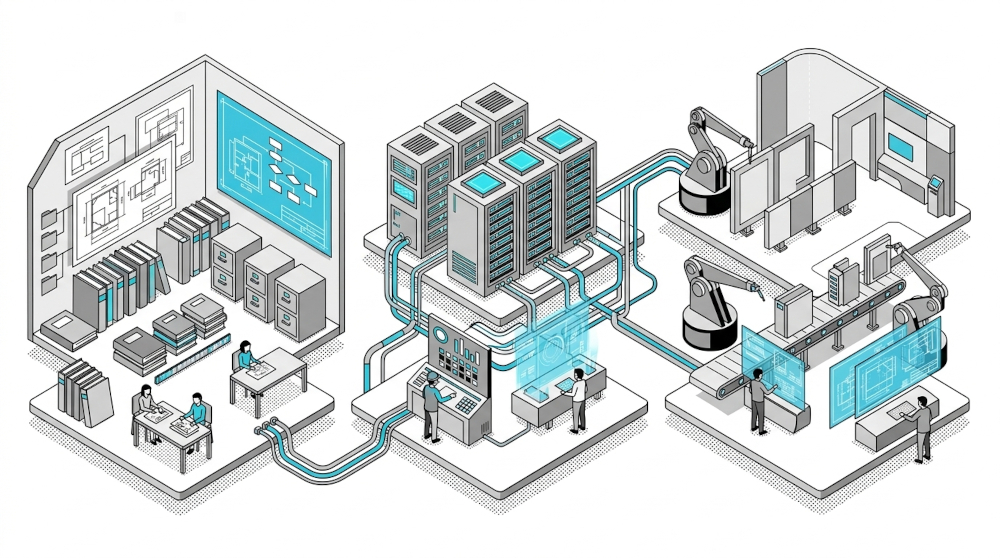
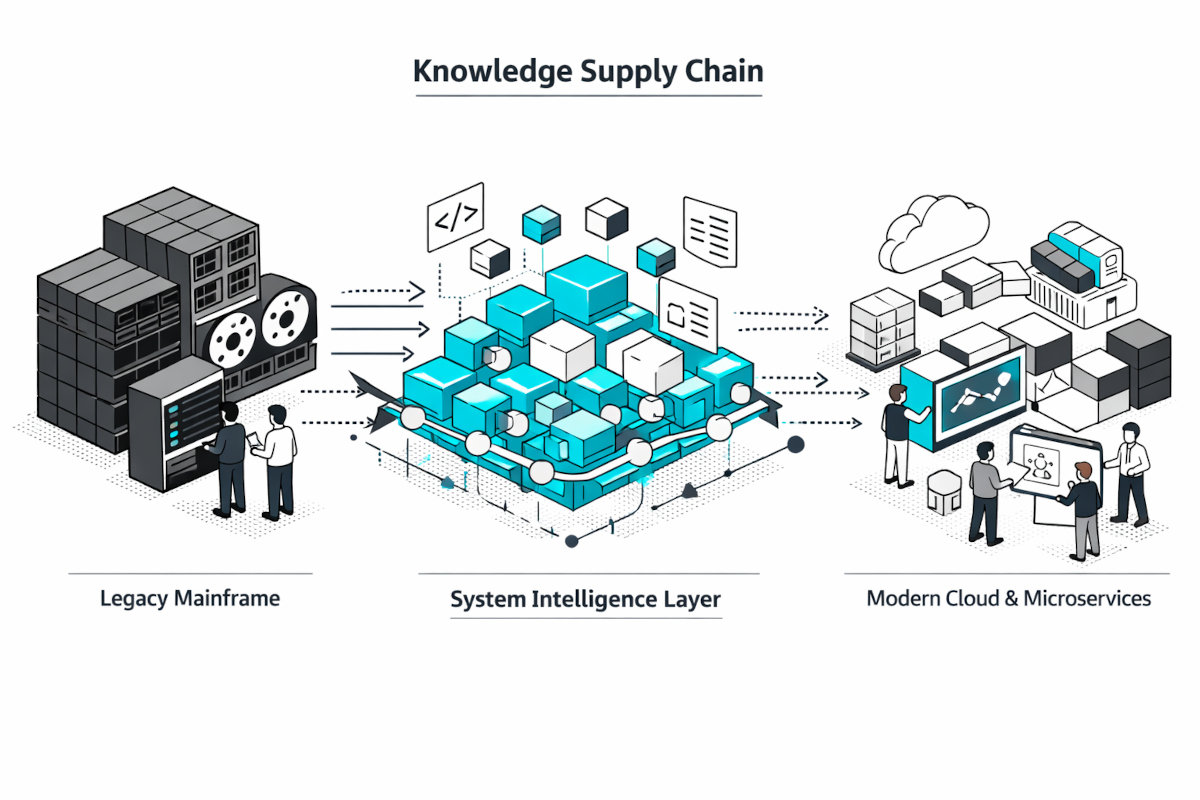
Every legacy system is supported by a knowledge supply chain. This chain includes people who understand historical decisions, artifacts that describe system behavior, and processes that move knowledge between teams. When this chain functions well, modernization progresses smoothly. When it breaks, delivery grinds to a halt.
In many enterprises, this supply chain is informal and fragile. Knowledge resides in a small group of SMEs, much of it undocumented or outdated. Project artifacts are created for immediate needs and then discarded. Handoffs between teams degrade understanding with each transition.
As modernization programs scale, these weaknesses become more pronounced. Demand for knowledge increases, but supply remains fixed—or even shrinks as experts retire or move on. The result is congestion. Knowledge becomes a scarce resource that throttles throughput.
This dynamic is rarely visible on program plans or status reports, but it drives outcomes. Teams may be staffed and funded, yet progress is gated by access to understanding.
To modernize at scale, enterprises must first acknowledge that knowledge behaves like a supply chain. It can be constrained, disrupted, and optimized. Treating it as an afterthought guarantees failure.
Where the Knowledge Supply Chain Breaks Down
The knowledge supply chain breaks down at predictable points—and often repeatedly across modernization programs.
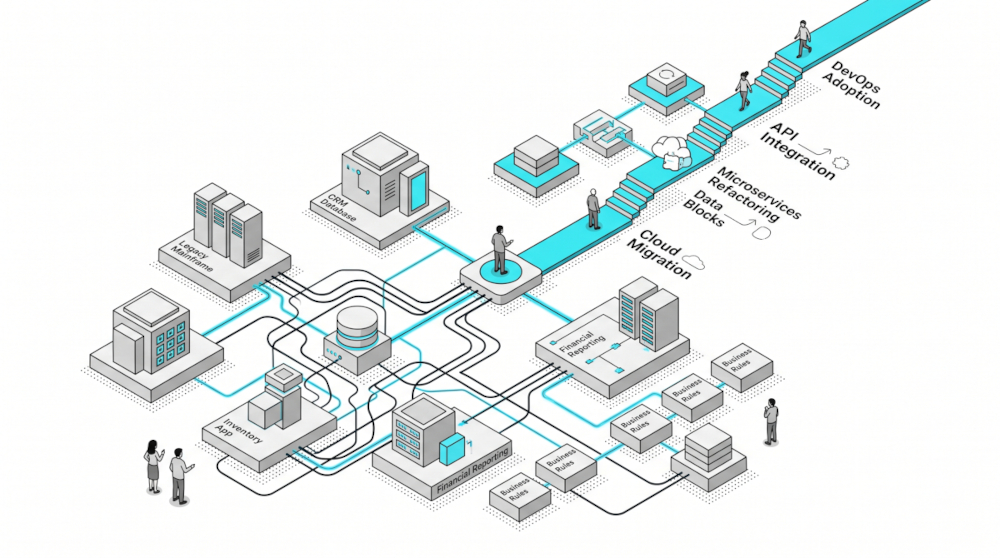
The most common failure point is SME dependency. A small number of individuals hold disproportionate system understanding. Their availability determines progress. When they are overloaded, unavailable, or no longer with the organization, delivery slows or assumptions replace facts.
The second breakdown occurs in artifact decay. Documentation created during assessments or migrations quickly becomes outdated. Because it is static and disconnected from the system itself, teams stop trusting it. Once credibility is lost, artifacts are ignored, and knowledge reverts back to people.
Another critical fracture happens during handoffs. As work moves from assessment to build, from build to test, and from delivery to operations, context is lost. Each transition strips away nuance. What remains is partial understanding, insufficient for confident decision-making.
In regulated enterprises, these breakdowns are amplified. Compliance knowledge is often embedded in historical behavior rather than explicit rules. When that context is lost, risk teams must reconstruct it manually—adding cost and delay.
These failures are not caused by poor execution. They are structural. The knowledge supply chain was never designed to scale, persist, or self-correct.
Why Scaling Modernization Fails When Knowledge Doesn’t Scale
Modernization programs scale by adding teams, increasing scope, or accelerating timelines. Knowledge rarely scales the same way. When demand for understanding increases faster than supply, throughput collapses.
This is why large programs often underperform despite significant investment. More developers are added, but decision latency increases. More parallel workstreams are launched, but dependencies multiply. Progress becomes uneven and unpredictable.
Without scalable knowledge, enterprises are forced into trade-offs. They either slow down to wait for certainty, or they move forward on assumptions. Both options are expensive. One delays value. The other increases rework and risk.
This imbalance also affects morale and retention. Teams spend more time waiting, clarifying, and reworking than delivering. Senior experts become bottlenecks rather than multipliers. The organization feels busy but not productive.
Scaling modernization requires more than scaling engineering capacity. It requires scaling understanding. Without that, modernization remains fragile—no matter how modern the technology stack becomes.
The Cost of Knowledge Friction in Regulated Enterprises
In regulated enterprises, knowledge friction is not just an efficiency problem—it is a risk and cost multiplier. When system understanding is fragmented or slow to surface, compliance activities become reactive and labor-intensive.
Audit preparation is a clear example. Teams spend weeks reconstructing how systems behave, tracing data flows, and explaining controls. This work often duplicates previous efforts, yet produces fragile evidence that must be recreated for the next audit cycle. The cost is ongoing, not episodic.
Knowledge friction also increases operational risk. When teams are unsure how systems behave, they avoid change or introduce excessive controls to compensate. Release cycles slow. Incident response becomes tentative. Risk accumulates quietly until it manifests as findings or remediation programs.
These costs are rarely attributed to knowledge gaps in financial reporting. They appear as compliance overhead, delayed initiatives, or extended project timelines. Yet the root cause is the same: understanding does not flow fast enough to support regulated change.
How System Intelligence Stabilizes the Knowledge Supply Chain
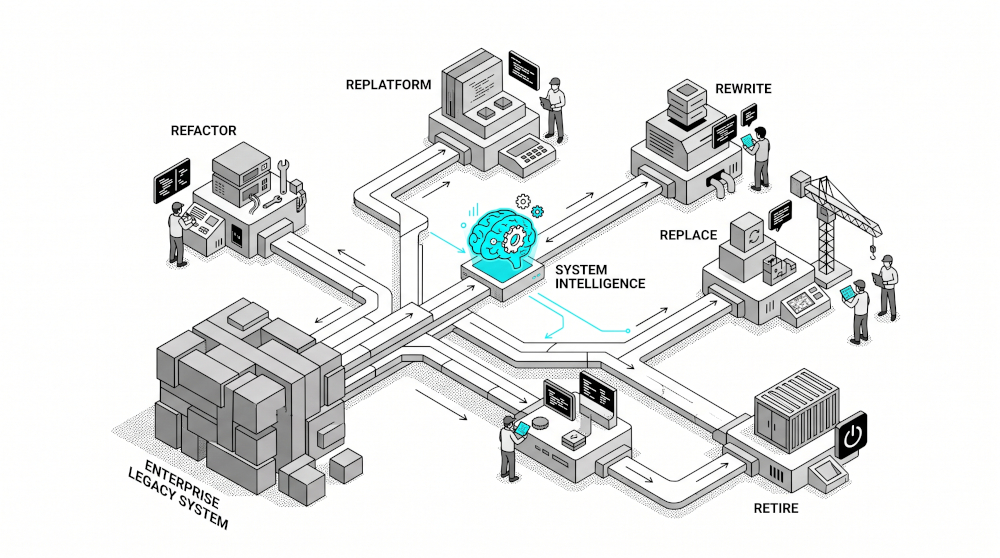
System intelligence addresses knowledge friction by creating a persistent, shared foundation of understanding. Instead of relying on individuals or static artifacts, system behavior is captured in a structured, continuously updated form.
This intelligence moves with the work. Developers, architects, testers, and compliance teams all draw from the same source of truth. When systems change, understanding changes with them. The supply chain stabilizes because knowledge is no longer scarce or fragile.
System intelligence also reduces handoff loss. Context is preserved across phases and teams. New participants inherit understanding rather than reconstruct it. Senior experts shift from being bottlenecks to reviewers and decision-makers.
For regulated enterprises, the impact is immediate. Compliance becomes explainable rather than inferential. Audits rely on evidence that already exists. Change can proceed with confidence because behavior is understood, not assumed.
By stabilizing the knowledge supply chain, system intelligence turns modernization from a coordination problem into an execution problem—one that enterprises know how to solve.
What Changes for COOs and Delivery Leaders
When modernization is viewed as a knowledge supply chain problem, the role of COOs and delivery leaders shifts materially. The focus moves from staffing and scheduling to throughput of understanding.
Leaders stop asking only whether teams are busy and start asking whether teams have the context they need to move. Bottlenecks are addressed by improving knowledge flow, not by adding headcount. Delivery health is measured by decision latency, rework rates, and onboarding speed rather than raw utilization.
Operating models also evolve. Knowledge ownership becomes explicit. Intelligence is treated as a managed asset, with clear accountability for its accuracy and continuity. Partners are evaluated not just on delivery output, but on how well they leave the organization positioned for the next phase of change.
This shift improves predictability. When understanding is readily available, timelines stabilize and dependencies are easier to manage. Delivery becomes less reactive and more repeatable—critical qualities for large, multi-year transformation programs.
Modernization at Scale Requires Knowledge That Moves Faster Than Code
At scale, modernization is constrained by how quickly knowledge can move through the organization. Code can be migrated, refactored, and deployed rapidly. Understanding, if unmanaged, moves slowly and degrades at every handoff.
Enterprises that succeed recognize this imbalance and correct it. They invest in systems and practices that allow knowledge to flow continuously, at the same pace as change. Modernization becomes less about heroic effort and more about steady execution.
This principle holds across technologies, industries, and delivery models. Whether systems are decades old or cloud-native, transformation stalls when understanding lags behind change.
Modernization is not ultimately a technical challenge. It is an operational one. Enterprises that treat knowledge as a first-class supply chain input will modernize faster, with less risk and lower cost, than those that continue to treat it as an afterthought.
You can’t scale modernization if understanding doesn’t scale with it.