
What CFOs Actually Care About in Legacy Modernization (And Why Most Projects Fail to Deliver It)
The ROI Illusion: Why Modernization Promises Rarely Translate to Financial Results
Most legacy modernization initiatives begin with a compelling financial narrative. Business cases are built around cost reduction, efficiency gains, and long-term scalability. Executive stakeholders—particularly CFOs—sign off based on projected ROI, often expecting payback within 24 to 36 months.
Yet, in practice, many of these projects fail to deliver the financial outcomes they promise.
The issue is not a lack of investment or intent. Enterprises routinely allocate millions toward transforming aging systems, particularly in regulated industries where compliance, resilience, and operational continuity are non-negotiable. The problem lies deeper—in how success is defined and measured throughout the lifecycle of the project.
Modernization efforts are approved on financial terms but executed on technical ones.
Delivery teams track progress through milestones such as code migration completion, system uptime, or cloud deployment readiness. While these are important indicators of technical progress, they do not directly translate into financial impact. A system can be successfully migrated and still fail to reduce operational costs, accelerate revenue, or improve margins.
This disconnect creates a structural misalignment between executive expectations and project execution.
From a CFO’s perspective, modernization is an investment decision. It competes with other capital allocation priorities and must demonstrate measurable returns. From an engineering perspective, modernization is often treated as a technical challenge—focused on architecture, tooling, and delivery velocity.
When these perspectives are not aligned, the result is predictable:
- Budgets expand beyond initial forecasts
- Timelines extend, delaying value realization
- Financial benefits remain ambiguous or unrealized
In many cases, organizations only recognize this gap after significant capital has already been deployed.
The consequence is not just project underperformance—it is erosion of confidence. Future modernization initiatives face greater scrutiny, longer approval cycles, and higher expectations for proof of value.
This is the ROI illusion: the belief that modernization inherently delivers financial returns, without ensuring that execution is explicitly aligned to those outcomes.
For modernization to succeed at the executive level, financial objectives cannot remain abstract targets defined at the beginning of a project. They must be operationalized, measured continuously, and directly tied to how modernization is executed.
Until that shift happens, the gap between promised ROI and realized value will continue to define the majority of legacy transformation efforts.
Inside the CFO Mindset: The Metrics That Actually Drive Investment Decisions
For CFOs, legacy modernization is not a technology initiative—it is a capital allocation decision. It competes directly with other strategic investments, from market expansion to M&A activity. As a result, the evaluation criteria are not rooted in technical elegance, but in financial certainty and measurable return.
Understanding this mindset is critical, because it defines how modernization projects are approved, funded, and ultimately judged.
Clear ROI
At the core of every CFO decision is one question: What measurable financial impact will this deliver?
This goes beyond general efficiency claims. CFOs expect:
- Quantified cost reductions (e.g., infrastructure, maintenance, licensing)
- Productivity gains translated into dollar value
- Clear linkage between modernization and revenue enablement
Importantly, ROI must be both definable upfront and trackable over time. Vague promises of “future flexibility” or “improved developer experience” rarely hold weight unless they translate into financial outcomes.
Cost Predictability
Unexpected costs are one of the fastest ways to erode executive confidence.
CFOs prioritize:
- Well-defined project scopes
- Transparent cost structures
- Minimal variance between forecasted and actual spend
In legacy environments—where undocumented systems and hidden dependencies are common—cost predictability becomes a major challenge. Without clear visibility, initial estimates often prove inaccurate, leading to budget overruns and re-approval cycles.
[[screenshot about system-level documentation]]
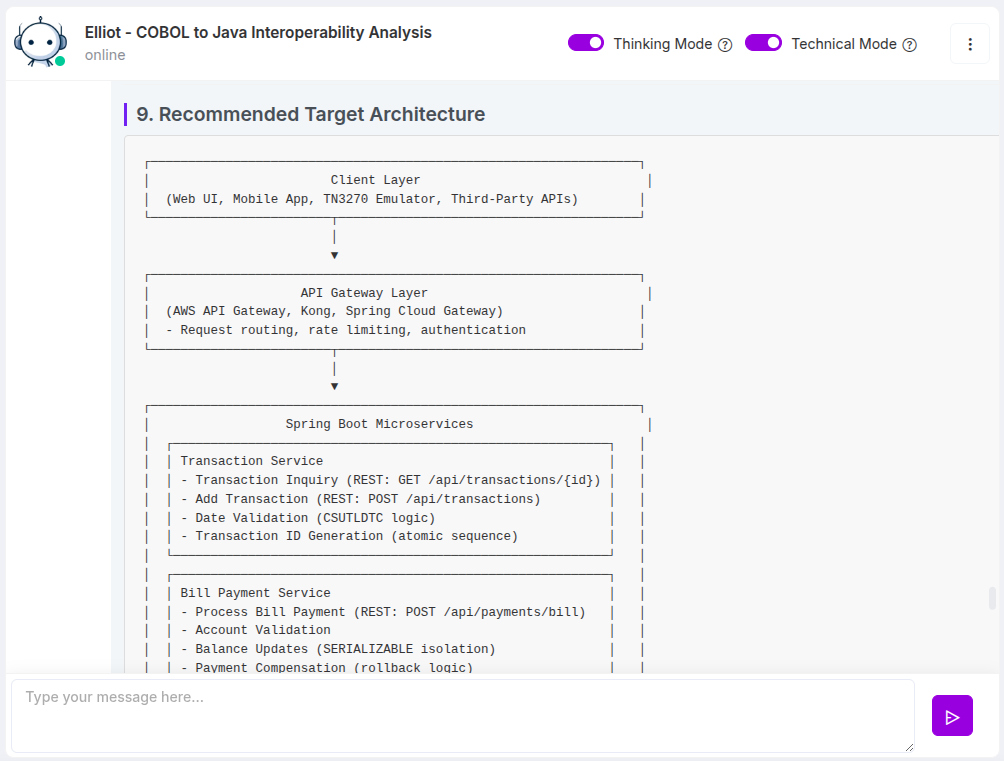
For CFOs, predictability is as important as total cost. A project that stays within a controlled budget is often more valuable than one that promises lower costs but delivers volatility.
Time to Value
Speed is a financial metric.
The longer it takes for a modernization project to deliver outcomes, the lower its effective return. Delays extend payback periods and tie up capital that could be deployed elsewhere.
Most CFOs expect:
- ROI realization within 24–36 months
- Incremental value delivery rather than long, delayed payoffs
Projects that require multi-year transformation before showing results are inherently higher risk from a financial standpoint.
Risk Reduction
Modernization is often justified as a way to reduce operational and compliance risk—but it can also introduce new forms of financial exposure.
CFOs evaluate:
- Risk of system downtime during transition
- Regulatory and compliance implications (e.g., audit failures, reporting gaps)
- Dependency on scarce or expensive talent
A financially sound modernization strategy minimizes disruption while improving long-term resilience.
The unifying principle behind all these priorities is straightforward:
CFOs do not fund modernization projects—they fund outcomes.
Any initiative that cannot clearly demonstrate how it will improve cost structure, reduce risk, or accelerate value realization will struggle to secure sustained executive support.
This is where many modernization efforts begin to diverge from expectations. While financial metrics define success at the approval stage, they are rarely embedded into the execution model.
Closing this gap is what separates projects that deliver measurable impact from those that merely achieve technical completion.
Where Modernization Breaks Down: The Hidden Financial Failure Points
Despite strong business cases and executive backing, most legacy modernization initiatives begin to drift off course early in execution. What appears financially sound at the approval stage often unravels under the weight of operational complexity, unclear system dependencies, and misaligned delivery models.
These failures are rarely caused by a single issue. Instead, they emerge from a series of compounding financial blind spots that undermine ROI.
Underestimated Discovery Costs
One of the most common—and most expensive—failures occurs before modernization even begins.
Legacy systems, particularly in industries like banking and healthcare, are often poorly documented. Critical business logic is embedded deep within monolithic codebases, understood only by a shrinking pool of experienced engineers.
As a result:
- Initial assessments underestimate system complexity
- Key dependencies are missed
- Additional analysis cycles are required mid-project
This leads to immediate scope expansion and budget inflation.
What was originally framed as a well-defined initiative quickly becomes an open-ended discovery effort—one that consumes both time and capital without delivering visible progress.
Extended Timelines
Time overruns are not just operational issues—they are financial liabilities.
As modernization projects encounter unforeseen complexities, timelines stretch:
- Rework becomes necessary due to incomplete understanding
- Integration challenges slow progress
- Decision-making delays increase as uncertainty grows
Each delay directly impacts ROI by pushing out the timeline for value realization.
A project expected to deliver returns in 24 months may take 36 months or longer, significantly reducing its financial viability and internal rate of return.
Over-Reliance on Expensive Talent
Legacy modernization often depends heavily on highly specialized engineers—particularly those with expertise in outdated languages such as COBOL or proprietary systems.
This creates a structural cost problem:
- Limited talent supply drives up labor costs
- Knowledge silos form, reducing team scalability
- Projects become dependent on a small number of key individuals
In many cases, organizations find themselves allocating a disproportionate share of the budget to maintain or interpret legacy systems rather than transforming them.
This dependency not only increases cost but also introduces operational risk if key personnel become unavailable.
Rework and Inefficiencies
Perhaps the most damaging financial issue is rework—often caused by incomplete or incorrect understanding of business logic.
When teams misinterpret how systems function:
- Features are rebuilt incorrectly
- Critical workflows are missed
- Testing cycles increase significantly
The result is duplicated effort, extended delivery cycles, and escalating costs.
[[screenshot about business logic extraction or pseudocode]]
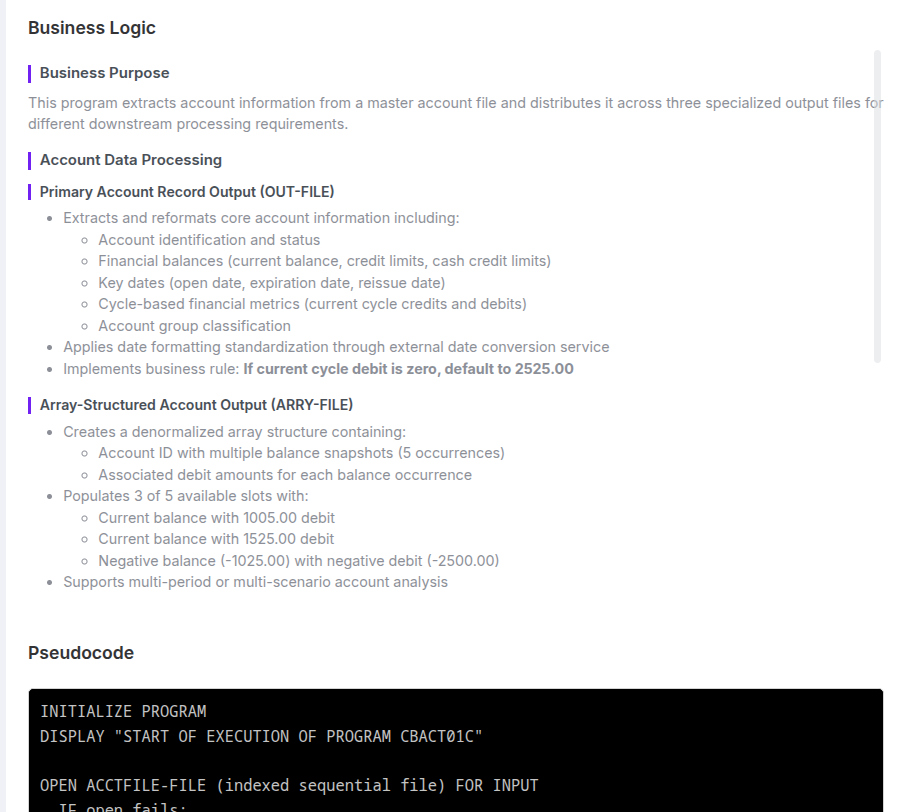
Rework is particularly problematic because it is rarely visible in early project reporting. By the time its financial impact becomes clear, budgets have already been exceeded and timelines significantly extended.
These failure points share a common characteristic: they are not purely technical problems—they are financial risks disguised as execution challenges.
Each one contributes to the same outcome:
- Loss of cost control
- Delayed or diminished ROI
- Reduced confidence from executive stakeholders
Understanding where modernization breaks down is essential, but it is only part of the equation. The deeper issue lies in why these failures occur so consistently across organizations.
That root cause is not lack of effort or investment—it is lack of understanding.
The Visibility Gap: How Poor System Understanding Derails ROI
At the core of nearly every failed modernization initiative is a single, consistent issue: insufficient understanding of the existing system.
This is not a tooling problem or a talent problem. It is a visibility problem—one that directly translates into financial risk.
Most legacy environments were not designed for transparency. Over decades, they have evolved through incremental changes, patches, and workarounds. Documentation is outdated or nonexistent. Business logic is deeply embedded across layers of code, often without clear ownership or traceability.
As a result, organizations begin modernization efforts without a complete picture of what they are transforming.
This lack of visibility manifests in several critical ways.
First, dependencies remain hidden. Systems that appear isolated are often tightly coupled with upstream and downstream processes. When these connections are not identified early, changes in one area create unintended consequences elsewhere—leading to delays, rework, and additional cost.
Second, business logic is poorly understood. Core processes—such as pricing rules, compliance checks, or transaction workflows—are encoded in ways that are difficult to interpret. Without accurately extracting and validating this logic, modernization efforts risk breaking essential functionality or requiring multiple iterations to get it right.
Third, scope becomes inherently unstable. When teams do not fully understand the system, they cannot accurately define the boundaries of the project. What begins as a controlled initiative quickly expands as new information emerges, undermining both timelines and budgets.
[[screenshot about system dependency mapping or architecture visualization]]
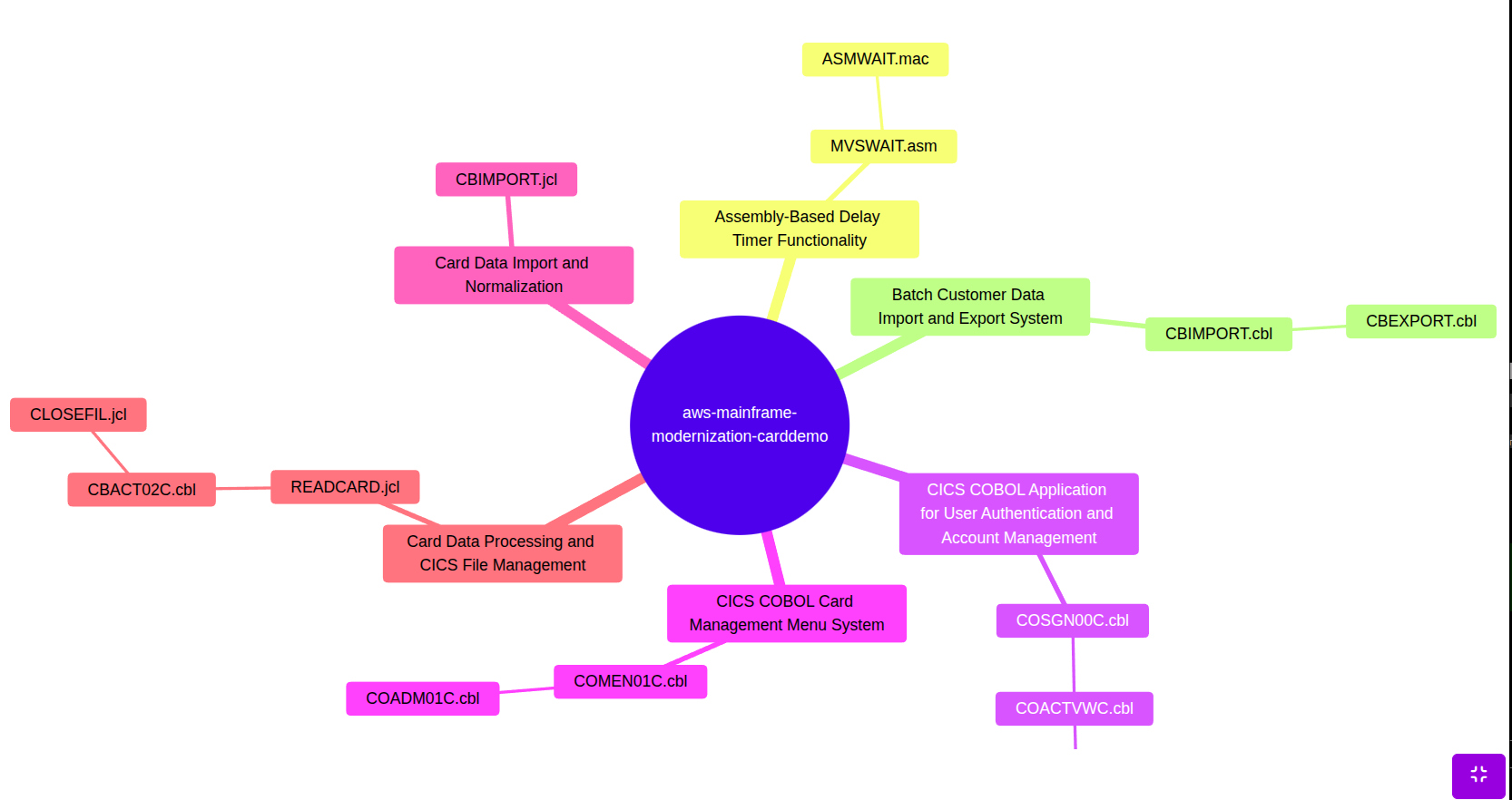
From a financial perspective, this visibility gap is the root cause behind:
- Cost overruns driven by unexpected complexity
- Timeline delays caused by rework and discovery cycles
- Inability to forecast ROI with confidence
In effect, organizations are making multi-million-dollar investment decisions based on incomplete information.
This is where the disconnect between technical execution and financial outcomes becomes most pronounced. Without a clear understanding of the system, it is impossible to:
- Accurately estimate effort and cost
- Identify high-impact modernization opportunities
- Measure progress against financial objectives
The consequence is not just inefficiency—it is unpredictability. And for CFOs, unpredictability is synonymous with risk.
The organizations that succeed in modernization are not necessarily those with the most advanced tools or the largest teams. They are the ones that eliminate uncertainty early by investing in deep system understanding before and during execution.
Because in modernization, visibility is not a technical advantage—it is a financial prerequisite.
From Cost Center to Value Driver: What Successful Transformations Do Differently
The difference between failed modernization initiatives and financially successful ones is not budget size, vendor selection, or even technical strategy. It is the ability to align execution with measurable financial outcomes from the outset.
Organizations that consistently deliver ROI treat modernization not as a technical upgrade, but as a disciplined investment strategy—one that is structured to reduce uncertainty, control costs, and accelerate value realization.
They approach the problem differently in four key ways.
Invest in Upfront Understanding
Successful transformations begin with clarity.
Before committing to large-scale execution, leading organizations invest in building a comprehensive understanding of their legacy systems:
- Mapping system dependencies
- Extracting and validating business logic
- Identifying high-risk and high-impact areas
This upfront effort is not viewed as overhead—it is treated as a risk mitigation strategy.
By establishing a clear baseline, organizations can:
- Produce more accurate cost estimates
- Define realistic timelines
- Prioritize modernization efforts based on financial impact
This directly addresses one of the primary causes of failure: underestimated complexity.
Control Scope Early
Financially successful projects are defined by disciplined scope management.
Rather than committing to broad, ambiguous transformation goals, these organizations:
- Break modernization into clearly bounded initiatives
- Align each phase with specific financial outcomes
- Avoid open-ended discovery during execution
This ensures that scope remains stable and predictable.
Early clarity enables tighter budget control and reduces the likelihood of mid-project expansion—one of the most common drivers of cost overruns.
Reduce Dependency on Specialized Labor
A key lever for improving financial outcomes is reducing reliance on scarce, high-cost expertise.
Instead of building modernization efforts around a small group of legacy specialists, successful organizations:
- Codify system knowledge into accessible formats
- Enable broader teams to contribute effectively
- Use automation to reduce manual analysis and interpretation
This creates a more scalable delivery model.
By distributing knowledge and reducing bottlenecks, organizations can lower labor costs while maintaining—or even increasing—delivery velocity.
Deliver Incrementally
Perhaps the most important shift is moving away from large, monolithic transformation programs toward incremental delivery models.
Rather than waiting years for full system replacement, successful initiatives:
- Deliver value in smaller, measurable increments
- Validate outcomes continuously
- Adjust strategy based on real financial performance
This approach has two critical advantages:
- Faster time to value, improving ROI timelines
- Reduced risk, as issues are identified and addressed earlier
From a CFO’s perspective, incremental delivery transforms modernization from a high-risk capital expenditure into a series of controlled, outcome-driven investments.
The common thread across all these practices is a shift in mindset.
Modernization is no longer treated as a one-time project with uncertain returns. It becomes a structured, data-driven process designed to deliver predictable financial outcomes.
Organizations that make this shift do not just complete modernization efforts—they extract measurable value from them.
And increasingly, achieving this level of discipline requires more than process improvements alone. It requires new capabilities that can provide real-time visibility, automate understanding, and align execution with financial objectives at scale.
This is where AI-driven platforms begin to play a critical role.
Engineering Financial Outcomes: How CodeAura Aligns Modernization with CFO Priorities
Closing the gap between promised ROI and realized value requires more than better planning—it requires fundamentally different execution capabilities.
This is where CodeAura shifts modernization from a technically driven initiative to a financially aligned strategy. By embedding visibility, automation, and intelligence into every stage of the modernization lifecycle, CodeAura directly addresses the metrics that CFOs care about most: cost predictability, labor efficiency, speed to value, and risk reduction.
Improving Cost Predictability
One of the primary drivers of budget overruns is uncertainty—uncertainty in system complexity, dependencies, and scope.
CodeAura addresses this through automated documentation and system-wide analysis:
- Generates comprehensive, real-time documentation of legacy systems
- Maps dependencies across applications and workflows
- Provides clear visibility into system architecture and behavior
[[screenshot about system-level documentation]]
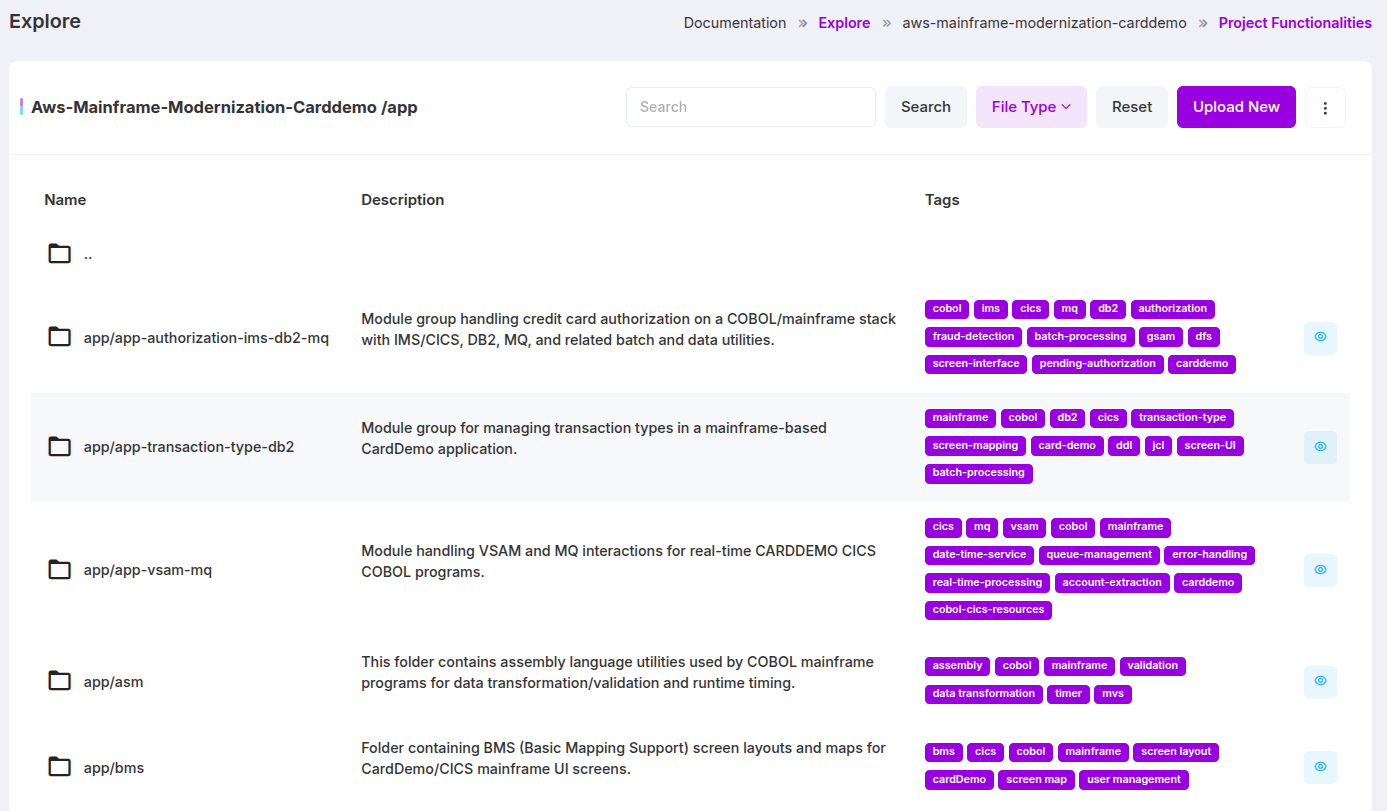
This level of transparency enables organizations to move from assumption-based planning to evidence-based estimation.
The financial impact is immediate:
- More accurate project scoping
- Reduced contingency buffers
- Fewer mid-project surprises
For CFOs, this translates into controlled budgets and higher confidence in financial forecasts.
Reducing Labor Costs
Traditional modernization efforts rely heavily on specialized engineers to interpret legacy systems—a costly and unscalable model.
CodeAura reduces this dependency by transforming system knowledge into an accessible, AI-driven knowledge base:
- Centralizes documentation, logic, and system insights
- Enables teams to query systems through a conversational interface
- Reduces reliance on a small pool of legacy experts
[[screenshot about knowledge base chat]]
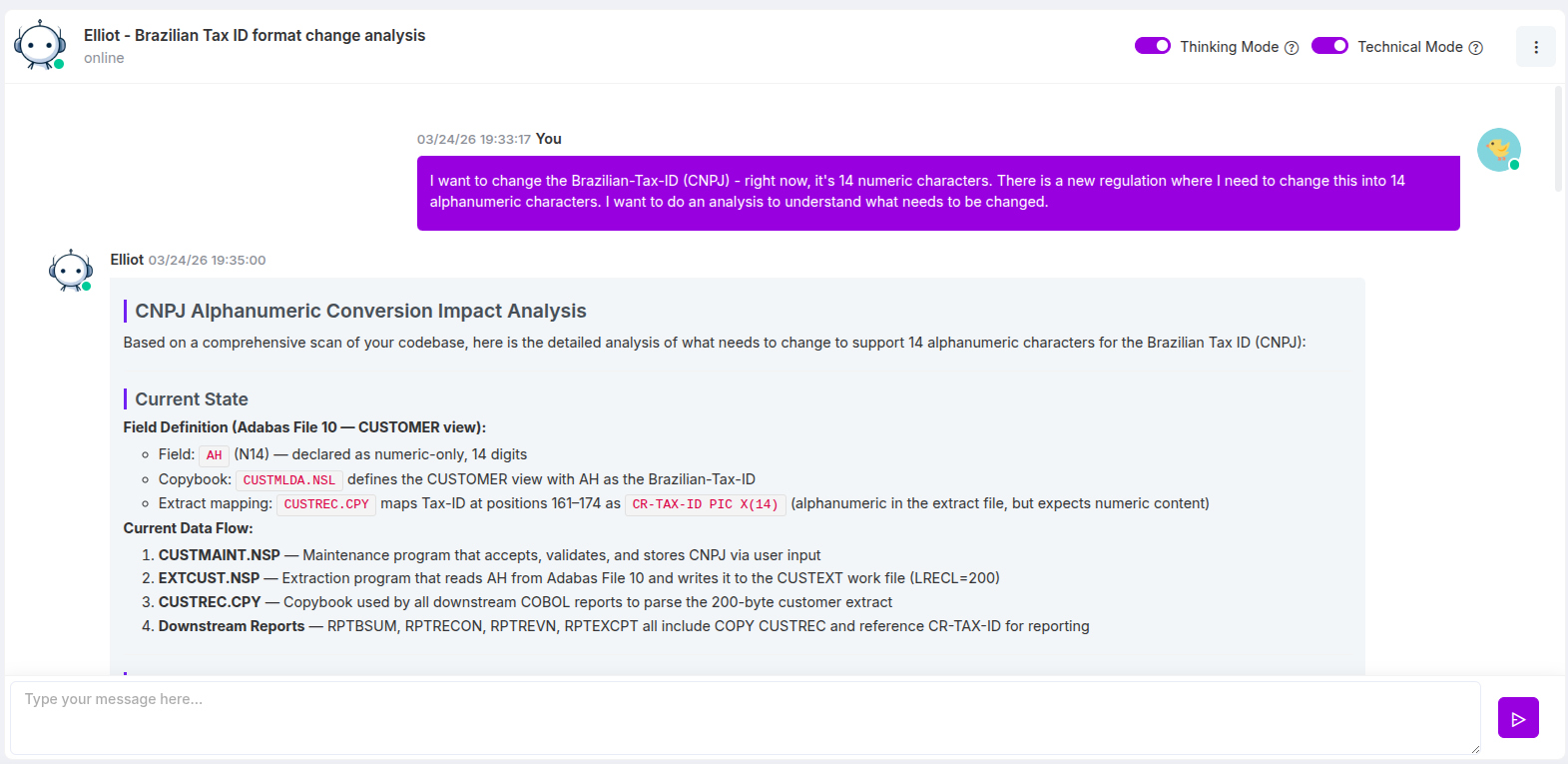
By democratizing access to system understanding, organizations can:
- Expand team participation without increasing costs
- Reduce time spent on manual analysis
- Lower overall labor expenditure
This creates a more efficient and scalable delivery model—one that aligns directly with CFO expectations around cost control.
Accelerating Delivery Timelines
Time to value is one of the most critical financial metrics in modernization.
CodeAura accelerates execution by combining system understanding with AI-assisted development:
- Speeds up code comprehension and onboarding
- Supports code generation and transformation into modern languages
- Reduces delays caused by ambiguity or missing context
[[screenshot about code generation]]
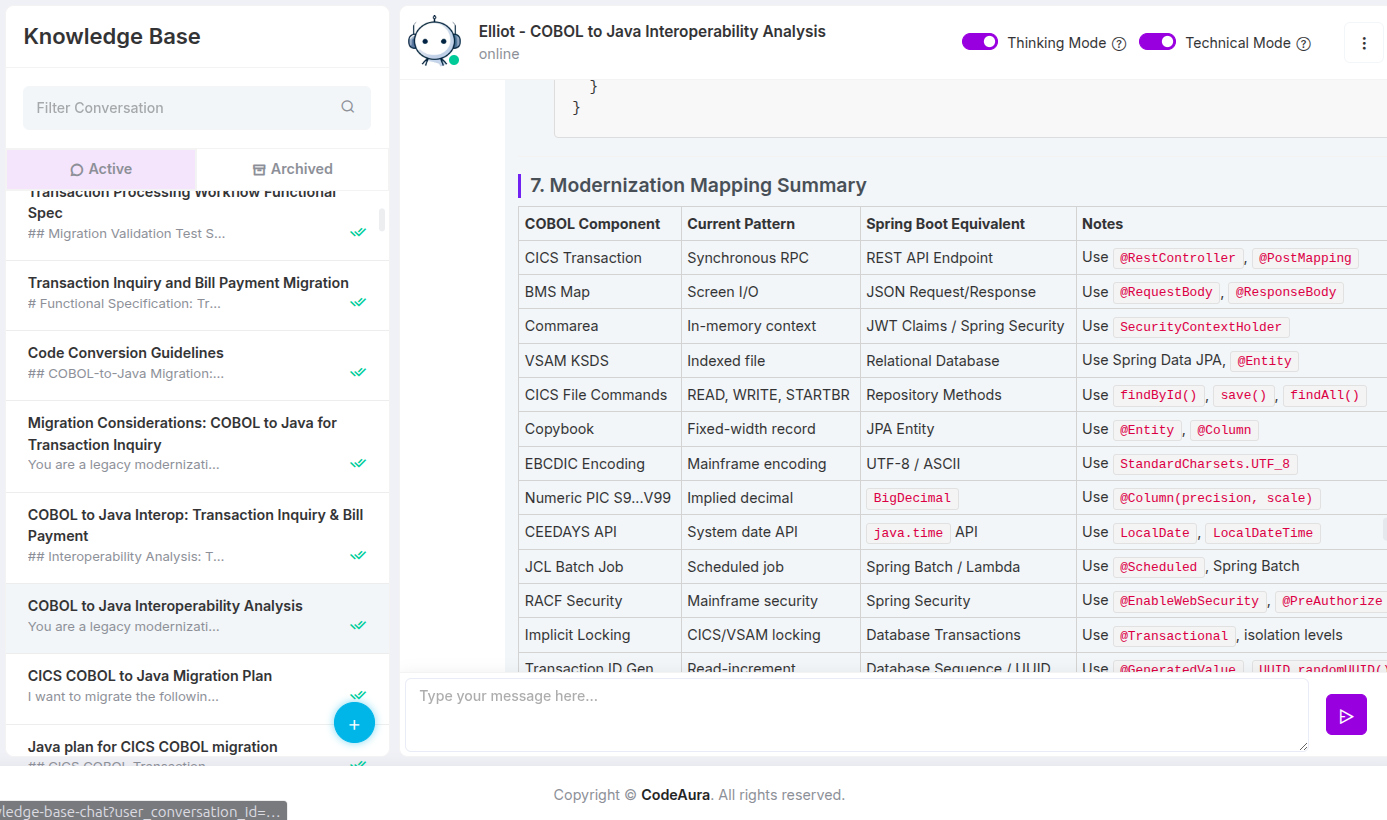
Faster execution leads to:
- Shorter project timelines
- Earlier realization of financial benefits
- Improved return on invested capital
Instead of waiting years for value, organizations can begin capturing ROI much earlier in the process.
Minimizing Rework
Rework is one of the most underestimated financial drains in modernization.
CodeAura mitigates this by extracting and structuring business logic directly from legacy systems:
- Converts complex logic into clear, interpretable formats
- Enables validation before implementation
- Ensures alignment between legacy behavior and modernized systems
[[screenshot about business logic extraction or pseudocode]]
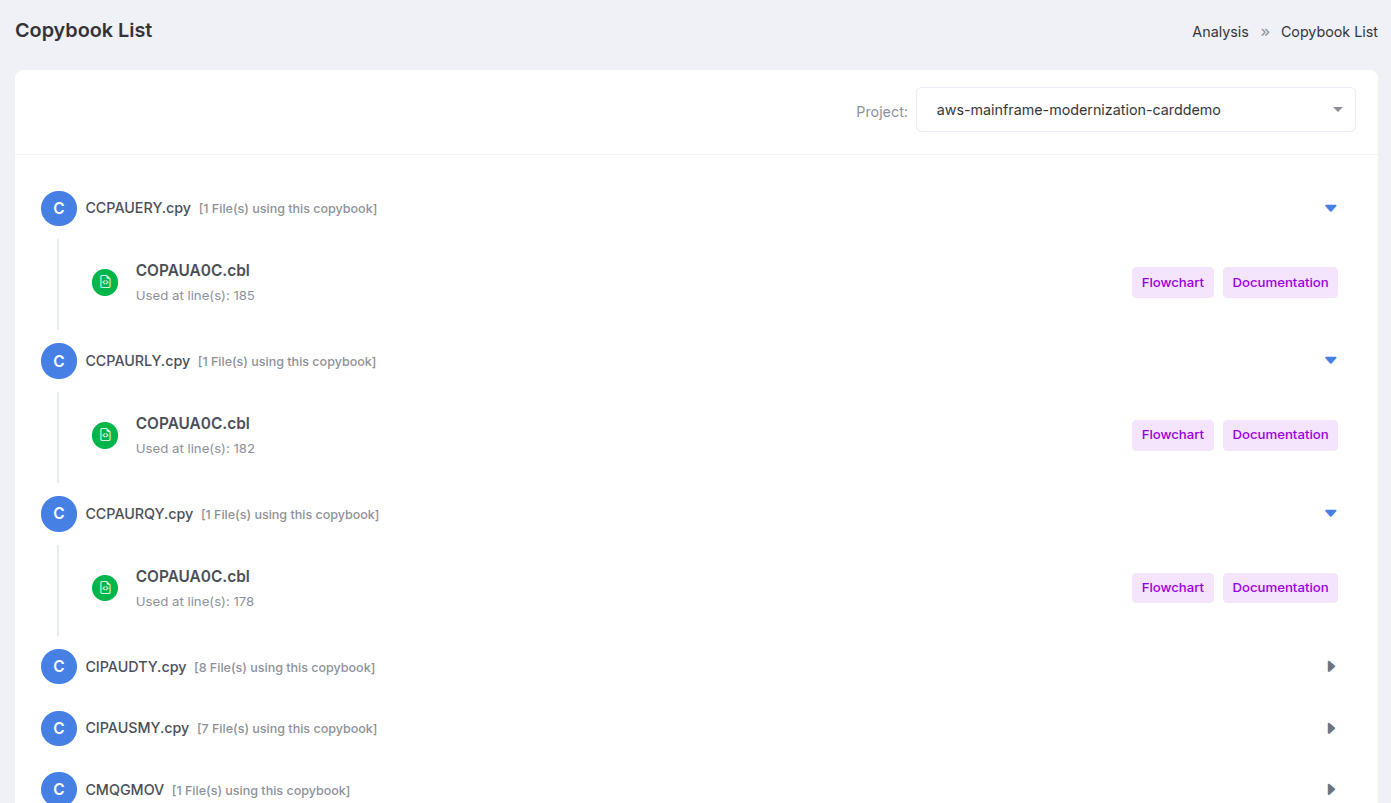
This reduces:
- Errors in implementation
- Repeated development cycles
- Cost associated with fixing late-stage issues
The result is not just faster delivery—but more accurate delivery.
By addressing the core financial failure points—uncertainty, inefficiency, delays, and rework—CodeAura enables organizations to execute modernization with a level of precision that traditional approaches cannot achieve.
It transforms modernization from a high-risk initiative into a controlled, outcome-driven investment.
For CFOs, this is the difference between approving a project based on projections and supporting a strategy grounded in measurable financial performance.
Before vs After: Quantifying the Financial Impact of AI-Augmented Modernization
The financial impact of modernization is often discussed in abstract terms—efficiency, agility, scalability. However, for CFOs and executive stakeholders, value must be concrete, measurable, and comparable.
The clearest way to understand this impact is to examine the difference between traditional modernization approaches and AI-augmented execution models.
| Traditional Modernization | AI-Augmented Modernization |
|---|---|
| Unpredictable costs | Controlled budgets |
| Long timelines | Faster delivery |
| High labor dependency | Scalable teams |
| Delayed ROI | Faster payback |
This shift is not incremental—it is structural.
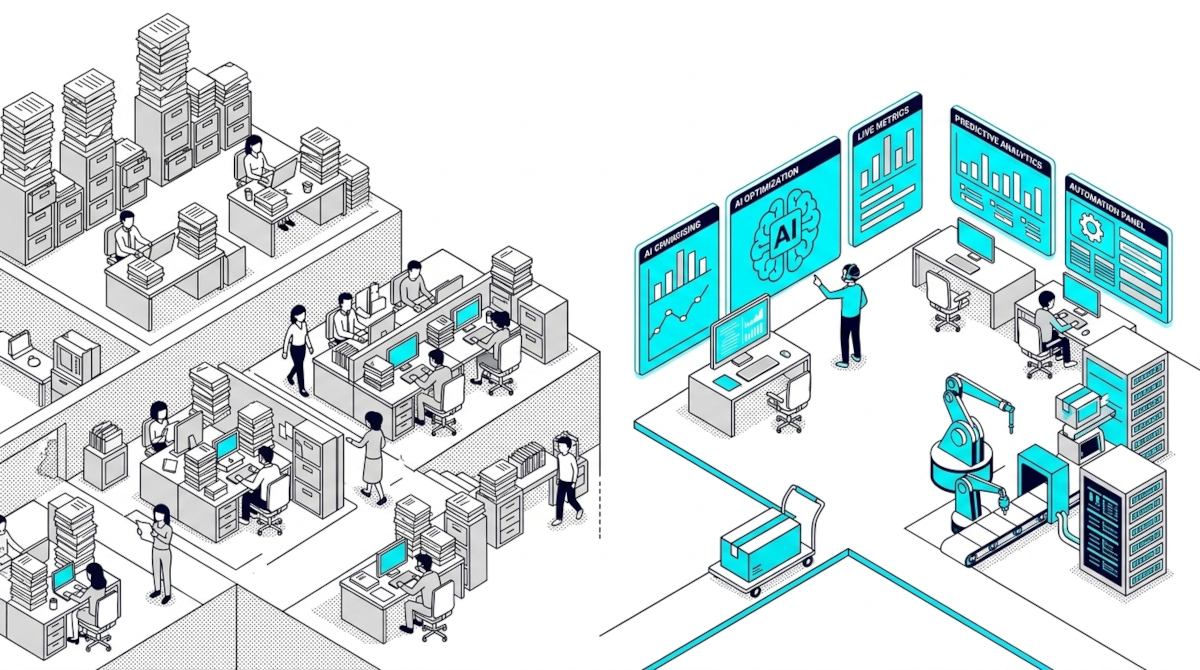
In traditional models, financial performance is undermined by uncertainty at every stage. Cost estimates are based on incomplete system understanding. Timelines extend as unforeseen complexities emerge. Labor costs increase due to reliance on specialized expertise. As a result, ROI becomes both delayed and difficult to quantify.
In contrast, AI-augmented modernization introduces predictability and control.
With enhanced visibility into legacy systems, organizations can define scope with greater precision. Automation reduces manual effort, lowering labor costs and enabling broader team participation. Accelerated execution shortens the time between investment and return.
The financial outcomes become significantly more tangible:
- Cost Variance Reduction: Projects operate closer to initial budget forecasts, minimizing overruns
- Timeline Compression: Delivery cycles are shortened, often by months or even years
- Labor Efficiency Gains: Teams achieve more output with fewer specialized resources
- Earlier ROI Realization: Value is captured sooner, improving overall return on capital
For example, consider a modernization initiative with an expected cost of $5 million and a projected ROI period of 36 months. In a traditional model, delays and overruns could extend payback to 48 months or beyond, while increasing total investment.
In an AI-augmented model, improved execution efficiency can:
- Reduce total cost through lower labor dependency
- Accelerate delivery timelines
- Bring ROI realization closer to the original 24–36 month target—or even sooner
The difference is not just financial performance—it is financial confidence.
[[screenshot about before vs after financial dashboard or comparison]]
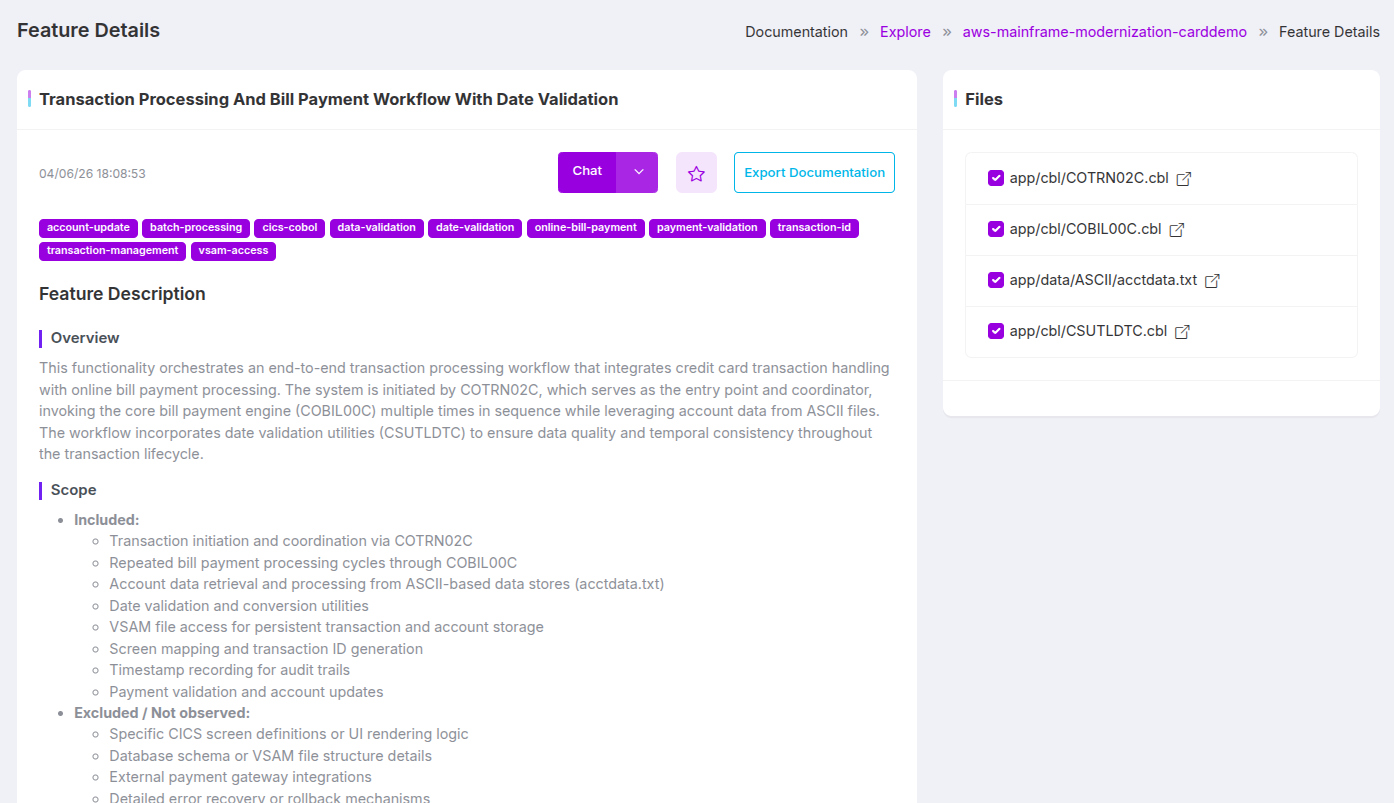
Executives gain the ability to:
- Forecast outcomes with greater accuracy
- Track progress against financial metrics in real time
- Make informed decisions based on measurable data rather than assumptions
This level of transparency fundamentally changes how modernization is perceived at the leadership level.
Instead of being viewed as a high-risk, cost-intensive initiative, it becomes a controlled investment with predictable returns.
And in an environment where capital efficiency is paramount, that distinction is critical.
The Executive Mandate: Reframing Modernization as a Measurable Investment Strategy
For executive leadership, the conversation around legacy modernization is undergoing a fundamental shift.
What was once viewed primarily as a necessary technology upgrade is now being evaluated through a far more rigorous lens: financial performance. In an environment defined by capital constraints, regulatory pressure, and increased accountability, modernization initiatives must justify themselves not just in technical terms—but in measurable business outcomes.
This reframing is no longer optional. It is an executive mandate.
CFOs, CIOs, and CTOs are increasingly aligned on a single expectation: modernization must behave like an investment, not an expense.
This means every initiative must be able to answer three critical questions with clarity:
- What financial value will this deliver?
- How predictable are the costs required to achieve it?
- How quickly will we realize returns?
Projects that cannot provide clear, data-backed answers to these questions are unlikely to secure sustained executive support—regardless of their technical merit.
This shift has significant implications for how modernization strategies are designed and executed.
First, success criteria must evolve. Completing a migration, retiring a legacy system, or moving to the cloud is no longer sufficient. These are milestones—not outcomes. True success is defined by:
- Reduction in operating costs
- Improved capital efficiency
- Accelerated revenue enablement
- Lower risk exposure
Second, financial accountability must be embedded throughout the lifecycle of the project. Rather than evaluating ROI only at the beginning and end, organizations must:
- Track financial metrics continuously
- Align delivery milestones with business value
- Adjust execution based on measurable performance
This requires a level of visibility and control that traditional approaches often lack.
Third, decision-making must become more dynamic. Instead of committing to large, multi-year transformation programs with fixed assumptions, leadership teams must adopt:
- Incremental investment models
- Continuous validation of outcomes
- The flexibility to reallocate capital based on results
[[screenshot about executive dashboard with ROI metrics]]
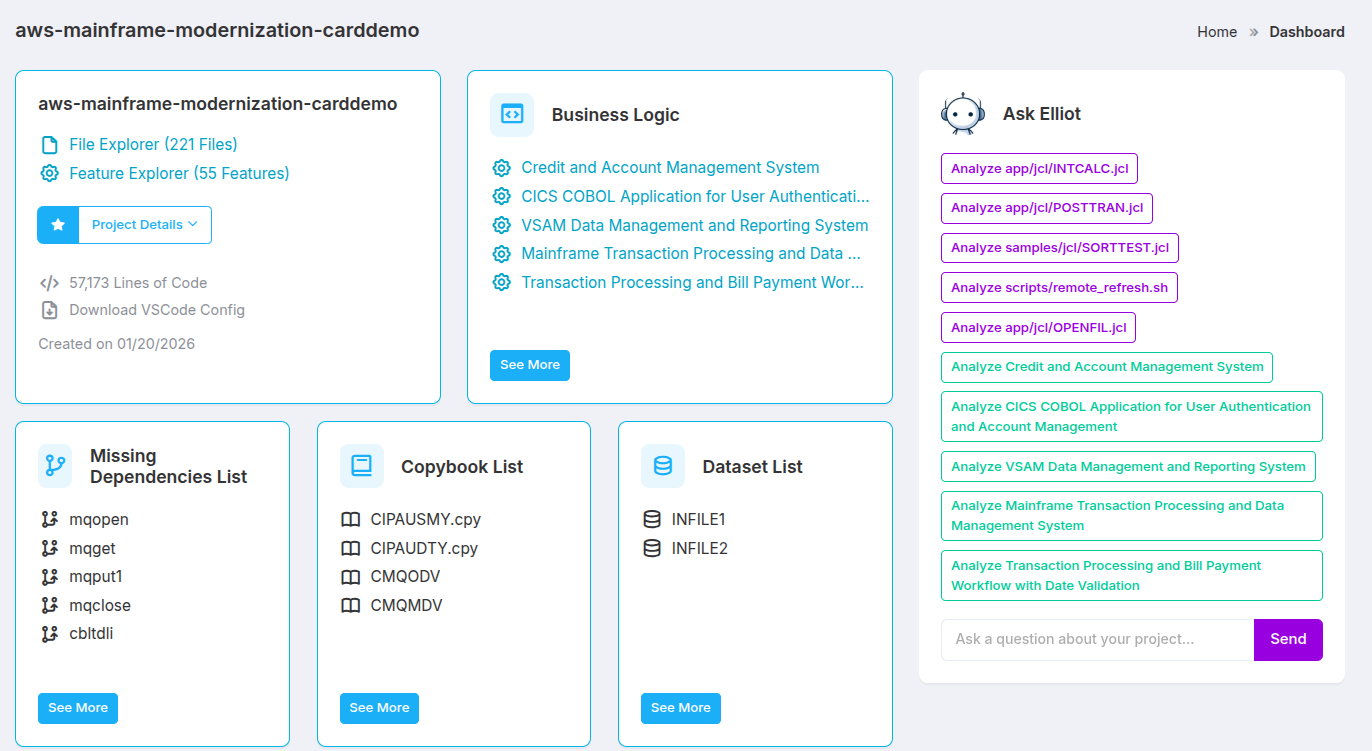
This approach reduces risk while improving the overall efficiency of capital deployment.
The broader implication is clear:
Modernization is no longer a technical initiative led solely by engineering teams. It is a cross-functional investment strategy that requires alignment between technology, finance, and operations.
Organizations that recognize this shift gain a significant advantage. They are able to:
- Execute modernization with greater financial discipline
- Deliver predictable and measurable outcomes
- Build sustained confidence at the executive and board level
Those that do not will continue to face the same pattern of cost overruns, delayed ROI, and diminished trust in transformation initiatives.
The definition of success has changed.
The success of a modernization project is not determined by whether it was completed—it is determined by whether it delivered the financial outcomes it promised.
And in that context, one principle becomes unavoidable:
If you can’t predict the cost of modernization, you can’t predict its value.