

Deployment Flexibility as a Strategic Imperative for Regulated Legacy Systems
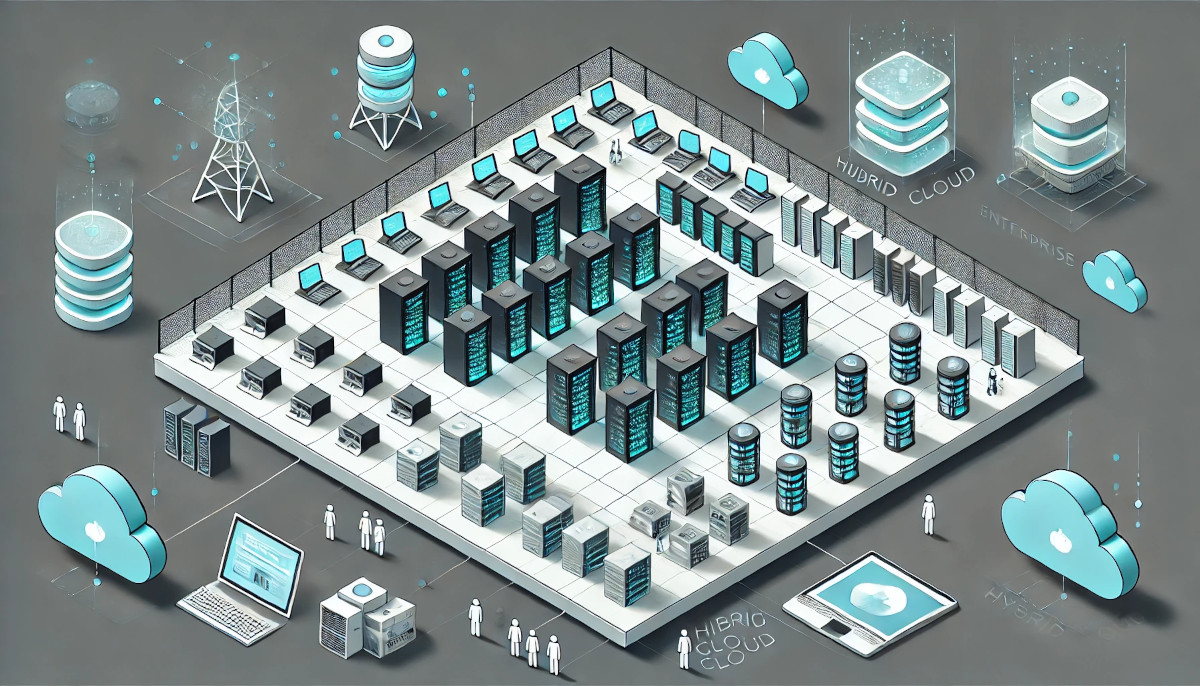
The Deployment Dilemma: Why Regulated Enterprises Cannot Rely on Cloud-Only Tools
For highly regulated enterprises, modernization initiatives increasingly collide with the architectural constraints of cloud-only vendor tools. While most AI and developer-productivity platforms assume unrestricted data mobility, organizations in banking, insurance, healthcare, and regulated manufacturing must operate within sharply defined boundaries. Core systems contain customer PII, transaction histories, clinical records, and operational IP that cannot legally or operationally leave controlled environments.
Cloud-only modernization offerings often introduce three immediate blockers. First, they require outbound data transfer—something many mainframes, midrange systems, and secured datacenter networks simply cannot permit without extensive, multi-department security reviews. Second, they create implicit compliance exposure: even anonymized code or configuration details can be considered sensitive under frameworks like Basel IV, HIPAA, PCI-DSS, or NIST 800-53. Finally, these models fail to accommodate the physical realities of legacy estates where systems run in isolation, lack stable APIs, or are governed by decades-old segmentation policies.
For CIOs and CTOs, the result is a modernization gridlock. Teams know that AI-assisted analysis and automated documentation would dramatically accelerate understanding of legacy systems, yet the deployment model itself becomes the barrier to adoption. Modernization stalls not because AI is insufficient—but because cloud-only architectures cannot meet the compliance, data sovereignty, and operational constraints that define regulated enterprises.
Regulatory Pressures Reshaping Modernization Architectures in BFSI, Healthcare, and Manufacturing
Modernization strategies in regulated industries are no longer shaped solely by technical ambition—they are dictated by intensifying regulatory pressure. Requirements from Basel IV, HIPAA, PCI-DSS, and NIST frameworks are forcing enterprises to rethink where workloads run, how data moves, and what levels of observability and control are mandatory across the entire application estate. These mandates extend beyond customer data protection; they touch operational continuity, auditability, access control, and systemic risk management.
In banking and financial services, Basel IV drives stricter scrutiny over model transparency and operational resilience. This affects modernization directly: any tool that performs code analysis, documentation generation, or dependency mapping must operate within environments that preserve lineage, traceability, and controlled audit logging. Healthcare organizations face similar constraints under HIPAA, where even derivative artifacts generated by AI—such as documentation describing workflows or data structures—may expose sensitive patterns that cannot leave protected boundaries.
Manufacturers working under NIST guidelines encounter another dimension of pressure: safeguarding operational IP and protecting industrial control systems. Many of these environments rely on decades-old software, often undocumented, running on hardware that was never designed for internet connectivity. Cloud-first modernization solutions simply cannot comply with mandates requiring strict asset isolation and zero-trust segmentation.
These regulatory forces collectively reshape modernization architectures. Enterprises must adopt platforms that can operate seamlessly in on-prem, hybrid, and offline environments while preserving full compliance and audit readiness. Tools that require centralized cloud execution are incompatible with the risk posture demanded by regulators. The result is a growing shift toward adaptable, multi-modal deployment platforms—where flexibility becomes a prerequisite for regulatory alignment, not a convenience.
Hybrid, On-Prem, and Air-Gapped Environments: The New Normal for Legacy Workloads
Across regulated industries, modernization leaders are recognizing a critical reality: legacy systems are not moving wholesale to the public cloud, and many will never do so. Instead, enterprises are architecting hybrid environments built around a mix of on-prem datacenters, private clouds, sovereign cloud partitions, and—especially in banking and healthcare—fully isolated air-gapped networks. These environments aren’t exceptions; they represent the operational backbone of mission-critical workloads.
Mainframes exemplify this pattern. Their security posture relies on strict perimeter control, limited outbound connectivity, and decades of hardened operational processes. Attempting to extract large codebases for external analysis introduces security reviews that can last months. Even midrange systems and homegrown monoliths often run in facilities where outbound traffic is blocked by default, and change controls mandate stepwise approvals for any integration activity.
Air-gapped environments push the constraints further. In defense-aligned manufacturing, life sciences, and certain banking operations, systems remain intentionally disconnected from any external network. Modernization tooling must therefore operate offline, with no dependency on external APIs, telemetry streams, or cloud orchestration. Platforms that cannot run locally are immediately disqualified.
Hybrid architectures add another complexity: workloads often span multiple environments simultaneously. A claims processing system may integrate with a cloud analytics layer while a compliance module remains on-prem for regulatory reasons. Tools that analyze or document these systems must respect cross-boundary security constraints while still producing a unified view of the estate.
In this landscape, deployment flexibility stops being a technical preference and becomes a structural requirement. Platforms must adapt to the environment—not the other way around—while ensuring that modernization initiatives remain viable across the full spectrum of legacy deployment realities.
Technical Debt and Knowledge Loss Under Rigid Deployment Models
Rigid, cloud-only deployment models intensify two long-standing risks in regulated enterprises: technical debt accumulation and institutional knowledge loss. When modernization tools cannot operate inside secured or isolated environments, critical systems remain opaque. This opacity forces teams to rely on tribal knowledge, manual code tracing, and outdated documentation—conditions that accelerate both technical debt growth and operational fragility.
Technical debt deepens when legacy codebases cannot be analyzed comprehensively. In many BFSI and healthcare organizations, 30–50% of core system logic is either undocumented or poorly understood. When AI-driven analysis tools are blocked by deployment constraints, architectural dependencies remain hidden, regression risks increase, and modernization roadmaps devolve into guesswork. The inability to generate accurate, environment-local insights leads to project delays, cost overruns, and incomplete transformations that carry old risks into new architectures.
Knowledge loss poses an even greater strategic threat. As senior engineers retire, decades of historical context disappear with them. Without in-environment automation capable of documenting control flows, data structures, service interactions, and business rules, organizations face a widening knowledge gap. Tools requiring outbound data transfer cannot fill this gap; they lack the ability to run where the code actually lives. That limitation leaves teams dependent on manual discovery processes that cannot scale to the size or complexity of production-grade monoliths.
These risks compound in regulated sectors, where compliance frameworks mandate demonstrable understanding of system behavior. When documentation, analysis, and migration capabilities cannot be executed in-place, organizations lose both visibility and control—two dimensions regulators increasingly scrutinize. Ultimately, rigid deployment models trap enterprises in a cycle where modernization is constrained not by technology capabilities, but by the inability to deploy those capabilities safely within their operational boundaries.
Why Deployment Flexibility Determines the Success of AI-Driven Legacy Modernization
AI-driven modernization relies on proximity to the code, the data flows, and the operational context in which legacy systems run. Deployment flexibility—being able to run the same AI automation engine in cloud, hybrid, on-prem, or air-gapped environments—is what ensures this proximity. Without it, even the most advanced AI models cannot deliver accurate insights or safe transformation pathways.
Enterprises adopting AI for legacy analysis quickly discover that the value of the tooling is directly proportional to its ability to operate where compliance, data residency, and networking constraints are strictest. For example, an AI system that documents COBOL batch flows or identifies modernization candidates must run within the same security perimeter as the mainframe it analyzes. Pulling these assets into the public cloud, even transiently, introduces violations under HIPAA, PCI-DSS, and internal data-classification policies. As a result, tools that lack flexible deployment options are often rejected before they ever reach evaluation.
Flexibility also drives architectural fidelity. Accurate modernization requires understanding job schedules, file interactions, environment-specific conditionals, exit routines, and security models—details that frequently cannot be replicated outside the source environment. A cloud-only model working on exported samples will miss structural behaviors that determine whether a modernization effort succeeds or fails. Running locally or in hybrid mode ensures the AI agent has full contextual access while preserving compliance controls.
For CIOs and CTOs, deployment flexibility is not merely an IT requirement—it is a risk and ROI lever. When AI can operate within existing boundaries, modernization timelines shrink, documentation coverage expands, and dependency mapping becomes reliable enough to support phased transformation. The alternative is a modernization program constrained by the limitations of its own tools, unable to unlock the deep insights necessary to de-risk migration. Deployment flexibility, therefore, becomes the decisive factor that separates theoretical AI benefits from operational, compliant modernization outcomes.
How CodeAura Delivers Secure, Isolated, and Compliance-Ready Deployment Options
CodeAura was designed from the ground up to operate within the constraints of regulated enterprises—where data cannot move freely, systems cannot expose outbound connections, and modernization must occur without violating compliance boundaries. Its architecture reflects these realities by offering deployment models that map directly to the environments where legacy systems live: on-prem, hybrid, private cloud, sovereign cloud, and fully offline installations.
In on-prem and hybrid scenarios, CodeAura’s AI engine runs behind the enterprise firewall, enabling teams to analyze COBOL, JCL, PL/I, or monolithic Java applications entirely within their security perimeter. No source code or metadata needs to leave the environment. The platform integrates directly with internal authentication providers and adheres to enterprise audit, logging, and RBAC requirements—ensuring modernization workflows align with internal controls and regulatory obligations.
For organizations with stricter demands, CodeAura supports isolated and air-gapped deployments. The platform can operate without internet access, external APIs, or telemetry backchannels, making it suitable for mainframes, regulated datacenters, and industrial control environments governed by NIST or defense-grade restrictions. Engineers can generate documentation, interaction diagrams, dependency graphs, and code-level insights entirely offline, eliminating compliance risk tied to external processing.
Hybrid deployment is equally strategic. Many regulated enterprises maintain a split architecture where certain modern services run in cloud environments while core logic remains on-prem. CodeAura’s deployment model allows AI agents to work across these boundaries while honoring environment-specific security policies. Whether triggered from JIRA, Slack, or internal DevOps pipelines, the analysis occurs wherever the code resides—bringing the AI to the system, not the system to the AI.
By aligning its deployment model with the realities of regulated industries, CodeAura enables organizations to modernize without re-architecting their risk posture. It removes the need for code extraction, eliminates compliance exceptions, and provides a pathway for AI-driven modernization that is secure, contextually accurate, and operationally feasible. Deployment flexibility is not an add-on—it is the architectural principle that makes CodeAura viable in the environments where modernization matters most.
Real-World Scenarios: Documenting Mainframe and COBOL Assets Without External Exposure
Enterprises often struggle to understand the full scope of their mainframe estates because the systems involved cannot be exposed to external networks or cloud environments. In practice, this means traditional modernization tools—which depend on uploading code, metadata, or logs—are unusable. CodeAura addresses this gap by enabling full in-place analysis within the confines of secured datacenters and air-gapped systems.
In a banking environment operating under Basel IV constraints, for example, a core payments engine written in COBOL may consist of thousands of modules, hundreds of JCL jobs, and undocumented data flows linking batch, CICS, and downstream platforms. CodeAura can be deployed inside the institution’s existing security perimeter, allowing its AI agents to ingest and interpret the entire codebase without any outbound traffic. The platform generates documentation bundles, call graphs, and flow diagrams directly within the mainframe-adjacent environment, supporting both auditors and modernization teams without creating data-sovereignty exceptions.
Healthcare organizations see similar benefits. A HIPAA-regulated claims processing system often contains sensitive patient-related logic embedded deep in legacy COBOL routines. With CodeAura, teams can run dependency analysis, identify business rules, or prepare for partial migration to modern languages like Java—entirely offline. No PHI leaves the environment, and all generated insights remain within the organization’s compliance envelope.
Manufacturers working under NIST guidelines benefit in another way: their industrial control systems and supporting software often operate in semi-isolated zones. CodeAura’s offline deployment mode enables these teams to document proprietary control logic, map system interactions, and build modernization roadmaps without introducing new connectivity risks or exposing intellectual property.
These scenarios share a common theme: modernization becomes possible only when analysis and documentation tools can operate where legacy systems reside. CodeAura’s ability to run securely within isolated or offline environments converts previously inaccessible systems into fully analyzable assets—unlocking modernization paths that were unreachable with cloud-only tooling.
Strategic Outcomes: Reducing Risk, Accelerating Modernization, and Meeting Compliance Mandates
When deployment flexibility is treated as a strategic imperative rather than an architectural afterthought, regulated enterprises gain control over modernization in ways that directly reduce risk and improve long-term resilience. Operating AI-driven analysis and documentation tools inside secured boundaries eliminates the need for compliance exceptions, accelerates approval cycles, and ensures regulators can trace how system insights were generated. These advantages translate into measurable reductions in audit exposure and operational uncertainty—two of the largest hidden costs in legacy estates.
Modernization accelerates as well. Teams equipped with in-environment automation can generate system documentation, dependency maps, and modernization candidates in days rather than months. This speed enables CIOs and CTOs to pursue staged migration strategies—rewriting, refactoring, or encapsulating legacy modules with confidence that architectural blind spots have been removed. Because CodeAura operates locally or in hybrid form, its insights remain continuously aligned with the systems’ actual runtime and deployment context.
The financial outcomes are equally material. By reducing manual discovery effort, preventing rework, and avoiding stalled modernization initiatives, enterprises often reclaim significant engineering capacity. These efficiencies compound with long-term cost savings that arise once legacy workloads can be migrated, scaled down, or partially retired. For CFOs, this becomes a defensible modernization ROI narrative rather than a speculative investment tied to opaque tooling constraints.
Finally, flexible deployment supports sustained compliance. Whether an enterprise is responding to Basel IV reporting requirements, HIPAA audit cycles, PCI-DSS obligations, or NIST security reviews, CodeAura’s in-place analysis model creates a verifiable chain of custody over system insights and documentation. This transparency strengthens internal governance and positions modernization as an enabler of compliance rather than a source of risk.
In regulated environments where modernization has historically been slow, expensive, and fraught with uncertainty, deployment flexibility reshapes the equation. It empowers enterprises to modernize on their terms—securely, incrementally, and with full regulatory alignment—unlocking transformation pathways that were previously blocked by the limitations of traditional, cloud-only tooling.
If your modernization roadmap is constrained by compliance, data residency, or isolated legacy systems, CodeAura can help.
Our platform brings AI documentation, analysis, and migration capabilities directly into your secured environment—no code extraction, no exceptions, no added risk.