

From Modernization Projects to Modernization Products: Why System Intelligence Is Becoming a Reusable Asset
Why Legacy Modernization Still Behaves Like a One-Off Project
Despite decades of experience, most legacy modernization initiatives are still executed as isolated, one-time projects. Enterprises mobilize teams, onboard scarce subject-matter experts, commission assessments, and generate large volumes of documentation—only to dismantle that knowledge base once the program ends. The next modernization effort, even on the same system, often starts from near zero.
This project-centric mindset is rooted in how modernization has historically been sold and delivered. Engagements are scoped around migrations, rewrites, or platform moves. Success is measured by go-live dates, cutover stability, and short-term cost reduction. What is rarely treated as a first-class outcome is the system understanding accumulated along the way: the behavioral knowledge of how systems actually operate, how data flows across boundaries, and where hidden dependencies live.
For regulated enterprises, this creates a compounding problem. Legacy systems are not static; they continue to change under regulatory pressure, integration demands, and business evolution. Yet every change reintroduces risk because the underlying system knowledge remains fragmented—spread across PDFs, tribal memory, and short-lived project artifacts.
Large modernization partners feel this acutely. Each new engagement requires rebuilding context, retraining teams, and revalidating assumptions. Margins shrink as senior experts are pulled back into rediscovery work. Delivery velocity slows as downstream teams lack confidence in inherited documentation. The result is a delivery model optimized for execution, not for continuity.
The core issue is not technical capability. Enterprises and their partners know how to migrate code, refactor architectures, and move workloads to the cloud. The failure is structural: modernization is treated as an event rather than as the creation of a durable, reusable asset. Until that changes, legacy transformation will remain expensive, fragile, and difficult to scale.
The Hidden Cost of Project-Based Modernization Models
Project-based modernization models appear efficient on paper. Scope is defined, timelines are fixed, and success criteria are tied to delivery milestones. Yet beneath this apparent control lies a set of hidden costs that compound over time—costs that are rarely captured in business cases or partner proposals.
The first is knowledge re-creation. Every modernization project rebuilds system understanding that already existed in some form during previous initiatives. Data lineage, business rules embedded in code, exception handling, and operational behaviors are rediscovered repeatedly. For large enterprises, this can mean tens of thousands of hours of senior engineering and SME time spent on work that produces no net-new business value.
The second cost is expert dependency. Because system knowledge is not captured as a living asset, delivery success remains tightly coupled to a small number of individuals. When those experts rotate off, retire, or are unavailable, risk spikes. Partners compensate by overstaffing or extending timelines—both of which erode margins and client confidence.
There is also a delivery drag that emerges after the initial migration. Teams inheriting modernized systems often lack the behavioral context needed to operate and extend them safely. As a result, change velocity drops, testing cycles lengthen, and compliance validation becomes more expensive. What was positioned as modernization quickly turns into a new form of technical debt.
For regulated industries, these costs are amplified. Audit readiness depends on being able to explain system behavior, data movement, and control logic—not just present updated code. When modernization artifacts are scattered or obsolete, compliance teams are forced into manual reconstruction exercises, increasing both operational risk and regulatory exposure.
Finally, project-based models limit partner scalability. Each engagement is staffed, tooled, and governed as a bespoke effort. Knowledge does not accumulate across clients or programs in a reusable way. This constrains growth and keeps modernization firms locked in labor-driven economics, even as clients expect faster delivery and lower costs.
These hidden costs point to a fundamental mismatch: modernization is being delivered as a temporary project, while the systems themselves are long-lived, evolving assets. Resolving that mismatch requires rethinking what modernization actually produces—and that leads to the concept of system intelligence.
What “System Intelligence” Actually Means in an Enterprise Context
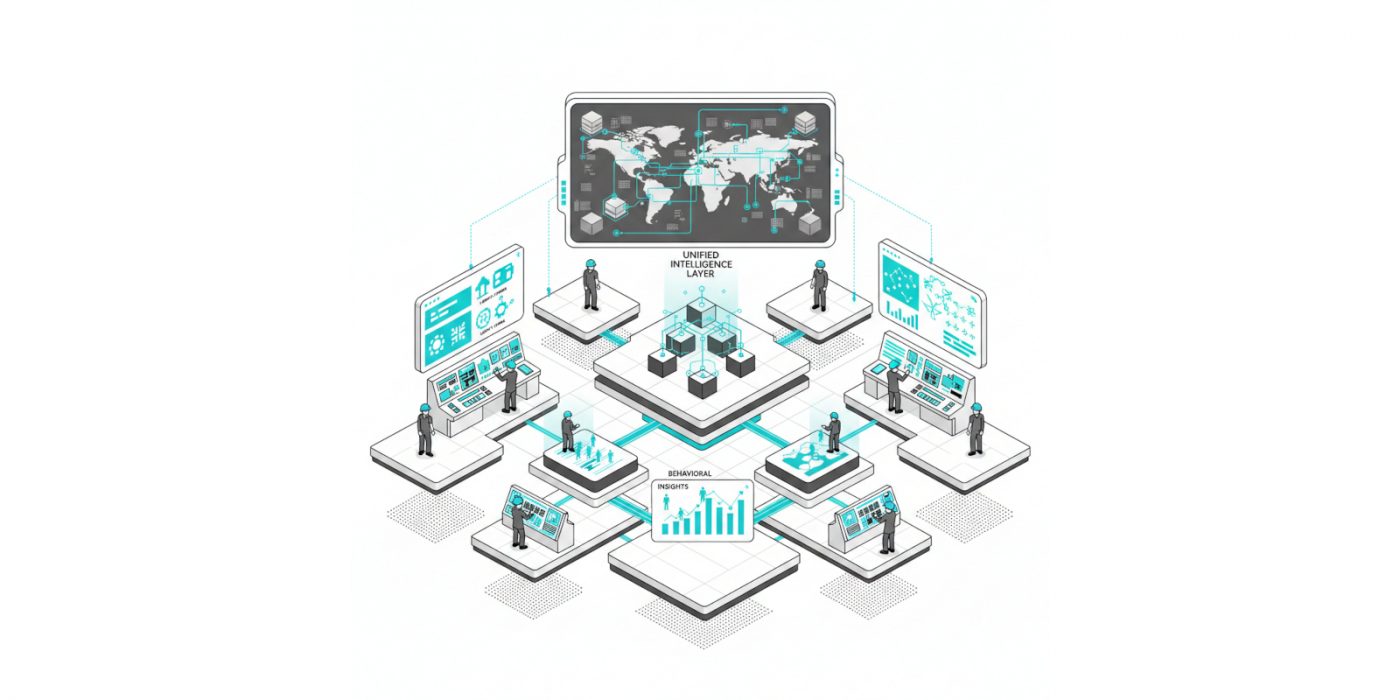
System intelligence is often misunderstood as better documentation or more sophisticated tooling. In reality, it represents something more foundational: a persistent, machine-readable understanding of how an enterprise system behaves, evolves, and interacts with its environment.
In an enterprise context, system intelligence captures behavior, not just structure. It goes beyond static code inventories or architecture diagrams to include execution flows, data transformations, control logic, integration dependencies, and exception paths. This intelligence reflects how the system actually runs in production—not how it was originally designed or later described in documents.
Crucially, system intelligence is continuously updated. As code changes, integrations are added, or regulations introduce new constraints, the intelligence layer evolves alongside the system. This distinguishes it from traditional artifacts that decay the moment a project ends. The value is not in a snapshot, but in maintaining an always-current understanding of system reality.
For regulated enterprises, this has direct operational and compliance implications. When auditors ask how a transaction moves through a system, where sensitive data is transformed, or how controls are enforced, system intelligence provides verifiable answers without requiring weeks of manual analysis. Risk teams gain visibility into behavioral changes, not just code diffs.
From a delivery perspective, system intelligence becomes a shared foundation. Architects, developers, testers, compliance teams, and operators work from the same source of truth. New teams can onboard faster because they inherit living knowledge, not outdated assumptions. Modernization efforts build on existing intelligence instead of recreating it.
This is where modernization shifts from a series of disconnected efforts to a compounding capability. When system intelligence is treated as an asset, every transformation program leaves the enterprise in a better position for the next one. The output of modernization is no longer just migrated code—it is durable understanding.
Next, this raises a critical question: if system intelligence is so valuable, why is it still discarded at the end of most engagements? The answer lies in how modernization outputs are framed today.
From Engagement Artifacts to Reusable Enterprise Assets
Modernization engagements generate a significant volume of artifacts: assessments, code inventories, dependency maps, process flows, test plans, and migration runbooks. These outputs are treated as temporary scaffolding—useful during delivery, but rarely preserved as long-term assets. Once the project closes, artifacts are archived, ownership dissolves, and relevance decays.
The problem is not the quality of these artifacts; it is their form and intent. Most are created for human consumption, optimized for point-in-time decision-making, and disconnected from the systems they describe. As systems evolve, these artifacts drift out of sync, quickly losing credibility and utility.
Transforming engagement artifacts into reusable enterprise assets requires a fundamental shift. System understanding must be captured in a form that is structured, queryable, and continuously refreshed. Instead of static documents, enterprises need living representations of system behavior—assets that can be reused across programs, teams, and regulatory cycles.
When modernization insights are institutionalized this way, their value compounds. A dependency map produced for one migration becomes a baseline for future integrations. Behavioral flows validated during testing become reference points for compliance reviews. Knowledge generated by one partner engagement accelerates the next, rather than being rediscovered.
For large modernization partners, this shift is equally important. Reusable intelligence reduces ramp-up time on follow-on work, lowers reliance on scarce senior experts, and improves delivery predictability. Partners move from repeatedly reconstructing context to extending and refining an existing intelligence layer.
This is the inflection point where modernization stops being a sequence of disconnected projects and starts behaving like a platform capability. The outputs of delivery are no longer consumed and discarded; they are accumulated and leveraged. And once intelligence is reusable, it begins to reshape the economics of modernization itself.
Why Reusability Changes the Economics of Modernization Delivery
When system intelligence is treated as a reusable asset, the financial model of modernization shifts in fundamental ways. Costs that were once recurring become front-loaded investments, and delivery efficiency improves with each subsequent initiative rather than resetting to baseline.
The most immediate impact is on discovery and analysis effort. Traditional modernization programs allocate a disproportionate share of time and budget to understanding existing systems. Reusable intelligence dramatically reduces this phase. Teams begin with validated behavioral knowledge, allowing projects to move faster and with fewer senior resources. For partners operating under fixed-price or not-to-exceed contracts, this directly improves margin predictability.
Reusability also alters staffing economics. When system understanding is embedded in an intelligence layer, delivery is less dependent on a small pool of experts. Mid-level engineers can operate with higher confidence, and onboarding time for new team members drops. This expands delivery capacity without linear increases in cost.
There is a downstream effect on quality and risk. Reused intelligence reduces variance across projects, leading to more consistent outcomes. Testing becomes more targeted because expected behaviors are already known and traceable. Defects tied to misunderstood logic decline, lowering rework costs and post-go-live remediation.
For enterprises, these efficiencies compound over time. Each modernization initiative builds on prior intelligence, shortening timelines and reducing disruption. The total cost of ownership for legacy transformation decreases—not because work stops, but because it becomes more efficient and less error-prone.
For modernization partners, this is the difference between labor-driven growth and scalable delivery. Reusability enables firms to deliver more work with the same teams, price engagements more competitively, and still protect margins. Modernization begins to resemble a productized capability rather than a bespoke service.
Once economics shift this way, a new model becomes possible: modernization as a continuous, ongoing practice rather than a series of episodic projects. That is the next step in the evolution.
How Productized System Intelligence Enables Continuous Modernization
Once system intelligence is productized, modernization stops being an episodic transformation event and becomes a continuous enterprise capability. Instead of mobilizing large programs every few years, organizations evolve their systems incrementally, with far less disruption and risk.
Productized system intelligence acts as a persistent control plane over legacy and modern systems alike. As changes are introduced—new regulations, integrations, product features—the intelligence layer updates to reflect new behaviors and dependencies. This allows enterprises to modernize in smaller, safer increments while maintaining confidence in system integrity.
For regulated environments, this model is especially powerful. Compliance is no longer a periodic scramble tied to major releases or audits. Behavioral understanding, data flows, and control logic are continuously visible and verifiable. Regulatory readiness becomes an operational state, not a project milestone.
Continuous modernization also improves business agility. When leaders can clearly see how systems behave and where constraints exist, they can make informed decisions about where to invest next. Modernization priorities shift from reactive firefighting to proactive optimization—retiring risk hotspots, improving integration resilience, or enabling faster product launches.
For delivery organizations, productized intelligence changes how work is structured. Instead of large, front-loaded engagements, partners support ongoing evolution. Teams build on an existing intelligence foundation, reducing handoff friction and preserving institutional knowledge across phases. The boundary between “legacy” and “modern” becomes less relevant; both are managed through the same intelligence lens.
This approach reframes modernization as a long-term partnership rather than a finite engagement. Value is delivered continuously, knowledge compounds, and risk steadily declines. At that point, the question is no longer whether to modernize, but how effectively that modernization capability is leveraged.
Next, this shift has significant implications for large system integrators and modernization partners—and how they position themselves in the market.
What This Means for Large SI and Modernization Partners
For large system integrators and modernization firms, the move toward productized system intelligence represents a strategic inflection point. It challenges long-standing delivery models, but it also creates an opportunity to move up the value chain.
In traditional engagements, partners are evaluated on execution efficiency: how quickly systems are migrated, how cleanly cutovers occur, and how well scope is managed. While these capabilities remain necessary, they are no longer sufficient. Clients increasingly expect partners to leave them in a better position after delivery—not just with new code, but with lasting clarity and control over their systems.
System intelligence enables partners to differentiate beyond labor. Firms that can capture, maintain, and extend enterprise system knowledge position themselves as long-term transformation partners rather than short-term executors. This shifts conversations with clients from cost and timelines to resilience, risk reduction, and future readiness.
There are also clear operational benefits for partners. Reusable intelligence reduces dependency on niche experts, accelerates onboarding, and improves delivery consistency across accounts. It supports more predictable outcomes, which is critical for firms managing large portfolios of fixed-price or outcome-based contracts.
Commercially, this opens the door to new engagement models. Instead of selling discrete modernization projects, partners can offer ongoing modernization platforms and capabilities. Revenue becomes more recurring, margins stabilize, and client relationships deepen over time.
Importantly, this shift aligns partner incentives with enterprise outcomes. When knowledge persists beyond a single engagement, both sides benefit from continuity. The success of the relationship is measured not by project completion, but by the enterprise’s ability to evolve safely and efficiently.
This leads to a final, strategic conclusion: in the next phase of enterprise modernization, competitive advantage will belong to those who control and operationalize system intelligence—not just those who execute migrations.
The New Competitive Advantage: Owning the Intelligence, Not Just the Migration
Enterprise modernization is entering a new phase. Migration capability, once a differentiator, is rapidly becoming table stakes. Cloud moves, refactoring patterns, and platform transitions are well understood. What remains scarce—and increasingly valuable—is durable understanding of how complex enterprise systems actually work.
Organizations that own system intelligence gain leverage. They make better decisions because they understand behavioral risk, not just architectural intent. They move faster because change does not require rediscovery. They operate with greater confidence because compliance, resilience, and integration impact are visible before issues surface.
For modernization partners, this is the defining competitive shift. Firms that focus solely on execution will continue to compete on price and capacity. Those that invest in capturing and operationalizing intelligence will compete on outcomes. They will be able to demonstrate how each engagement strengthens the client’s modernization capability, rather than simply completing a task.
This distinction matters most in regulated enterprises, where modernization is never truly “done.” Systems evolve under constant regulatory, operational, and market pressure. In that environment, the lasting value of modernization is not the migrated system—it is the intelligence that allows that system to continue evolving safely.
The future of modernization belongs to platforms and partners that treat intelligence as a product, not a byproduct. By shifting focus from projects to reusable system understanding, enterprises and their partners can finally break the cycle of rediscovery and unlock modernization as a continuous, compounding advantage.
If your modernization efforts still reset knowledge after every project, it’s time to rethink the model. CodeAura helps enterprises and modernization partners capture system intelligence as a reusable, continuously evolving asset—reducing risk, accelerating delivery, and improving long-term ROI.
Book a meeting to see how productized system intelligence can transform your modernization strategy.